
Title
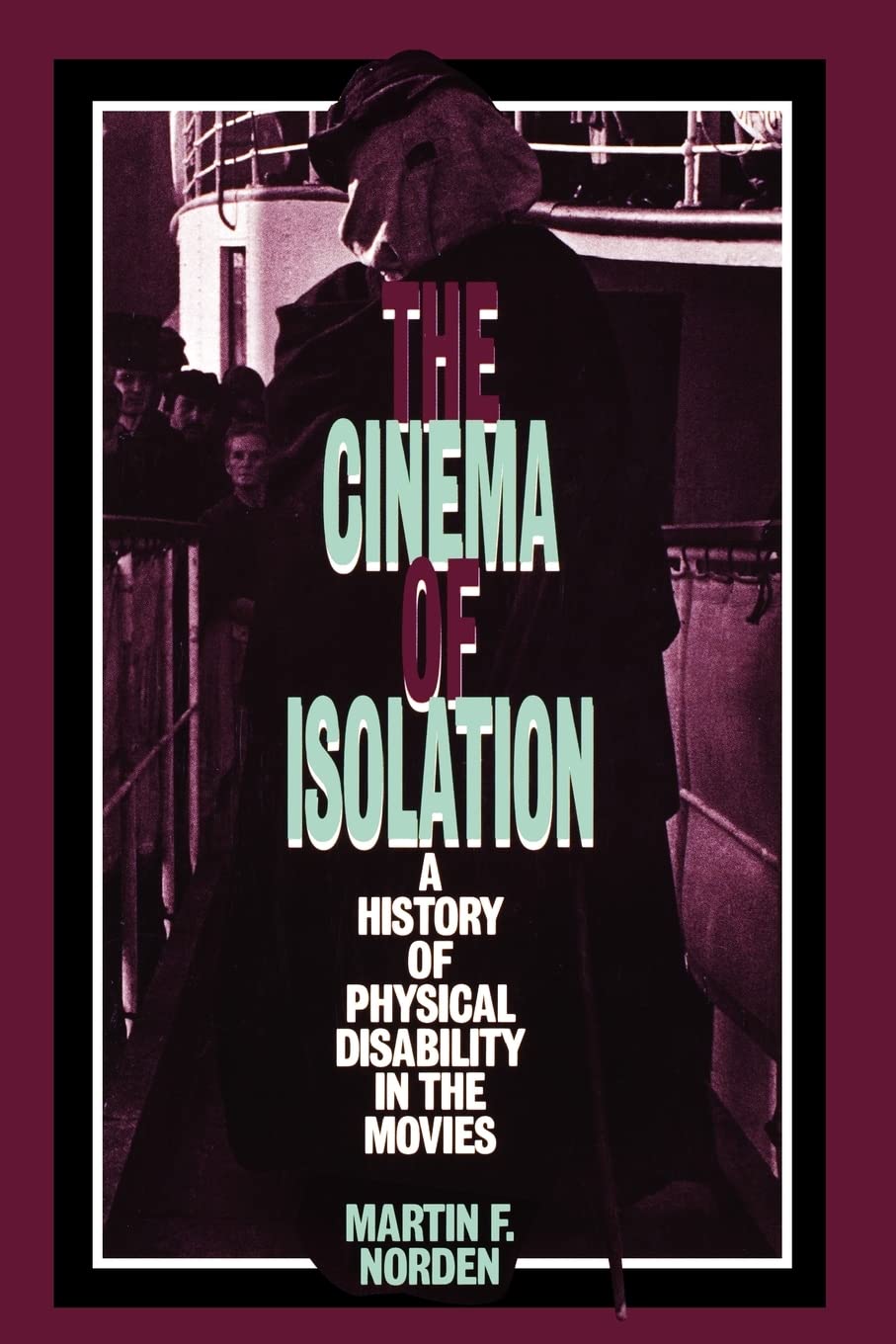
The Cinema Of Isolation: A History Of Physical Disability In The Movies,Used
Sold by Ergodebooks, an authorized reseller.
Returns accepted within 30 days | support@ergodebooks.com
Shipping Information
- Free Standard Shipping — United States only
- Processing Time: 3–5 business days
- Estimated Delivery: 6–10 business days after dispatch
- Double-boxed, fully insured & discreetly packaged
- Tracking number sent via email once dispatched
Returns & Refund
Returns accepted within 30 days of delivery.
Damaged or Defective Item
Free return shipping + replacement or full refund
Wrong Item Received
Free return shipping + replacement or full refund
Change of Mind
Return shipping at customer's expense · 25% restocking fee applies
Payment Option

Filmmakers Have Often Encouraged Us To Regard People With Physical Disabilities In Terms Of Pity, Awe, Humor, Or Fearas 'Others' Who Somehow Deserve To Be Isolated From The Rest Of Society. In This First History Of The Portrayal Of Physical Disability In The Movies, Martin Norden Examines Hundreds Of Hollywood Movies (And Notable International Ones), Finds Their Place Within Mainstream Society, And Uncovers The Movie Industry'S Practices For Maintaining The Status Quokeeping People With Disabilities Dependent And 'In Their Place.'Norden Offers A Dazzling Array Of Physically Disabled Characters Who Embody Or Break Out Of The Stereotypes That Have Both Influenced And Been Symptomatic Of Societys Fluctuating Relationship With Its Physically Disabled Minority. He Shows Us 'Sweet Innocents' Like Tiny Tim, 'Obsessive Avengers' Like Quasimodo, Variations On The Disabled Veteran, And Many Others. He Observes The Arrival Of A New Set Of Stereotypes Tied To The Growth Of Science And Technology In The 1970S And 1980S, And Underscores Movies Like My Left Foot And The Waterdance That Display A Newfound Sensitivity. Nordens Indepth Knowledge Of Disability History Makes For A Particularly Intelligent And Sensitive Approach To This Longoverlooked Issue In Media Studies.
⚠️ WARNING (California Proposition 65):
This product may contain chemicals known to the State of California to cause cancer, birth defects, or other reproductive harm.
For more information, please visit www.P65Warnings.ca.gov.
- Q: What is the page count of 'The Cinema of Isolation'? A: The book contains four hundred six pages. It provides an in-depth exploration of physical disability in the movies.
- Q: What binding type does this book have? A: The book is available in paperback binding. This makes it lightweight and easy to handle.
- Q: Who is the author of 'The Cinema of Isolation'? A: The author is Martin Norden. He brings a wealth of knowledge on disability history to this work.
- Q: What genre does 'The Cinema of Isolation' belong to? A: This book falls under the Performing Arts genre. It specifically addresses the portrayal of disability in film.
- Q: How should I read 'The Cinema of Isolation'? A: You can read it as a scholarly text or for personal interest. It is suitable for anyone interested in film studies and disability issues.
- Q: Is 'The Cinema of Isolation' suitable for academic research? A: Yes, it is suitable for academic research. The book offers extensive historical analysis and references Hollywood films.
- Q: How should I store 'The Cinema of Isolation'? A: Store the book in a cool, dry place. Keeping it away from direct sunlight will help preserve its condition.
- Q: Can I clean the pages of 'The Cinema of Isolation'? A: No, it is not recommended to clean the pages. Instead, handle the book gently to avoid damage.
- Q: What should I do if 'The Cinema of Isolation' arrives damaged? A: Contact the seller for return instructions. Most sellers will offer a replacement or refund for damaged items.
- Q: How does 'The Cinema of Isolation' compare to other disability studies books? A: It offers a unique historical perspective on film portrayals of disability. Unlike many others, it focuses on mainstream and international cinema.
- Q: Is this book appropriate for younger readers? A: Yes, it is appropriate for young adults. However, some themes may require parental guidance.
- Q: Does 'The Cinema of Isolation' have illustrations? A: Yes, the book includes sixty-seven black and white illustrations. These visuals enhance the textual analysis.
- Q: What themes are explored in 'The Cinema of Isolation'? A: The book explores themes of pity, humor, and societal perceptions of disability in film. It also addresses stereotypes and their evolution.
- Q: Is 'The Cinema of Isolation' a good choice for film students? A: Yes, it is an excellent choice for film students. It provides critical insights into the representation of disability in cinema.
- Q: Does this book discuss international films? A: Yes, it examines notable international films alongside Hollywood productions. This broadens the context of disability representation.