
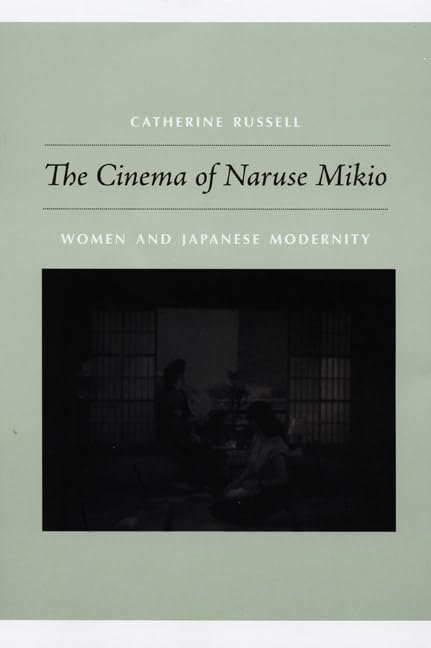
Title
The Cinema of Naruse Mikio: Women and Japanese Modernity,New
Sold by Ergodebooks, an authorized reseller.
Returns accepted within 30 days | support@ergodebooks.com
Shipping Information
- Free Standard Shipping — United States only
- Processing Time: 3–5 business days
- Estimated Delivery: 6–10 business days after dispatch
- Double-boxed, fully insured & discreetly packaged
- Tracking number sent via email once dispatched
Returns & Refund
Returns accepted within 30 days of delivery.
Damaged or Defective Item
Free return shipping + replacement or full refund
Wrong Item Received
Free return shipping + replacement or full refund
Change of Mind
Return shipping at customer's expense · 25% restocking fee applies
Payment Option

One of the most prolific and respected directors of Japanese cinema, Naruse Mikio (190569) made eightynine films between 1930 and 1967. Little, however, has been written about Naruse in English, and much of the writing about him in Japanese has not been translated into English. With The Cinema of Naruse Mikio, Catherine Russell brings deserved critical attention to this underappreciated director. Besides illuminating Naruses contributions to Japanese and world cinema, Russells indepth study of the director sheds new light on the Japanese film industry between the 1930s and the 1960s.Naruse was a studiobased director, a company man renowned for bringing films in on budget and on time. During his long career, he directed movies in different styles of melodrama while displaying a remarkable continuity of tone. His films were based on a variety of Japanese literary sources and original scripts; almost all of them were set in contemporary Japan. Many were womens films. They had female protagonists, and they depicted womens passions, disappointments, routines, and living conditions. While neither Naruse or his audiences identified themselves as feminist, his films repeatedly foreground, if not challenge, the rigid gender norms of Japanese society. Given the complex historical and critical issues surrounding Naruses cinema, a comprehensive study of the director demands an innovative and interdisciplinary approach. Russell draws on the critical reception of Naruse in Japan in addition to the cultural theories of Harry Harootunian, Miriam Hansen, and Walter Benjamin. She shows that Naruses movies were key texts of Japanese modernity, both in the ways that they portrayed the changing roles of Japanese women in the public sphere and in their depiction of an urban, industrialized, massmediasaturated society.
⚠️ WARNING (California Proposition 65):
This product may contain chemicals known to the State of California to cause cancer, birth defects, or other reproductive harm.
For more information, please visit www.P65Warnings.ca.gov.