
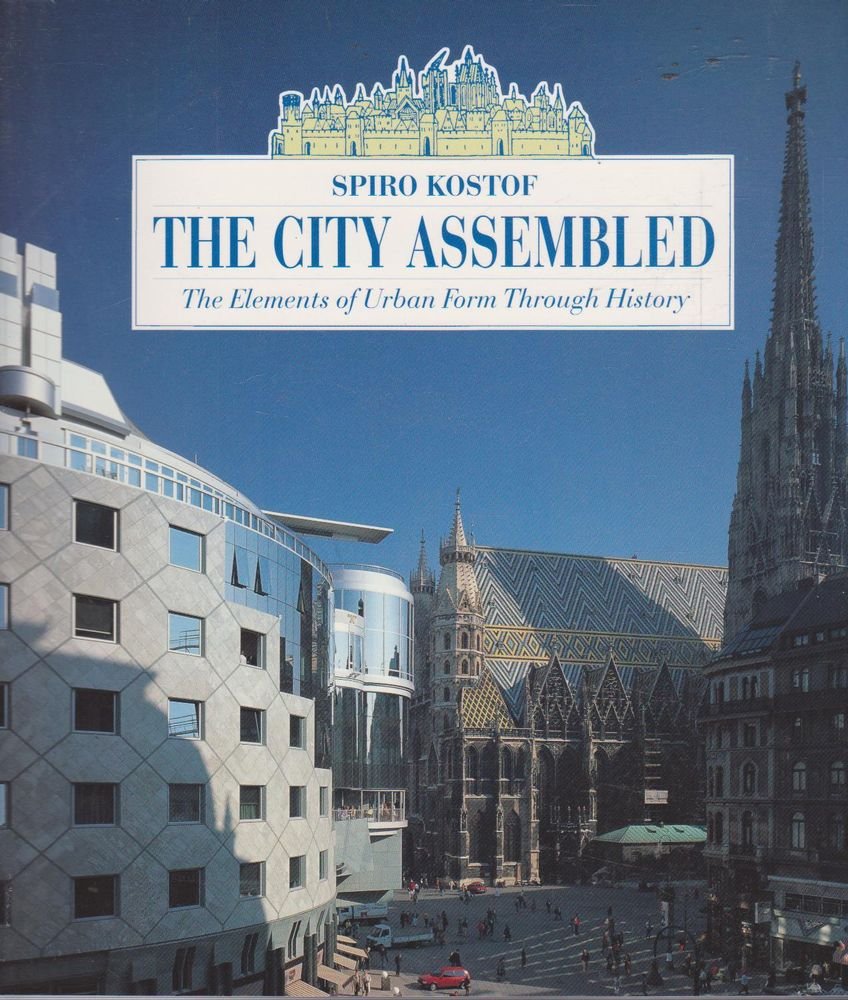
Title
The City Assembled: The Elements Of Urban Form Through History,New
Sold by Ergodebooks, an authorized reseller.
Returns accepted within 30 days | support@ergodebooks.com
Shipping Information
- Free Standard Shipping — United States only
- Processing Time: 3–5 business days
- Estimated Delivery: 6–10 business days after dispatch
- Double-boxed, fully insured & discreetly packaged
- Tracking number sent via email once dispatched
Returns & Refund
Returns accepted within 30 days of delivery.
Damaged or Defective Item
Free return shipping + replacement or full refund
Wrong Item Received
Free return shipping + replacement or full refund
Change of Mind
Return shipping at customer's expense · 25% restocking fee applies
Payment Option

The City Assembled Is The Companion Volume To Sprio Kostof'S The City Shaped(Reissued In Paperback By Bulfinch, Spring 1999) And Continues Kostof'S Unique Study Of Urban Landscape And Process. Moving From The Historical And Cultural Overviews Of The City In The First Book, Kostof Descends Into The Streets, Sidewalks, Squares, Markets, And Waterfronts Of The City And Presents A Detailed Urban Anatomy. The Book Is Organized Thematically Around The Structural Phenomena Of The Citythe City Edge, Street, Public Space, The Marketplace, And The Realities Of Cultural And Ecomomic Segregationand Explores The Customs, Practicalities, And Biases Behind The Elements Of The City. In Every Instance, Professor Kostof Follows A Farranging Story Up To The Present To Illustrate How Fresh The Discussion Remains Today. In The Past, The Various Elements Of A City Evolved In Response To A Variety Of Pressures. Today, They Are Usually The Result Of Planning Decisions. In A Final Chapter, Kostof Considers 'Urban Process' 'The Effect On Cities Of Natural Disasters, Wars, And Comprehensive Redevelopment' Compared With Incremental Growth And Change. His Book Is Thus An Exercise In Architectural And Social History, A Case Study For The Present, And A Pointer For The Future.The Story Is Also Told In Over Three Hundred Drawings, Prints, Paintings, And Photographs That Illustrate Not Only Typical Elements Of A City, Such As A Colonnaded Street Of Ancient Palmyra, But Also Specific Uses Of Particular Elements, Such As Prague'S Wenceslas Square. The City Assembled Is A Fascinating Account Of The Urban Experience, Writte, Like The City Shaped, For General Readers And Professionals Alike.
⚠️ WARNING (California Proposition 65):
This product may contain chemicals known to the State of California to cause cancer, birth defects, or other reproductive harm.
For more information, please visit www.P65Warnings.ca.gov.
- Q: What is the page count of 'The City Assembled'? A: This book contains three hundred fifty-two pages. It provides a comprehensive look into urban form and history.
- Q: What type of binding does 'The City Assembled' have? A: This book is available in paperback binding. This makes it a lightweight and flexible choice for reading.
- Q: Who is the author of 'The City Assembled'? A: The author is Spiro Kostof. He is known for his insightful studies on urban landscapes.
- Q: What is the main theme of 'The City Assembled'? A: The main theme is the historical and cultural development of cities. It examines how urban elements have evolved over time.
- Q: What category does 'The City Assembled' belong to? A: This book belongs to the category of Urban & Land Use Planning. It is ideal for both general readers and professionals.
- Q: How does 'The City Assembled' illustrate urban elements? A: It includes over three hundred drawings, prints, and photographs. These visuals depict various aspects of urban form and function.
- Q: Is 'The City Assembled' suitable for professionals in urban planning? A: Yes, it is suitable for professionals in urban planning. The book offers detailed insights into urban processes and historical contexts.
- Q: Who would benefit from reading 'The City Assembled'? A: Both general readers and professionals can benefit from this book. It provides valuable information about urban design and history.
- Q: What unique perspective does Kostof offer in 'The City Assembled'? A: Kostof examines urban anatomy through historical and cultural lenses. He focuses on the interplay between planning decisions and urban evolution.
- Q: What should I know about the condition of used copies of this book? A: Used copies are typically in good condition. However, it's always best to check the specific details before purchasing.
- Q: What topics are covered in 'The City Assembled'? A: Topics include city edges, public spaces, and economic segregation. Kostof also discusses the impact of historical events on urban development.
- Q: Does 'The City Assembled' address contemporary urban issues? A: Yes, it addresses contemporary urban issues. Kostof links historical developments to present-day urban challenges.
- Q: How does this book approach the concept of urban process? A: It analyzes urban processes like natural disasters and redevelopment. Kostof compares these with gradual urban growth and change.
- Q: What visual elements enhance the reading experience in 'The City Assembled'? A: The book features drawings, paintings, and photographs. These visuals help illuminate the text and provide context.
- Q: Can I find this book in different formats? A: Currently, it is available in paperback format. There are no mentions of hardcover or digital editions.