
Title
The City Of Collective Memory: Its Historical Imagery And Architectural Entertainments,New
Sold by Ergodebooks, an authorized reseller.
Returns accepted within 30 days | support@ergodebooks.com
Shipping Information
- Free Standard Shipping — United States only
- Processing Time: 3–5 business days
- Estimated Delivery: 6–10 business days after dispatch
- Double-boxed, fully insured & discreetly packaged
- Tracking number sent via email once dispatched
Returns & Refund
Returns accepted within 30 days of delivery.
Damaged or Defective Item
Free return shipping + replacement or full refund
Wrong Item Received
Free return shipping + replacement or full refund
Change of Mind
Return shipping at customer's expense · 25% restocking fee applies
Payment Option

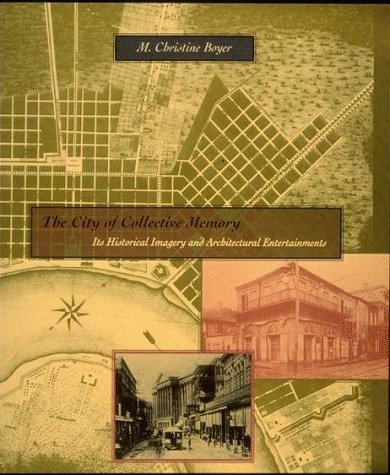
Christine Boyer Faces Headon The Crisis Of The City In The Late Twentieth Century, Taking Us On A Fascinating Journey Through Theaters And Museums, Panoramas And Maps, Buildings And Institutions That Are Used To Construct A New Reading Of The City As A System Of Representation, A Complex Cultural Entity. Boyer Brings Together Elements And Concepts From Geography, Critical Theory, Architecture, Literature, And Painting In A Synthetic And Readable Work That Is Broad In Its Reach And Original In Its Insights. What Finally Emerges Is A Sense Of The City Reinvigorated With Richness And Potential.The City Of Collective Memory Describes A Series Of Different Visual And Mental Models By Which The Urban Environment Has Been Recognized, Depicted, And Planned. Boyer Identifies Three Major 'Maps': One Common To The Traditional Citythe City As A Work Of Art; One Characteristic Of The Modern Citythe City As Panorama; And One Appropriate To The Contemporary Citythe City As Spectacle. It Is A Richly Illustrated And Documented Study That Pays Considerable Attention To The Normally Hidden And Unspoken Codes That Regulate The Order Imposed On And Derived From The City. A Wide Range Of Secondary Historical Literature And Theoretical Work Is Considered, With Evident Debts To Structuralist Analysis Of Urban Form Represented By Aldo Rossi, As Well To Much Poststructuralist Criticism From Walter Benjamin To The Present.
⚠️ WARNING (California Proposition 65):
This product may contain chemicals known to the State of California to cause cancer, birth defects, or other reproductive harm.
For more information, please visit www.P65Warnings.ca.gov.
- Q: How many pages does the book have? A: The book has five hundred seventy-two pages. This comprehensive text provides a deep exploration of urban environments and their representation.
- Q: What is the binding type of this book? A: The book features a paperback binding. This allows for flexibility and ease of use, making it suitable for casual reading.
- Q: What are the dimensions of the book? A: The book measures eight point nine four inches in length, seven point zero two inches in width, and one point one four inches in height. These dimensions make it portable and easy to handle.
- Q: What genre does this book belong to? A: This book belongs to the Urban and Land Use Planning genre. It addresses the complexities of urban environments through various theoretical lenses.
- Q: Who is the author of this book? A: The author of the book is M. Christine Boyer. She is known for her insightful analyses of urban spaces and cultural representations.
- Q: Is there a specific reading level for this book? A: The book is suitable for advanced readers and scholars. Its complex themes and theories cater to those with an interest in urban studies.
- Q: How should I care for this book? A: To care for the book, store it in a cool, dry place away from direct sunlight. This will help preserve its binding and pages.
- Q: Can I clean the book if it gets dirty? A: Yes, you can gently wipe the cover with a soft, dry cloth. Avoid using water or cleaning solutions to prevent damage.
- Q: Is this book suitable for all ages? A: No, this book is not specifically suitable for children. It contains academic content that may be more appropriate for adults and higher education students.
- Q: What if the book arrives damaged? A: If the book arrives damaged, contact the seller for a replacement or refund. Most sellers offer a return policy for damaged items.
- Q: Is this book a good choice for someone interested in architecture? A: Yes, this book is an excellent choice for those interested in architecture. It combines elements of architecture with urban theory and cultural critique.
- Q: Does this book include illustrations? A: Yes, the book is richly illustrated. It includes various visual models that enhance the reader's understanding of urban representation.
- Q: Are there references to historical literature in this book? A: Yes, the book considers a wide range of secondary historical literature. This provides a broader context for the theories discussed.
- Q: Is this book part of a series? A: No, this book is a standalone publication. It presents a unique perspective on urban memory and representation.
- Q: What topics are covered in the book? A: The book covers topics such as urban representation, cultural entities, and the interplay between geography and architecture. It provides a multifaceted view of the city.