
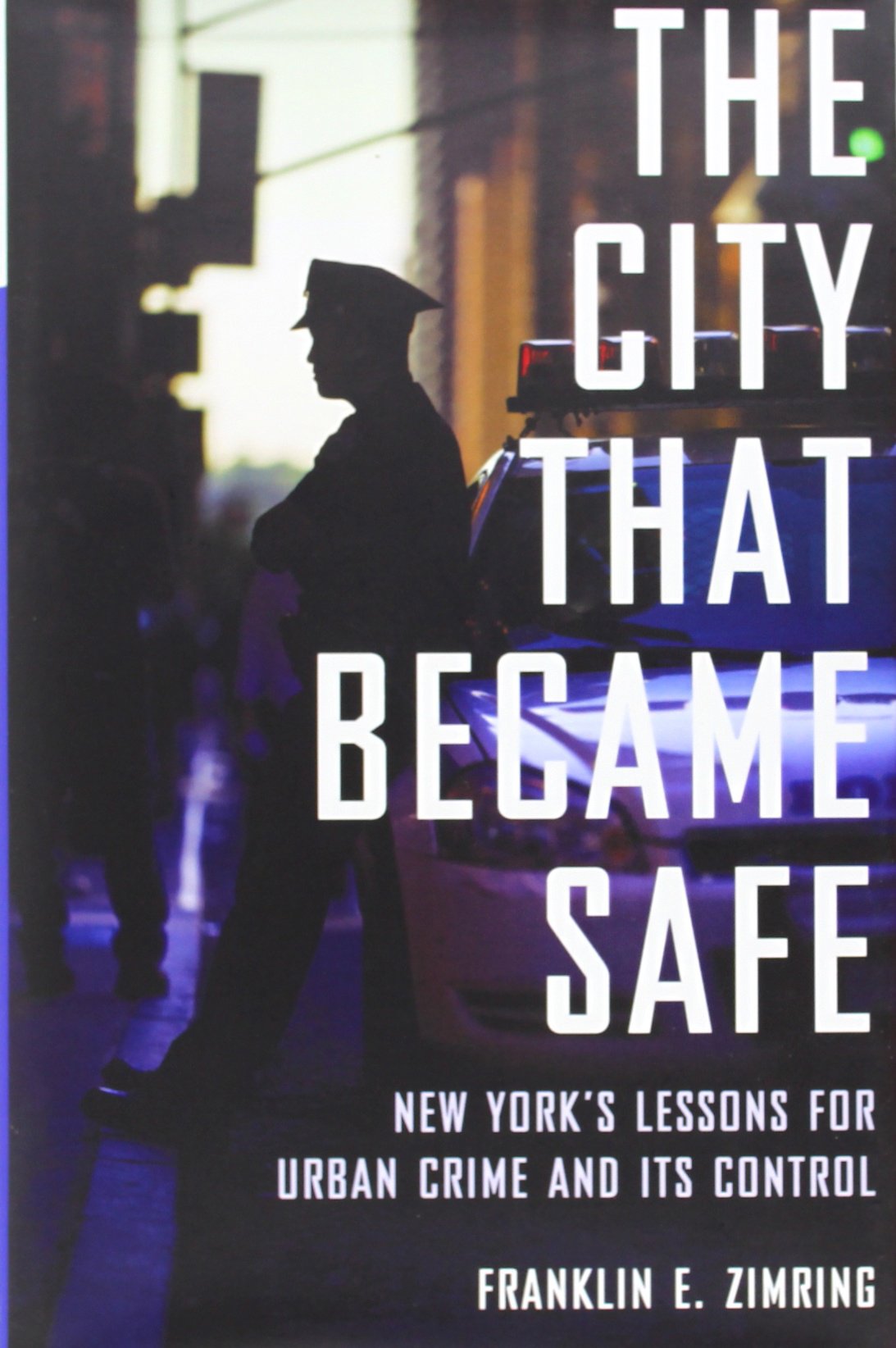
Title
The City That Became Safe: New York'S Lessons For Urban Crime And Its Control (Studies In Crime And Public Policy),Used
Sold by Ergodebooks, an authorized reseller.
Returns accepted within 30 days | support@ergodebooks.com
Shipping Information
- Free Standard Shipping — United States only
- Processing Time: 3–5 business days
- Estimated Delivery: 6–10 business days after dispatch
- Double-boxed, fully insured & discreetly packaged
- Tracking number sent via email once dispatched
Returns & Refund
Returns accepted within 30 days of delivery.
Damaged or Defective Item
Free return shipping + replacement or full refund
Wrong Item Received
Free return shipping + replacement or full refund
Change of Mind
Return shipping at customer's expense · 25% restocking fee applies
Payment Option

The Fortypercent Drop In Crime That Occurred Across The U.S. From 1991 To 2000 Remains Largely An Unsolved Mystery. Even More Puzzling Is The Eightypercent Drop Over Nineteen Years In New York City. Twice As Long And Twice As Large, It Is The Largest Crime Decline On Record.In The City That Became Safe, Franklin E. Zimring Seeks Out The New York Difference Through A Comprehensive Investigation Into The City'S Falling Crime Rates. The Usual Understanding Is That Aggressive Police Created A Zerotolerance Law Enforcement Regime That Drove Crime Rates Down. Is This Political Sound Bite Trueare The Official Statistics Generated By The Police Accurate? Though Zerotolerance Policing And Qualityoflife Were Never A Consistent Part Of The Nypd'S Strategy, Zimring Shows The Numbers Are Correct And Argues That Some Combination Of More Cops, New Tactics, And New Management Can Take Some Credit For The Decline. That The Police Can Make A Difference At All In Preventing Crime Overturns Decades Of Conventional Wisdom From Criminologists, But Zimring Also Points Out What Most Experts Have Missed: The New York Experience Challenges The Basic Assumptions Driving American Crime And Drugcontrol Policies.New York Has Shown That Crime Rates Can Be Greatly Reduced Without Increasing Prison Populations. New York Teaches That Targeted Harm Reduction Strategies Can Drastically Cut Down On Drug Related Violence Even If Illegal Drug Use Remains High. And New York Has Proven That Epidemic Levels Of Violent Crime Are Not Hardwired Into The Populations Or Cultures Of Urban America. This Careful And Penetrating Analysis Of How The Nation'S Largest City Became Safe Rewrites The Playbook On Crime And Its Control For All Big Cities.
⚠️ WARNING (California Proposition 65):
This product may contain chemicals known to the State of California to cause cancer, birth defects, or other reproductive harm.
For more information, please visit www.P65Warnings.ca.gov.
- Q: What is the page count of the book? A: The book contains two hundred seventy-two pages. This length allows for an in-depth exploration of urban crime and its control.
- Q: What is the binding type of this book? A: This book is a hardcover edition. Hardcover bindings provide durability and a premium feel, making it suitable for repeated use.
- Q: What are the dimensions of the book? A: The book measures nine point three inches in length, six point one inches in height, and one inch in width. These dimensions make it easy to handle and store.
- Q: Who is the author of the book? A: The author is Franklin E. Zimring. His expertise in criminology lends credibility to the insights presented in the book.
- Q: What genre does this book belong to? A: This book is categorized under criminology. It provides scholarly analysis and insights into crime reduction strategies.
- Q: Is this book suitable for academic use? A: Yes, this book is suitable for academic use. Its comprehensive analysis and research make it a valuable resource for students and professionals.
- Q: How can I apply the insights from this book? A: You can apply the insights by implementing targeted harm reduction strategies in urban settings. The book presents evidence-based approaches that can influence crime control policies.
- Q: Is this book appropriate for general readers? A: Yes, the book is appropriate for general readers. While it is rooted in academic research, it is written in an accessible manner.
- Q: What age group is this book suitable for? A: This book is suitable for adults and older teens. Its themes and discussions are aimed at a mature audience interested in urban crime.
- Q: How should I store this book? A: Store the book in a cool, dry place away from direct sunlight. This will help preserve its condition and prevent damage to the binding.
- Q: Can I lend this book to others? A: Yes, you can lend this book to others. Just be sure to inform them about its academic nature and insightful discussions.
- Q: What if my book arrives damaged? A: If your book arrives damaged, contact the seller for a replacement or refund. Be sure to provide evidence of the damage for processing.
- Q: Does this book cover specific crime reduction strategies? A: Yes, the book covers specific crime reduction strategies used in New York City. It discusses how targeted approaches can lead to significant decreases in crime.
- Q: What makes this book unique in its field? A: This book is unique because it challenges conventional wisdom about crime control. Zimring's analysis offers fresh perspectives on urban crime dynamics.
- Q: Is there a focus on drug-related violence in the book? A: Yes, the book focuses on drug-related violence and its control. It highlights effective strategies that can reduce violence without increasing incarceration.
- Q: Will this book help in understanding urban crime trends? A: Yes, this book will help you understand urban crime trends. It provides a detailed analysis of the factors contributing to crime rate changes in New York City.