
Title
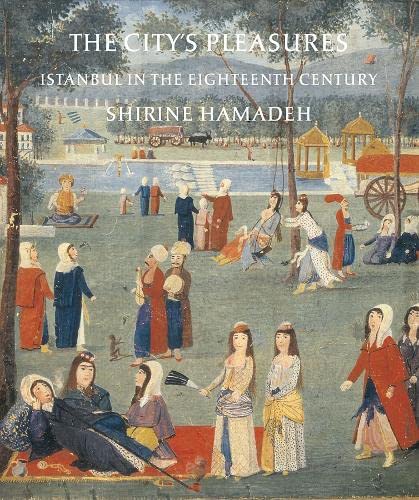
The City's Pleasures: Istanbul in the Eighteenth Century (Publications on the Near East),Used
Sold by Ergodebooks, an authorized reseller.
Returns accepted within 30 days | support@ergodebooks.com
Shipping Information
- Free Standard Shipping — United States only
- Processing Time: 3–5 business days
- Estimated Delivery: 6–10 business days after dispatch
- Double-boxed, fully insured & discreetly packaged
- Tracking number sent via email once dispatched
Returns & Refund
Returns accepted within 30 days of delivery.
Damaged or Defective Item
Free return shipping + replacement or full refund
Wrong Item Received
Free return shipping + replacement or full refund
Change of Mind
Return shipping at customer's expense · 25% restocking fee applies
Payment Option

The City's Pleasures is the first historical investigation of the tremendous changes that affected the fabric and architecture of Istanbul in the century that followed the decisive return of the Ottoman court to the capital in 1703. These were spectacular times that witnessed the most extraordinary urban expansion and building explosion in the history of the city. Showing how architecture and urban form became involved in the representation and construction of a changing social order, Shirine Hamadeh reassesses the dominance of the paradigm of Westernization in interpretations of this period and challenges the suggestion that change in the eighteenth century could only occur by turning toward a now superior West. Drawing on a genre of Ottoman poetry written in celebration of the built environment and on a vast array of related textual and visual sources, Hamadeh demonstrates that architectural change was the result of a dynamic synthesis between internal and external factors, and closely mirrored the process of dcloisonnement of the city's social landscape.Examining novel forms, spaces, and decorative vocabularies; changing patterns of patronage; and new patterns of architectural perception; The City's Pleasures shows how these exposed and reinforced the internal dynamics that were played out between a society in flux and a state anxious to recreate an ideal system of social hierarchies. Profoundly hybrid in nature, the new architectural idiom reflected a growing permeability between elite and middleclass sensibilities, an unprecedented degree of receptivity to Western and Eastern foreign traditions, and a clear departure from the parameters of the classical canon. Innovation became the new operative doctrine. As the built environment was experienced, perceived, and appreciated by contemporary observers, it increasingly revealed itself as a perpetual source of sensory pleasures.
⚠️ WARNING (California Proposition 65):
This product may contain chemicals known to the State of California to cause cancer, birth defects, or other reproductive harm.
For more information, please visit www.P65Warnings.ca.gov.