
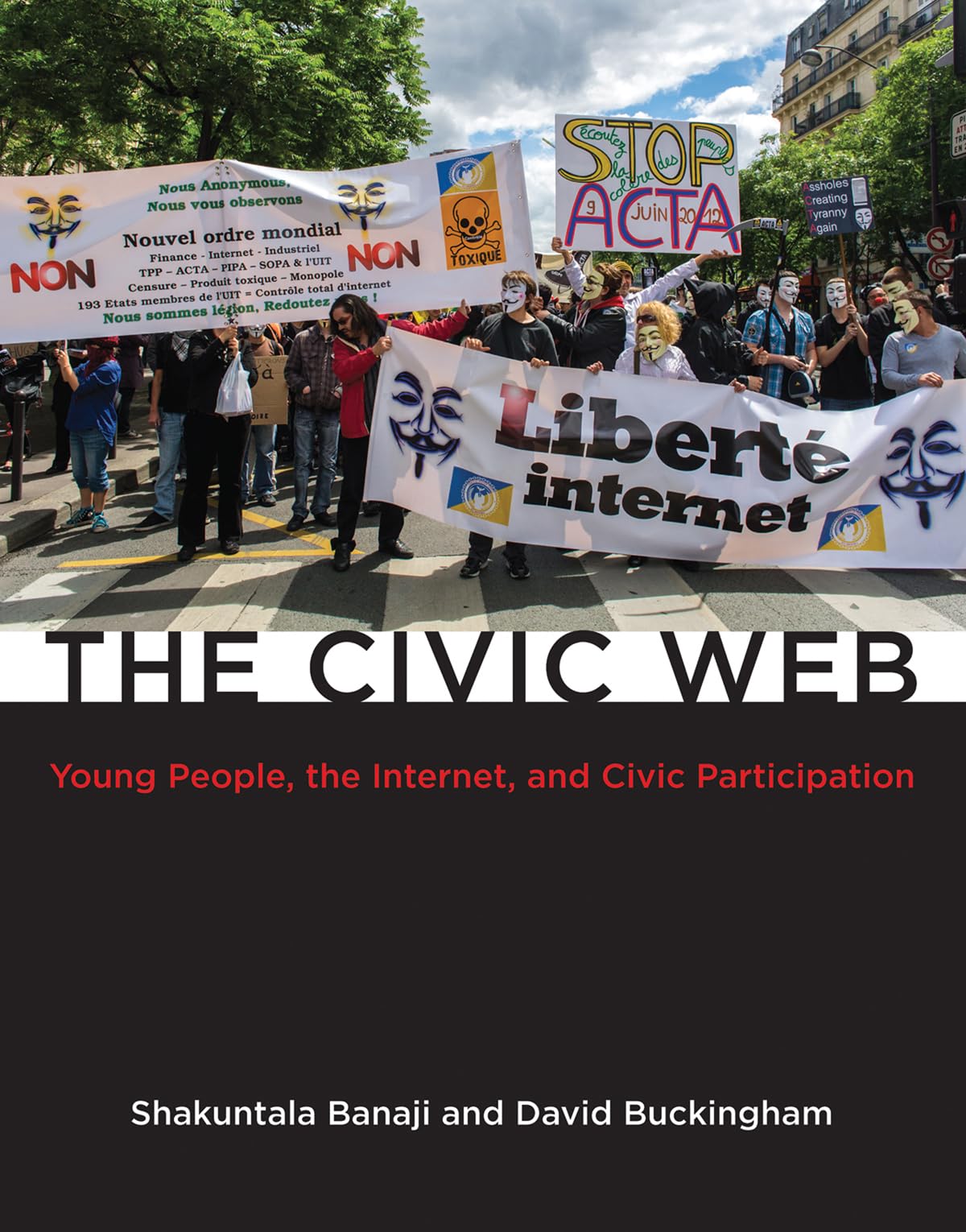
Title
The Civic Web: Young People, the Internet, and Civic Participation (John D. and Catherine T. MacArthur Foundation Series on Digi,Used
Sold by Ergodebooks, an authorized reseller.
Returns accepted within 30 days | support@ergodebooks.com
Shipping Information
- Free Standard Shipping — United States only
- Processing Time: 3–5 business days
- Estimated Delivery: 6–10 business days after dispatch
- Double-boxed, fully insured & discreetly packaged
- Tracking number sent via email once dispatched
Returns & Refund
Returns accepted within 30 days of delivery.
Damaged or Defective Item
Free return shipping + replacement or full refund
Wrong Item Received
Free return shipping + replacement or full refund
Change of Mind
Return shipping at customer's expense · 25% restocking fee applies
Payment Option

An investigation of how governments, organizations, and groups use the Internet to promote civic and political engagement among young people.There has been widespread concern in contemporary Western societies about declining engagement in civic life; people are less inclined to vote, to join political parties, to campaign for social causes, or to trust political processes. Young people in particular are frequently described as alienated or apathetic. Some have looked optimistically to new mediaand particularly the Internetas a means of revitalizing civic life and democracy. Governments, political parties, charities, NGOs, activists, religious and ethnic groups, and grassroots organizations have created a range of youthoriented websites that encourage widely divergent forms of civic engagement and use varying degrees of interactivity. But are young people really apathetic and lacking in motivation? Does the Internet have the power to reengage those disenchanted with politics and civic life?Based on a major research project funded by the European Commission, this book attempts to understand the role of the Internet in promoting young people's participation. Examples are drawn from Hungary, the Netherlands, Slovenia, Spain, Sweden, Turkey, and the United Kingdomcountries offering contrasting political systems and cultural contexts. The book also addresses broader questions about the meaning of civic engagement, the nature of new forms of participation, and their implications for the future of civic life.
⚠️ WARNING (California Proposition 65):
This product may contain chemicals known to the State of California to cause cancer, birth defects, or other reproductive harm.
For more information, please visit www.P65Warnings.ca.gov.
- Q: How many pages does the book have? A: The book has one hundred eighty-five pages. This length allows for a comprehensive exploration of the subject matter.
- Q: What is the binding type of the book? A: The book is hardcover. This provides durability and a premium feel for readers.
- Q: What are the dimensions of the book? A: The book measures seven point twenty-five inches in length, zero point seventy-five inches in width, and nine point twenty-seven inches in height. These dimensions make it easy to handle and store.
- Q: What is the main theme of the book? A: The main theme is the role of the Internet in promoting civic and political engagement among young people. It addresses how digital media can revitalize democratic participation.
- Q: Who is the author of the book? A: The author is Shakuntala Banaji. She is known for her research on media and young people's civic participation.
- Q: What kind of research is the book based on? A: The book is based on a major research project funded by the European Commission. It draws on examples from various European countries.
- Q: How should I care for the book? A: Keep the book in a cool, dry place to maintain its condition. Avoid exposure to direct sunlight to prevent fading of the cover and pages.
- Q: Is the book suitable for young adults? A: Yes, the book is suitable for young adults. It addresses issues relevant to youth engagement in civic life.
- Q: Can I read this book if I am not familiar with civic studies? A: Yes, you can read this book even without prior knowledge of civic studies. It is accessible and provides context for understanding the themes discussed.
- Q: How do I store the book properly? A: Store the book upright on a shelf to prevent warping. Ensure it is not pressed between heavy objects to maintain its shape.
- Q: What is the target audience for this book? A: The target audience includes educators, researchers, and anyone interested in youth civic engagement. It also appeals to those studying digital media.
- Q: Does the book include real-world examples? A: Yes, the book includes examples from countries like Hungary, the Netherlands, and the United Kingdom. These examples highlight diverse political systems and cultural contexts.
- Q: Is there a warranty or return policy for the book? A: Typically, books do not come with a warranty. However, check the retailer's return policy for options if the book arrives damaged.
- Q: What if I have issues with the book's quality? A: If you have issues with the book's quality, contact the retailer where you purchased it for assistance. They may offer a return or exchange.
- Q: How does this book compare to others on civic engagement? A: This book offers a unique perspective by integrating Internet usage with civic engagement. It differs from others by focusing specifically on young people's experiences.
- Q: Are there any illustrations or figures in the book? A: Yes, the book includes nineteen figures and seven tables. These visual elements support the text and enhance understanding of the research findings.