If you have any questions, you are always welcome to contact us. We'll get back to you as soon as possible, withing 24 hours on weekdays.
Customer service
All questions about your order, return and delivery must be sent to our customer service team by e-mail at yourstore@yourdomain.com
Sale & Press
If you are interested in selling our products, need more information about our brand or wish to make a collaboration, please contact us at press@yourdomain.com
Help
If you have any questions, you are always welcome to contact us. We'll get back to you as soon as possible, withing 24 hours on weekdays.
Customer service
All questions about your order, return and delivery must be sent to our customer service team by e-mail at yourstore@yourdomain.com
Sale & Press
If you are interested in selling our products, need more information about our brand or wish to make a collaboration, please contact us at press@yourdomain.com
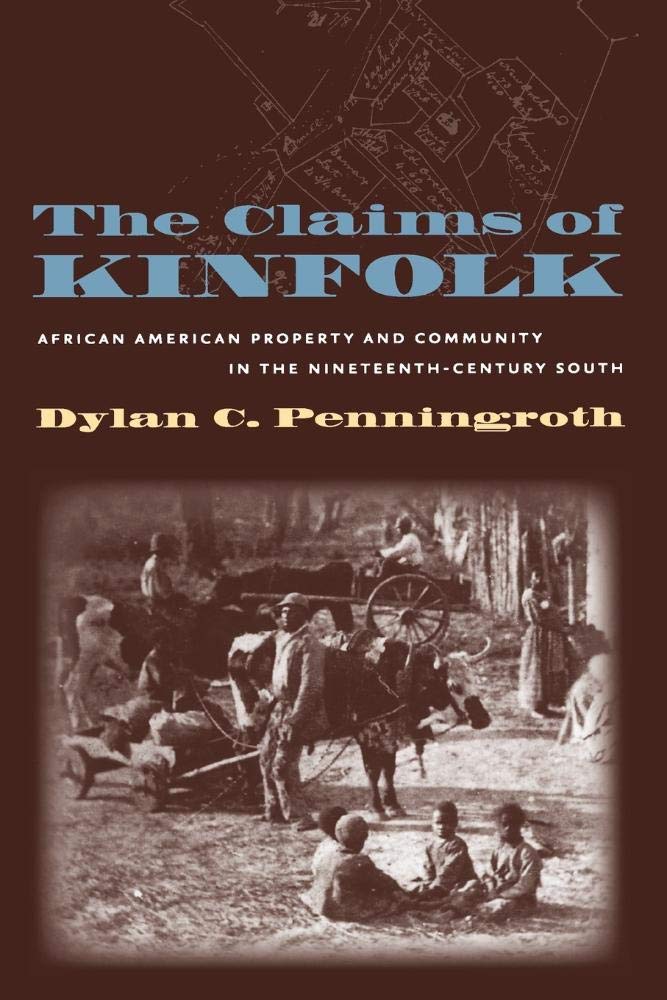
In The Claims of Kinfolk, Dylan Penningroth uncovers an extensive informal economy of property ownership among slaves and sheds new light on African American family and community life from the heyday of plantation slavery to the 'freedom generation' of the 1870s. By focusing on relationships among blacks, as well as on the more familiar struggles between the races, Penningroth exposes a dynamic process of community and family definition. He also includes a comparative analysis of slavery and slave property ownership along the Gold Coast in West Africa, revealing significant differences between the African and American contexts.Property ownership was widespread among slaves across the antebellum South, as slaves seized the small opportunities for ownership permitted by their masters. While there was no legal framework to protect or even recognize slaves' property rights, an informal system of acknowledgment recognized by both blacks and whites enabled slaves to mark the boundaries of possession. In turn, property ownershipand the negotiations it entailedinfluenced and shaped kinship and community ties. Enriching common notions of slave life, Penningroth reveals how property ownership engendered conflict as well as solidarity within black families and communities. Moreover, he demonstrates that property had less to do with individual legal rights than with constantly negotiated, extralegal social ties.
⚠️ WARNING (California Proposition 65):
This product may contain chemicals known to the State of California to cause cancer,
birth defects, or other reproductive harm.
For MAP (Minimum Advertised Price) violations and Intellectual Property (IP) or Trademark concerns, please contact:
support@ergodebooks.com
⚠️ California Proposition 65 Warning: Some products sold on this website may expose you to chemicals known to the State of California to cause cancer, birth defects, or other reproductive harm. For more information, visit www.P65Warnings.ca.gov.