If you have any questions, you are always welcome to contact us. We'll get back to you as soon as possible, withing 24 hours on weekdays.
Customer service
All questions about your order, return and delivery must be sent to our customer service team by e-mail at yourstore@yourdomain.com
Sale & Press
If you are interested in selling our products, need more information about our brand or wish to make a collaboration, please contact us at press@yourdomain.com
Help
If you have any questions, you are always welcome to contact us. We'll get back to you as soon as possible, withing 24 hours on weekdays.
Customer service
All questions about your order, return and delivery must be sent to our customer service team by e-mail at yourstore@yourdomain.com
Sale & Press
If you are interested in selling our products, need more information about our brand or wish to make a collaboration, please contact us at press@yourdomain.com
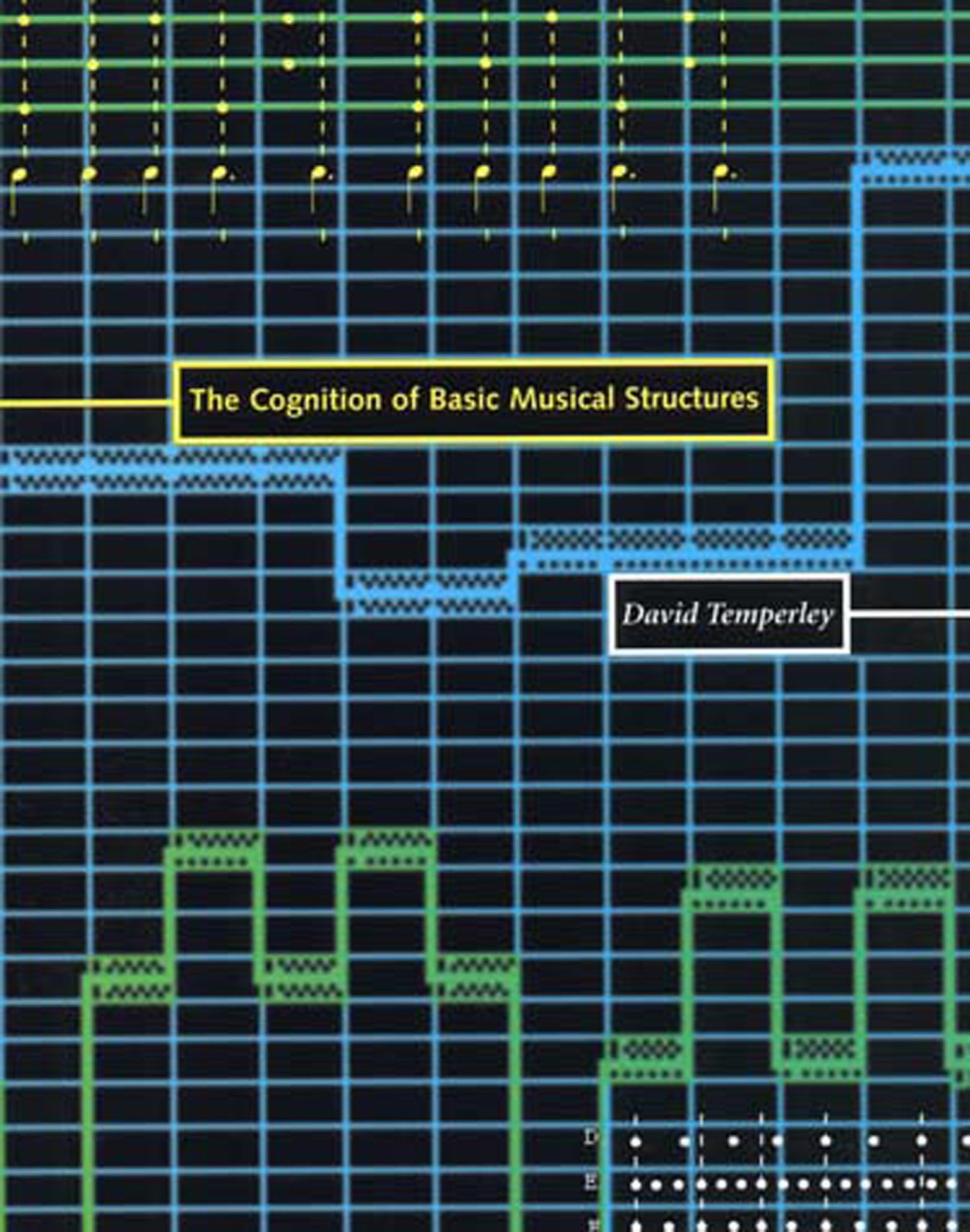
In this book, David Temperley addresses a fundamental question about music cognition: how do we extract basic kinds of musical information, such as meter, phrase structure, counterpoint, pitch spelling, harmony, and key from music as we hear it? Taking a computational approach, Temperley develops models for generating these aspects of musical structure. The models he proposes are based on preference rules, which are criteria for evaluating a possible structural analysis of a piece of music. A preference rule system evaluates many possible interpretations and chooses the one that best satisfies the rules.After an introductory chapter, Temperley presents preference rule systems for generating six basic kinds of musical structure: meter, phrase structure, contrapuntal structure, harmony, and key, as well as pitch spelling (the labeling of pitch events with spellings such as A flat or G sharp). He suggests that preference rule systems not only show how musical structures are inferred, but also shed light on other aspects of music. He substantiates this claim with discussions of musical ambiguity, retrospective revision, expectation, and music outside the Western canon (rock and traditional African music). He proposes a framework for the description of musical styles based on preference rule systems and explores the relevance of preference rule systems to higherlevel aspects of music, such as musical schemata, narrative and drama, and musical tension.
⚠️ WARNING (California Proposition 65):
This product may contain chemicals known to the State of California to cause cancer,
birth defects, or other reproductive harm.
For MAP (Minimum Advertised Price) violations and Intellectual Property (IP) or Trademark concerns, please contact:
support@ergodebooks.com
⚠️ California Proposition 65 Warning: Some products sold on this website may expose you to chemicals known to the State of California to cause cancer, birth defects, or other reproductive harm. For more information, visit www.P65Warnings.ca.gov.