If you have any questions, you are always welcome to contact us. We'll get back to you as soon as possible, withing 24 hours on weekdays.
Customer service
All questions about your order, return and delivery must be sent to our customer service team by e-mail at yourstore@yourdomain.com
Sale & Press
If you are interested in selling our products, need more information about our brand or wish to make a collaboration, please contact us at press@yourdomain.com
Help
If you have any questions, you are always welcome to contact us. We'll get back to you as soon as possible, withing 24 hours on weekdays.
Customer service
All questions about your order, return and delivery must be sent to our customer service team by e-mail at yourstore@yourdomain.com
Sale & Press
If you are interested in selling our products, need more information about our brand or wish to make a collaboration, please contact us at press@yourdomain.com
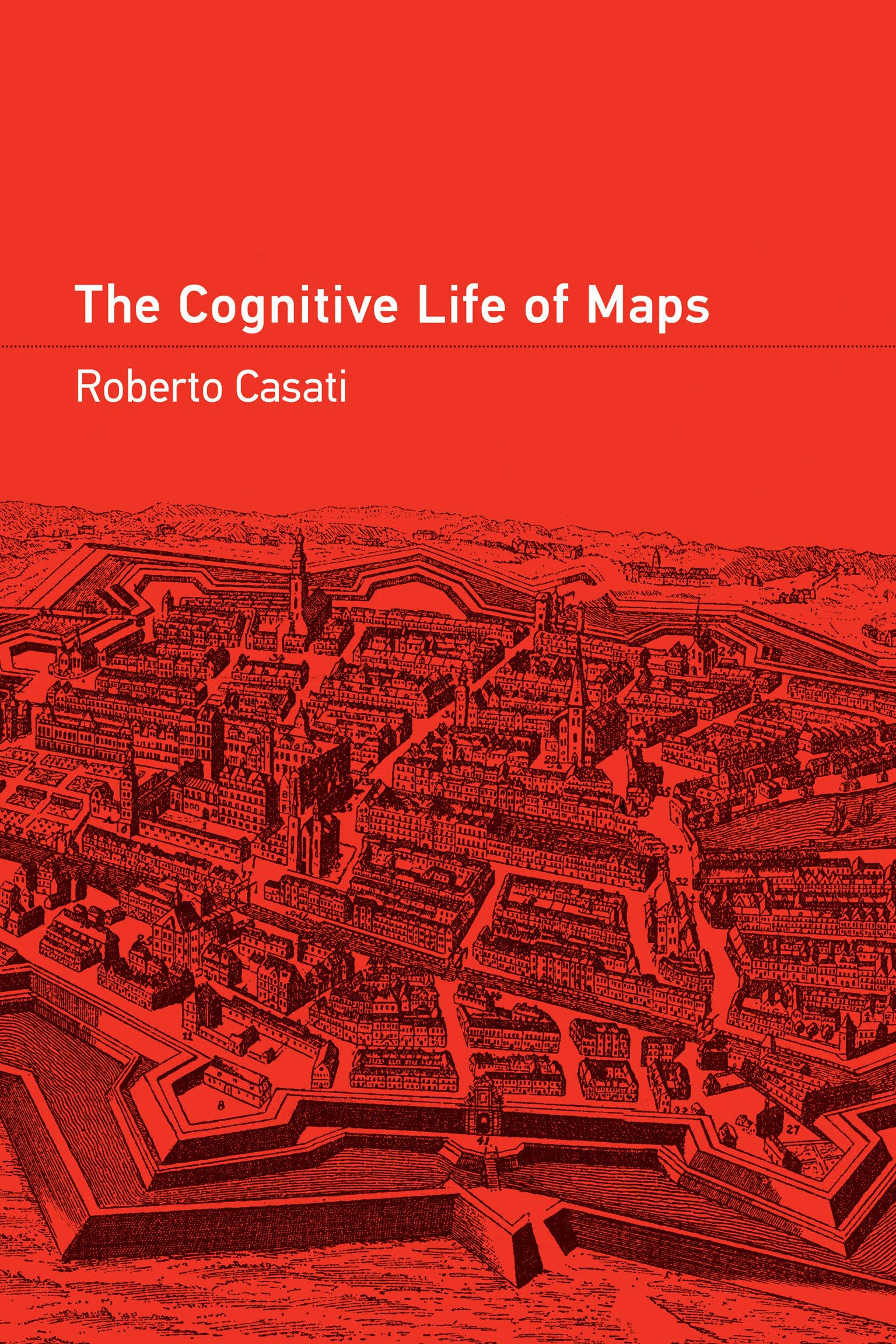
The mapness of mapshow maps live in interaction with their users, and what this tells us about what they are and how they work.In a sense, maps are temporarily alive for those who design, draw, and use them. They have, for the moment, a cognitive life. To grapple with what this meansto ask how maps can be alive, and what kind of life they haveis to explore the core question of what maps are. And this is what Roberto Casati does in The Cognitive Life of Maps, in the process assembling the conceptual tools for understanding why maps have the power they have, why they are so widely used, and how we use (and misuse) them.Drawing on insights from cognitive science and philosophy of mind, Casati considers the main claims around what maps are and how they worktheir specific syntax, peculiar semantics, and pragmatics. He proposes a series of steps that can lead to a precise theory of maps, one that reveals what maps have in common with diagrams, pictures, and texts, and what makes them different. This minimal theory of maps helps us to see maps nested in many cognitive artifactsclock faces, musical notation, writing, calendars, and numerical series, for instance. It also allows us to tackle the issue of the territorialization of mapsto show how maps can be used to draw specific spatial inferences about territories. From the mechanics of maps used for navigation to the differences and similarities between maps and pictures and models, Casati's ambitious work is a cognitive map in its own right, charting the way to a new understanding of what maps mean.
⚠️ WARNING (California Proposition 65):
This product may contain chemicals known to the State of California to cause cancer,
birth defects, or other reproductive harm.
For MAP (Minimum Advertised Price) violations and Intellectual Property (IP) or Trademark concerns, please contact:
support@ergodebooks.com
⚠️ California Proposition 65 Warning: Some products sold on this website may expose you to chemicals known to the State of California to cause cancer, birth defects, or other reproductive harm. For more information, visit www.P65Warnings.ca.gov.