If you have any questions, you are always welcome to contact us. We'll get back to you as soon as possible, withing 24 hours on weekdays.
Customer service
All questions about your order, return and delivery must be sent to our customer service team by e-mail at yourstore@yourdomain.com
Sale & Press
If you are interested in selling our products, need more information about our brand or wish to make a collaboration, please contact us at press@yourdomain.com
Help
If you have any questions, you are always welcome to contact us. We'll get back to you as soon as possible, withing 24 hours on weekdays.
Customer service
All questions about your order, return and delivery must be sent to our customer service team by e-mail at yourstore@yourdomain.com
Sale & Press
If you are interested in selling our products, need more information about our brand or wish to make a collaboration, please contact us at press@yourdomain.com
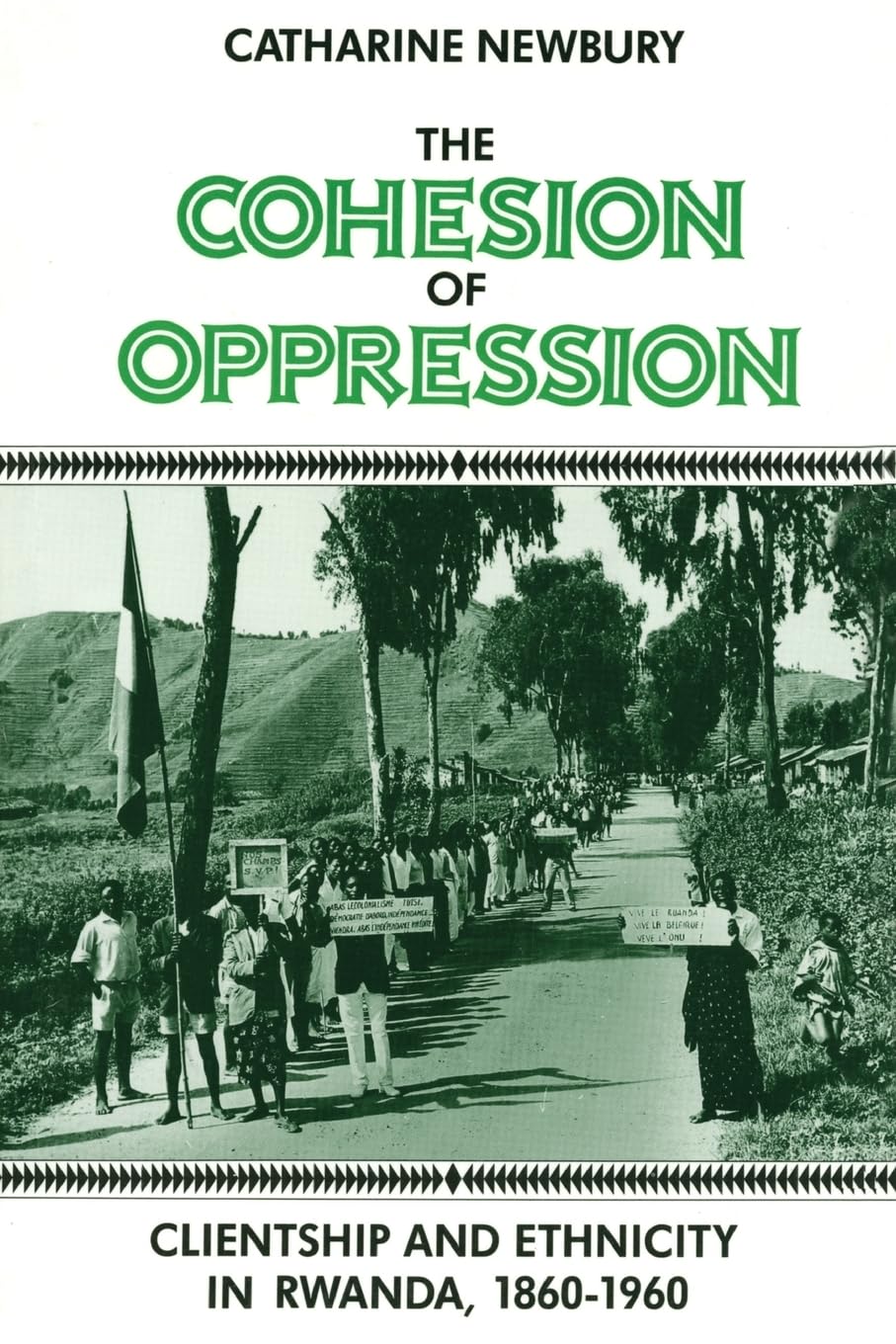
Revolutions are often seen in terms of a spontaneous burst of intense political activity; less attention usually is given to the structures, processes, and perceptions that make such activity possible. This innovative book examines such longterm transformations as they relate to the revolution in the Central African nation of Rwanda, which culminated in its independence in July 1962.While much of the previous work on Rwanda has focused on the royal court and central state institutions, The Cohesion of Oppression instead focuses on politics outside the central heartland. Adopting a 'view from below,' it explores the interaction of central and local power bases and delineates the transformations introduced into the system by German and Belgian colonial policies that consciously sought to bolster one ethnic group as agents of colonial administration.In the three years before independence, violent conflict in Rwanda resulted in the abolition of the monarchy, the expulsion of the ruling Tuutsi ethnic group from power, and the installation of rival Hutu authorities to take control of a presidential regime with an elected Assembly. While basic Rwandan cultural norms persisted during and after the revolution, significant alterations had taken place in the locus of political power and social categories that had access to high office. This book considers both the internal and the nonRwandan influences that substantially affected these alterations but concentrates on the former, since such an approach has in general been more neglected.
⚠️ WARNING (California Proposition 65):
This product may contain chemicals known to the State of California to cause cancer,
birth defects, or other reproductive harm.
For MAP (Minimum Advertised Price) violations and Intellectual Property (IP) or Trademark concerns, please contact:
support@ergodebooks.com
⚠️ California Proposition 65 Warning: Some products sold on this website may expose you to chemicals known to the State of California to cause cancer, birth defects, or other reproductive harm. For more information, visit www.P65Warnings.ca.gov.