
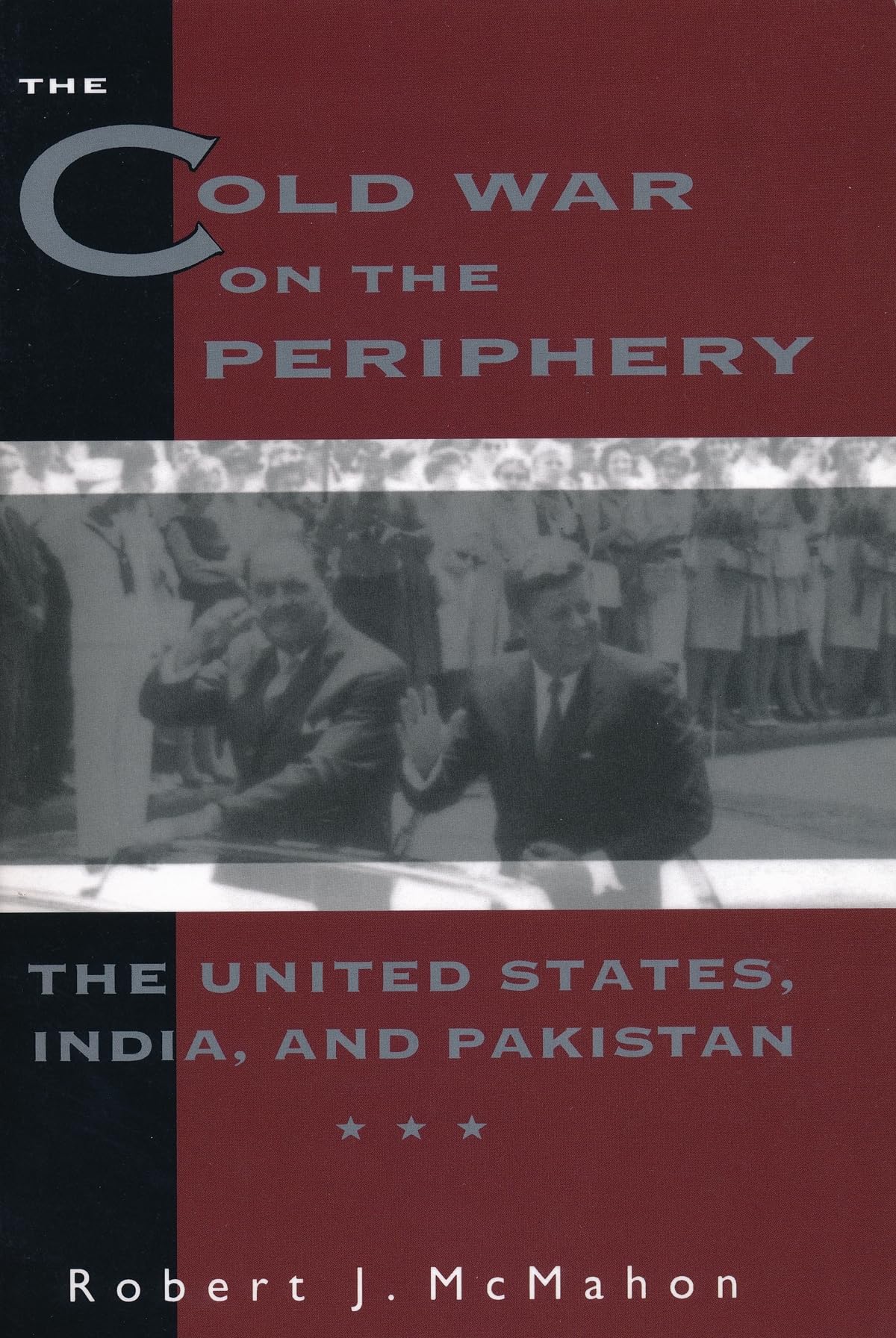
Title
The Cold War On The Periphery
Sold by Ergodebooks, an authorized reseller.
Returns accepted within 30 days | support@ergodebooks.com
Shipping Information
- Free Standard Shipping — United States only
- Processing Time: 3–5 business days
- Estimated Delivery: 6–10 business days after dispatch
- Double-boxed, fully insured & discreetly packaged
- Tracking number sent via email once dispatched
Returns & Refund
Returns accepted within 30 days of delivery.
Damaged or Defective Item
Free return shipping + replacement or full refund
Wrong Item Received
Free return shipping + replacement or full refund
Change of Mind
Return shipping at customer's expense · 25% restocking fee applies
Payment Option

Focusing On The Two Tumultuous Decades Framed By Indian Independence In 1947 And The Indopakistani War Of 1965, The Cold War On The Periphery Explores The Evolution Of American Policy Toward The Subcontinent. Mcmahon Analyzes The Motivations Behind America'S Pursuit Of Pakistan And India As Strategic Cold War Prizes. He Also Examines The Profound Consequencesfor U.S. Regional And Global Foreign Policy And For South Asian Stabilityof America'S Complex Political, Military, And Economic Commitments On The Subcontinent.Mcmahon Argues That The Pakistaniamerican Alliance, Consummated In 1954, Was A Monumental Strategic Blunder. Secured Primarily To Bolster The Defense Perimeter In The Middle East, The Alliance Increased Indopakistani Hostility, Undermined Regional Stability, And Led India To Seek Closer Ties With The Soviet Union. Through His Examination Of The Volatile Region Across Four Presidencies, Mcmahon Reveals The American Strategic Vision To Have Been Surprinsgly Ill Defined, Inconsistent, And Even Contradictory Because Of Its Exaggerated Anxiety About The Soviet Threat And America'S Failure To Incorporate The Interests And Concerns Of Developing Nations Into Foreign Policy.The Cold War On The Periphery Addresses Fundamental Questions About The Global Reach Of Postwar American Foreign Policy. Why, Mcmahon Asks, Did Areas Possessing Few Of The Essential Prerequisites Of Economicmilitary Power Become Objects Of Intense Concern For The United States? How Did The National Security Interests Of The United States Become So Expansive That They Extended Far Beyond The Industrial Core Nations Of Western Europe And East Asia To Embrace Nations On The Third World Periphery? And What Combination Of Economic, Political, And Ideological Variables Best Explain The Motives That Led The United States To Seek Friends And Allies In Virtually Every Corner Of The Planet?Mcmahon'S Lucid Analysis Of Indopakistaniamericna Relations Powerfully Reveals How U.S. Policy Was Driven, As He Puts It, By A Series Of Amorphousand Largely Illusorymilitary, Strategic, And Psychological Fears About American Vulnerability That Not Only Wasted American Resources But Also Plunged South Asia Into The Vortex Of The Cold War.
⚠️ WARNING (California Proposition 65):
This product may contain chemicals known to the State of California to cause cancer, birth defects, or other reproductive harm.
For more information, please visit www.P65Warnings.ca.gov.
- Q: How many pages does the book have? A: The book has four hundred thirty-one pages. It provides a detailed exploration of American policy towards South Asia during the Cold War.
- Q: What is the binding type of this book? A: The book is a paperback. This makes it lightweight and easy to handle for reading.
- Q: What are the dimensions of the book? A: The book measures six inches in length, one point two six inches in width, and nine point zero two inches in height. These dimensions make it a portable read.
- Q: Who is the author of 'The Cold War on the Periphery'? A: The author is Robert McMahon. He provides an in-depth analysis of U.S. policy in South Asia.
- Q: What topics does this book cover? A: The book covers American foreign policy, Indo-Pakistani relations, and the implications of U.S. alliances during the Cold War. It offers insights into strategic decisions made during that era.
- Q: Is this book suitable for academic study? A: Yes, the book is suitable for academic study. It presents a thorough examination of historical events and policies that shaped U.S. involvement in South Asia.
- Q: What themes are explored in this book? A: The themes include strategic alliances, regional stability, and the motivations behind U.S. foreign policy decisions. McMahon analyzes the complexities of these interactions.
- Q: Can this book be used for a research project? A: Yes, it can be used for a research project. The book provides valuable insights and analyses that are relevant to studies on international relations and history.
- Q: How should I care for this paperback book? A: To care for the paperback book, keep it in a dry place and avoid exposure to direct sunlight. This will help maintain its condition over time.
- Q: Is this book considered a primary source? A: No, this book is not a primary source. It is a secondary source, analyzing historical events based on primary documents and previous research.
- Q: What if I receive a damaged copy? A: If you receive a damaged copy, you should contact the retailer for a return or exchange. Most retailers have policies in place for such situations.
- Q: Are there any specific storage recommendations for this book? A: Store the book upright on a shelf to prevent warping. Avoid stacking heavy items on top of it to maintain its shape.
- Q: Is there a warranty for this book? A: No, there is typically no warranty for books. However, check the retailer's return policy for any issues upon delivery.
- Q: What if I have questions about the content of the book? A: If you have questions about the content, consider reaching out to academic forums or book clubs specializing in history or international relations.
- Q: Is this book appropriate for young readers? A: The book is primarily aimed at adults and students. It contains complex themes that may not be suitable for younger readers without guidance.