
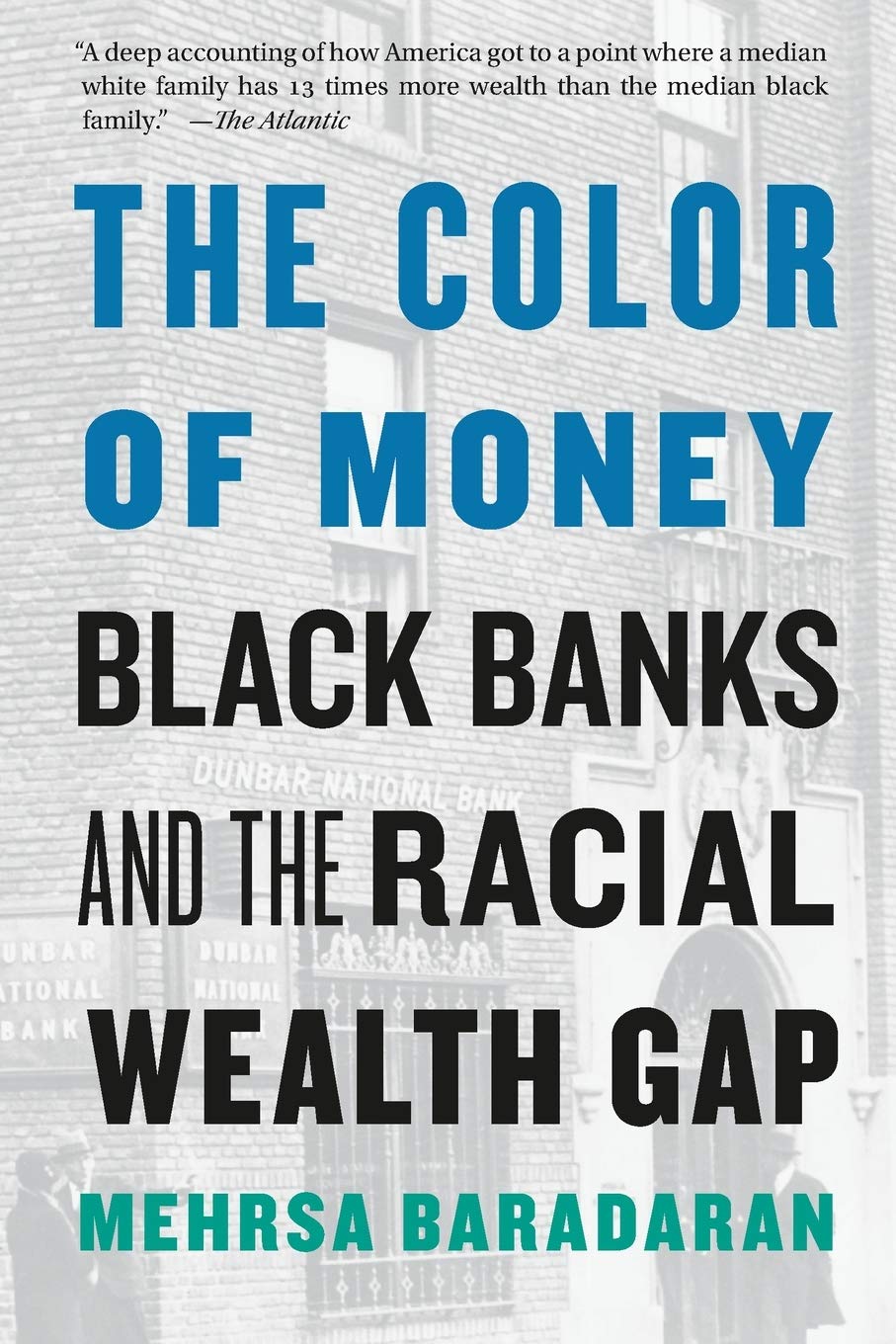
Title
The Color Of Money: Black Banks And The Racial Wealth Gap,Used
Sold by Ergodebooks, an authorized reseller.
Returns accepted within 30 days | support@ergodebooks.com
Shipping Information
- Free Standard Shipping — United States only
- Processing Time: 1–3 business days
- Estimated Delivery: 3–5 business days after dispatch
- Double-boxed, fully insured & discreetly packaged
- Tracking number sent via email once dispatched
- Orders over $250 require signature upon delivery. Taxes calculated at checkout.
Returns & Refund
Returns accepted within 30 days of delivery.
Damaged or Defective Item
Free return shipping + replacement or full refund
Wrong Item Received
Free return shipping + replacement or full refund
Change of Mind
Return shipping at customer's expense · 25% restocking fee applies
Payment Option

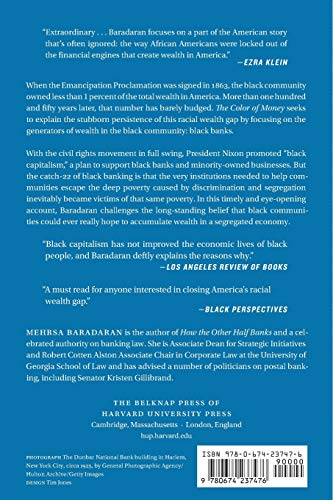
Read This Book. It Explains So Much About The Momentbeautiful, Heartbreaking Work.Tanehisi Coatesa Deep Accounting Of How America Got To A Point Where A Median White Family Has 13 Times More Wealth Than The Median Black Family.The Atlanticextraordinarybaradaran Focuses On A Part Of The American Story Thats Often Ignored: The Way African Americans Were Locked Out Of The Financial Engines That Create Wealth In America.Ezra Kleinwhen The Emancipation Proclamation Was Signed In 1863, The Black Community Owned Less Than 1 Percent Of The Total Wealth In America. More Than 150 Years Later, That Number Has Barely Budged. The Color Of Money Seeks To Explain The Stubborn Persistence Of This Racial Wealth Gap By Focusing On The Generators Of Wealth In The Black Community: Black Banks.With The Civil Rights Movement In Full Swing, President Nixon Promoted Black Capitalism, A Plan To Support Black Banks And Minorityowned Businesses. But The Catch22 Of Black Banking Is That The Very Institutions Needed To Help Communities Escape The Deep Poverty Caused By Discrimination And Segregation Inevitably Became Victims Of That Same Poverty. In This Timely And Eyeopening Account, Baradaran Challenges The Longstanding Belief That Black Communities Could Ever Really Hope To Accumulate Wealth In A Segregated Economy.Black Capitalism Has Not Improved The Economic Lives Of Black People, And Baradaran Deftly Explains The Reasons Why.Los Angeles Review Of Booksa Must Read For Anyone Interested In Closing Americas Racial Wealth Gap.Black Perspectives
⚠️ WARNING (California Proposition 65):
This product may contain chemicals known to the State of California to cause cancer, birth defects, or other reproductive harm.
For more information, please visit www.P65Warnings.ca.gov.
- Q: How many pages are in 'The Color of Money'? A: There are three hundred eighty-four pages in 'The Color of Money'. This comprehensive book delves into racial wealth disparities in America.
- Q: What is the size of the book? A: The book measures five point five one inches in length, one inch in width, and eight point two seven inches in height. Its dimensions make it easy to handle and read.
- Q: What type of binding does this book have? A: The binding of this book is paperback. This makes it lightweight and portable for readers.
- Q: Who is the author of 'The Color of Money'? A: The author is Mehrsa Baradaran. She provides a critical analysis of wealth inequality in her work.
- Q: What genre does this book belong to? A: This book is categorized as Economic History. It explores the intersection of race and finance in America.
- Q: Is this book suitable for young readers? A: No, this book is not specifically aimed at young readers. It discusses complex themes of wealth and race that may require adult comprehension.
- Q: How can I best utilize the insights from this book? A: You can utilize the insights by applying its historical context to current discussions on racial wealth gaps. Reflecting on its lessons can enhance your understanding of economic disparities.
- Q: Is this book a good resource for studying economic disparities? A: Yes, this book is an excellent resource for studying economic disparities. It provides a thorough examination of historical and systemic issues.
- Q: Can this book help with understanding financial systems? A: Yes, it can help you understand financial systems, especially regarding racial inequities. Baradaran explores the role of black banks in wealth creation.
- Q: What should I do to maintain the book's condition? A: To maintain the book's condition, store it in a cool, dry place and avoid exposure to direct sunlight. This helps preserve the binding and pages.
- Q: Does this book have any special care instructions? A: No, there are no special care instructions for this book. Standard care includes keeping it away from moisture and dust.
- Q: What if the book arrives damaged? A: If the book arrives damaged, you should contact the seller for a return or replacement. Most sellers have policies to address such issues.
- Q: Is there a warranty for this book? A: No, books typically do not come with a warranty. However, return policies may apply depending on the retailer.
- Q: How does this book compare to other economic history books? A: This book is unique in its focus on racial wealth gaps compared to other economic history titles. It specifically addresses issues related to black banks.
- Q: Is this book suitable for academic research? A: Yes, this book is suitable for academic research. It provides well-researched insights and references on economic history and racial issues.
- Q: What should I do if I have questions about the content? A: If you have questions about the content, consider joining a reading group or reaching out to an academic specializing in economic history for discussion.