
Title
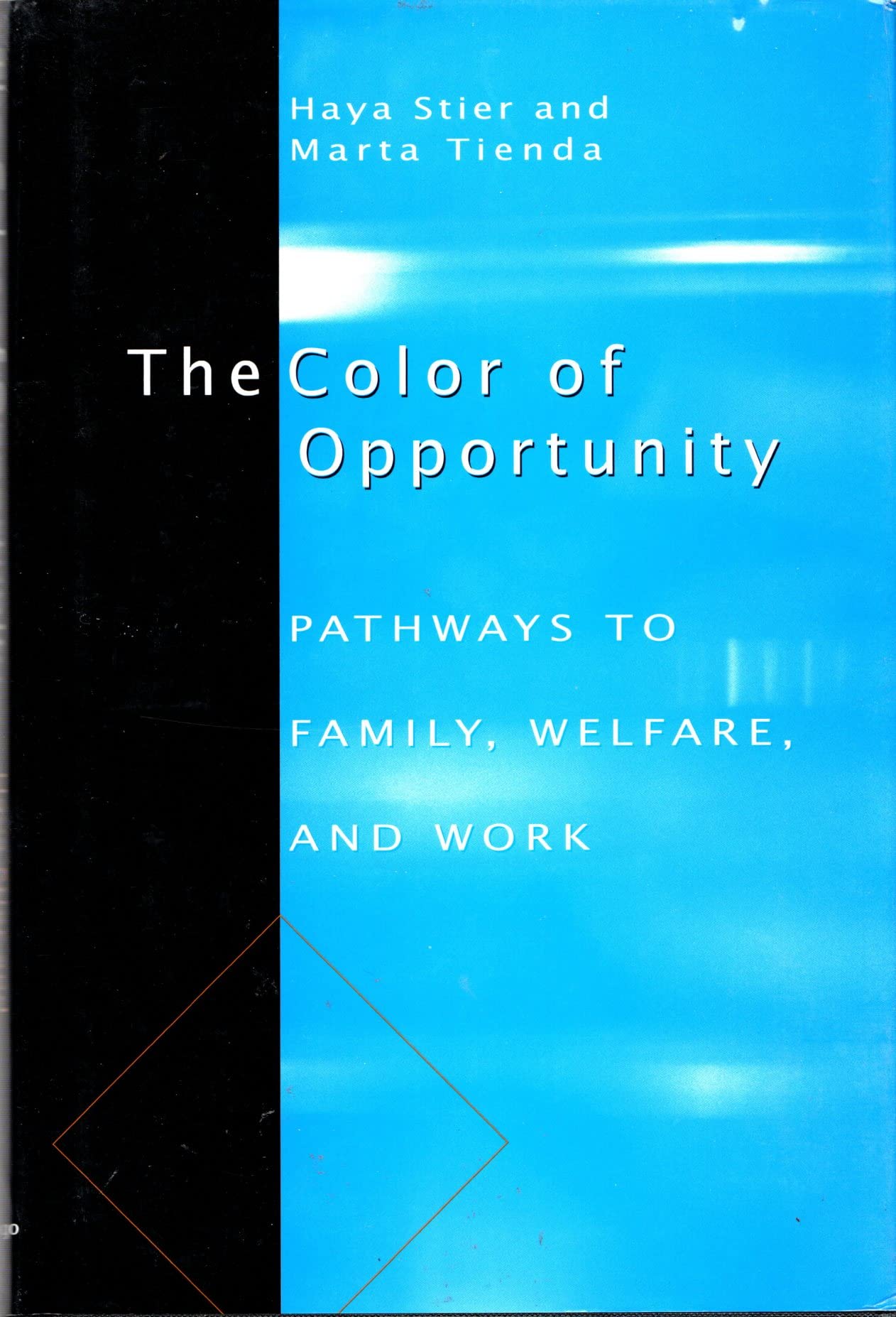
The Color of Opportunity: Pathways to Family, Welfare, and Work,Used
Sold by Ergodebooks, an authorized reseller.
Returns accepted within 30 days | support@ergodebooks.com
Shipping Information
- Free Standard Shipping — United States only
- Processing Time: 3–5 business days
- Estimated Delivery: 6–10 business days after dispatch
- Double-boxed, fully insured & discreetly packaged
- Tracking number sent via email once dispatched
Returns & Refund
Returns accepted within 30 days of delivery.
Damaged or Defective Item
Free return shipping + replacement or full refund
Wrong Item Received
Free return shipping + replacement or full refund
Change of Mind
Return shipping at customer's expense · 25% restocking fee applies
Payment Option

In The Color of Opportunity, Haya Stier and Marta Tienda ask: How do race and ethnicity limit opportunity in postcivil rights Chicago? In the 1960s, Chicago was a focal point of civil rights activities. But in the 1980s it served as the laboratory for ideas about the emergence and social consequences of concentrated urban poverty; many experts such as William J. Wilson downplayed the significance of race as a cause of concentrated poverty, emphasizing instead structural causes that called for change in employment policy. But in this new study, Stier and Tienda ask about the pervasive poverty, unemployment, and reliance on welfare among blacks and Hispanics in Chicago, wondering if and how the inner city poor differ from the poor in general.The culmination of a sixyear collaboration analyzing the Urban Poverty and Family Life Survey of Chicago, The Color of Opportunity is the first major work to compare Chicago's inner city minorities with national populations of like race and ethnicity from a life course perspective. The authors find that blacks, whites, Mexicans, and Puerto Ricans living in poor neighborhoods differ in their experiences with early material deprivation and the lifetime disadvantages that accumulatebut they do not differ much from the urban poor in their family formation, welfare participation, or labor force attachment. Stier and Tienda find little evidence for ghettospecific behavior, but they document the myriad ways color still restricts economic opportunity.The Color of Opportunity stands as a muchneeded corrective to increasingly negative views of poor people of color, especially the poor who live in deprived neighborhoods. It makes a key and lasting contribution to ongoing debates about the origins and nature of urban poverty.
⚠️ WARNING (California Proposition 65):
This product may contain chemicals known to the State of California to cause cancer, birth defects, or other reproductive harm.
For more information, please visit www.P65Warnings.ca.gov.