
Title
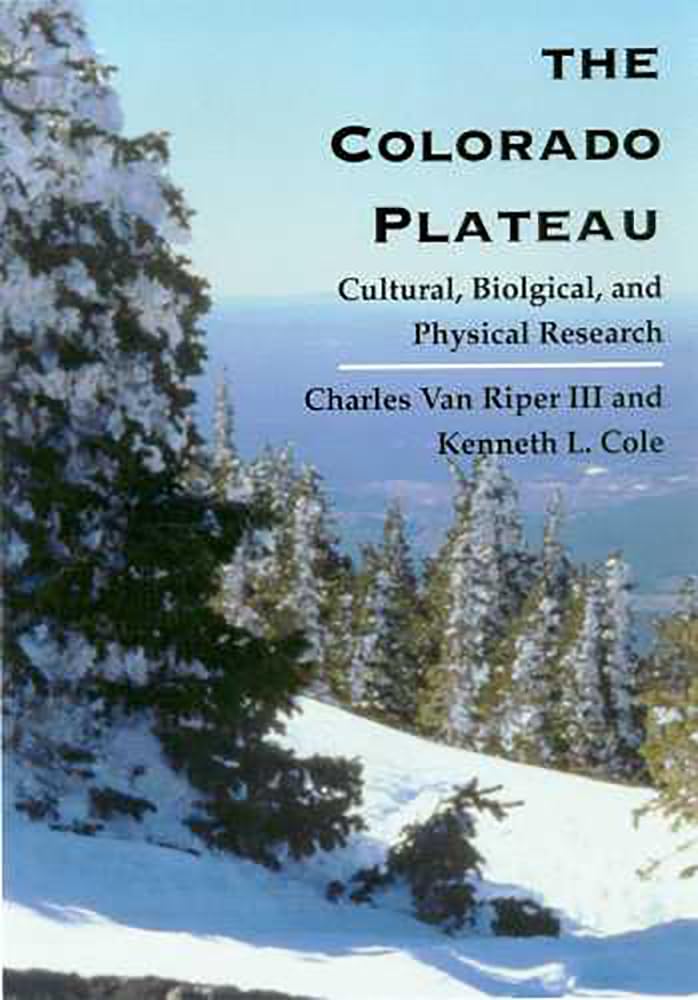
The Colorado Plateau: Cultural, Biological, And Physical Research,Used
Sold by Ergodebooks, an authorized reseller.
Returns accepted within 30 days | support@ergodebooks.com
Shipping Information
- Free Standard Shipping — United States only
- Processing Time: 3–5 business days
- Estimated Delivery: 6–10 business days after dispatch
- Double-boxed, fully insured & discreetly packaged
- Tracking number sent via email once dispatched
Returns & Refund
Returns accepted within 30 days of delivery.
Damaged or Defective Item
Free return shipping + replacement or full refund
Wrong Item Received
Free return shipping + replacement or full refund
Change of Mind
Return shipping at customer's expense · 25% restocking fee applies
Payment Option

Product Description Stretching from the four corners of Arizona, New Mexico, Colorado, and Utah, the Colorado Plateau is a natural laboratory for a wide range of studies. This volume presents 23 original articles drawn from more than 100 research projects presented at the Sixth Biennial Conference of Research on the Colorado Plateau. This scientific gathering revolved around research, inventory, and monitoring of lands in the region. The book's contents cover management techniques for cultural, biological, and physical resources, representing collaborative efforts among federal, university, and private sector scientists and land managers. Chapters on cultural concerns cover benchmarks of modern southwestern anthropological knowledge, models of past human activity and impact of modern visitation at newly established national monuments, challenges in implementing the 1964 Wilderness Act, and opportunities for increased federal research on Native American lands. The section on biological resources comprises sixteen chapters, with coverage that ranges from mammalian biogeography to responses of elk at the urbanwildland interface. Additional biological studies include the effects of fire and grazing on vegetation; research on bald eagles at Grand Canyon and tracking wild turkeys using radio collars; and management of palentological resources. Two final chapters on physical resources consider a proposed rerouting of the Rio de Flag River in urban Flagstaff, Arizona, and an examination of past climate patterns over the Plateau, using stream flow records and tree ring data. In light of similarities in habitat and climate across the Colorado Plateau, techniques useful to particular management units have been found to be applicable in many locations. This volume highlights an abundance of research that will prove useful for all of those working in the region, as well as for others seeking comparative studies that integrate research into land management actions. From the Inside Flap Stretching from the four corners of Arizona, New Mexico, Colorado, and Utah, the Colorado Plateau is a natural laboratory for a wide range of studies. This volume presents 23 original articles drawn from more than 100 research projects presented at the Sixth Biennial Conference of Research on the Colorado Plateau. This scientific gathering revolved around research, inventory, and monitoring of lands in the region. The book's contents cover management techniques for cultural, biological, and physical resources, representing collaborative efforts among federal, university, and private sector scientists and land managers. Chapters on cultural concerns cover benchmarks of modern southwestern anthropological knowledge, models of past human activity and impact of modern visitation at newly established national monuments, challenges in implementing the 1964 Wilderness Act, and opportunities for increased federal research on Native American lands. The section on biological resources comprises sixteen chapters, with coverage that ranges from mammalian biogeography to responses of elk at the urbanwildland interface. Additional biological studies include the effects of fire and grazing on vegetation; research on bald eagles at Grand Canyon and tracking wild turkeys using radio collars; and management of palentological resources. Two final chapters on physical resources consider a proposed rerouting of the Rio de Flag River in urban Flagstaff, Arizona, and an examination of past climate patterns over the Plateau, using stream flow records and tree ring data. In light of similarities in habitat and climate across the Colorado Plateau, techniques useful to particular management units have been found to be applicable in many locations. This volume highlights an abundance of research that will prove useful for all of those working in the region, as well as for others seeking comparative studies that integrate research into land management actions. From
⚠️ WARNING (California Proposition 65):
This product may contain chemicals known to the State of California to cause cancer, birth defects, or other reproductive harm.
For more information, please visit www.P65Warnings.ca.gov.