
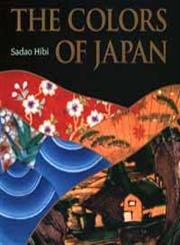
Title
The Colors Of Japan: Background, Characteristics And Creation,Used
Sold by Ergodebooks, an authorized reseller.
Returns accepted within 30 days | support@ergodebooks.com
Shipping Information
- Free Standard Shipping — United States only
- Processing Time: 3–5 business days
- Estimated Delivery: 6–10 business days after dispatch
- Double-boxed, fully insured & discreetly packaged
- Tracking number sent via email once dispatched
Returns & Refund
Returns accepted within 30 days of delivery.
Damaged or Defective Item
Free return shipping + replacement or full refund
Wrong Item Received
Free return shipping + replacement or full refund
Change of Mind
Return shipping at customer's expense · 25% restocking fee applies
Payment Option

The Colors Of Japan Is A Visually Stunning Look Into The Unique Use Of Color In Japanese Culture From Prehistoric Times To The Present Day. That The Japanese Should Possess Their Own Sense Of Color Is Not Surprising, For Like Almost Every Other Aspect Of Human Life, Color Perception Varies From Culture To Culture.The First And Most Fundamental Reason For This Variation Can Be Attributed To Geography. People Living In Arid Lands Will Obviously Perceive Green In A Different Way From People Surrounded By Lush Forests, As Is The Case In Japan. Geography Will Also Dictate The Materials That Can Be Used To Create The Pigments And Dyes To Color Objects.Once Geography Has Set The Stage, Other Factors Come Into Play, Such As The Direction In Which A Particular Culture Evolves. For Instance, Certain Colors May Be Restricted To Certain Classes, As Happened In The Classical Period Of Japanese History.A Third Factor Is External Cultural Influence, In Which The Color Perceptions Of One Culture Are Adopted By Another As Part Of The Ebb And Flow Of History. In The Case Of Japan, The First Sources Of Such Influence Were Korea And China.The Colors Of Japan Presents A Crystalline Overview Of These Three Factors By Means Of Discerning Writing And Stunning Photographs. The Text Covers The Four Basic Colors, The Relationship Of Japanese Color Perception To Natural Phenomena, The Development Of Hierarchies Of Colors, The Aesthetic Of Mixed Colors, And The Particular Culture Of Color Developed By Townspeople In The Seventeenth Through The Nineteenth Centuries.The Photographs Range Over A Variety Of Objects, From The Refined To The Plebeian. There Are Lacquerware, Various Kimonos, Combs, Surcoats, Picture Scrolls, Ceramics, Sword Mountings, Shrine Gates, Paintings, Woodblock Prints, Tea Houses, A Castle, Paper Stencils, Fans, Sculpture, Umbrellas, Screens, And Human Figures. Each Is Not Only An Illustration Of A Particular Color As Used In Japanese Culture, But Also A Beautiful Object In Its Own Right. Nature, An Allimportant Player In The Nurturing Of Color Perception, Is Not Forgotten. The Book Includes Lovely Photographs Of Autumn Foliage, A Horseradish Field, A Pebbly Stream In A Temple Garden, A Tea House Pathway, Rows Of Tea Bushes, And, Last But Not Least, A Tiny Green Frog.As An Approach To A Different Way Of Viewing Color, As An Introduction To The Arts And Crafts Of Japan, Or As A Satisfying Reading Experience, The Colors Of Japan Is A Book That Anyone Who Possesses A Aesthetic Outlook On Life Will Not Want To Miss.The Book Includes Fullcolor Photos Of The Following:Torii Gates At Fushimi Inari Shrine, Negoro Trays, Negoro Sake Keg, Lacquered Wood Combs, Textile Designs And Motifs, Jimbaori (Surcoat Worn Over Armor), Furisode Kimono, Nachi Fire Festival, Autumn Foliage At Muroji Temple, Ban Dainagon Picture Scrolls, Various Forms Of Imari Ware, Sword Mountings, Suit Of Armor, Noren Curtains, Katabira Kimono, Paintings, Kyoto Hills, Various Forms Of Nabeshima Ware, Aizuri And Other Ukiyoe, Haniwa Funeral Sculpture, Jomon Vase, Teascoop And Case, Joan Tea House, Fireman'S Hanten, Paper Stencils, Carving On Gate Of Toshogu Shrine, Horseradish Field, Pebble Stream At Shinnyoin Temple, Fushinan Tea House, Ukiyoe By Katsukawa Shunsho, Ukiyoe By Utagawa Kunisada Using Berorin, Iga Vase, Sanda Tiered Celadon Boxes, Oribe Mukozuke (Side Dishes), A Green Frog (Aogaeru), Japanese Zelkova Bonsai, Pair Of Sixfold Screens, Green Tea Plantations, Tea In A Black Bowl, Fans, Jizo Statue At Meigetsuin Temple, Ikat Kimono, Uchikake Kimono, Konkomyo Saishoo Sutra, Choken Noh Costume, Silk Wrapping Cloth, Murasakie Ukiyoe By Chobunsai Eishi, Sacred Rope At Oyamazumi Shrine, Annual Rites At Hibara Shrine, Snakeeye (Janome) Umbrella, Dance Fans, Kabuki Actor Bando Tamasaburo, Screen (Pine Trees) By Hasegawa Tohaku, Mino Tea Bowl, Raku Tea Bowl ('Ayame'), Himeji Castle, Fifthcentury Gold Seal, Sobatsugi Noh Robe With Shokko Motif, Kari
⚠️ WARNING (California Proposition 65):
This product may contain chemicals known to the State of California to cause cancer, birth defects, or other reproductive harm.
For more information, please visit www.P65Warnings.ca.gov.
- Q: How many pages does 'The Colors of Japan' have? A: This book has one hundred four pages. It provides a detailed exploration of color in Japanese culture.
- Q: What are the dimensions of 'The Colors of Japan'? A: The book measures nine point seven inches in length, one inch in width, and nine point five inches in height. These dimensions make it a standard-sized hardcover book.
- Q: What type of binding does 'The Colors of Japan' have? A: It features a hardcover binding. This ensures durability and makes it suitable for display on bookshelves.
- Q: Who is the author of 'The Colors of Japan'? A: The author of the book is Sadao Hibi. He provides insight into the aesthetic and cultural significance of color in Japan.
- Q: What is the main theme of 'The Colors of Japan'? A: The main theme is the unique use of color in Japanese culture from prehistoric times to the present. It explores various historical and cultural factors influencing color perception.
- Q: Is this book suitable for children? A: Yes, the book is suitable for children, particularly those interested in art and culture. It presents information in an engaging and visually appealing manner.
- Q: How can I use 'The Colors of Japan' for educational purposes? A: You can use this book to teach students about cultural differences in color perception. It can also serve as a resource for art projects and discussions on aesthetics.
- Q: Is 'The Colors of Japan' appropriate for art enthusiasts? A: Yes, it is highly appropriate for art enthusiasts. The book combines stunning visuals with insightful commentary on color in Japanese art and design.
- Q: What is the best way to care for this book? A: To care for 'The Colors of Japan,' keep it in a cool, dry place away from direct sunlight. Avoid bending the spine and handle it with clean hands.
- Q: Can I find this book in libraries? A: Yes, many libraries carry 'The Colors of Japan.' You can check your local library's catalog to see if it is available.
- Q: What should I do if my copy of 'The Colors of Japan' arrives damaged? A: If your copy arrives damaged, contact the seller for a return or exchange. Most sellers have policies in place for damaged items.
- Q: Is there a warranty for 'The Colors of Japan'? A: Typically, there is no warranty for books. However, check with the seller regarding their specific return policies for issues with the book.
- Q: Who is the publisher of 'The Colors of Japan'? A: The book is published by Kodansha USA. They are known for producing high-quality publications on Japanese culture.
- Q: Does 'The Colors of Japan' include any illustrations? A: Yes, it includes numerous full-color photographs and illustrations that enhance the text and provide visual context to the themes discussed.
- Q: What type of photography is featured in 'The Colors of Japan'? A: The book features a variety of photography, including traditional Japanese art, natural landscapes, and cultural artifacts, showcasing the spectrum of colors in Japan.