
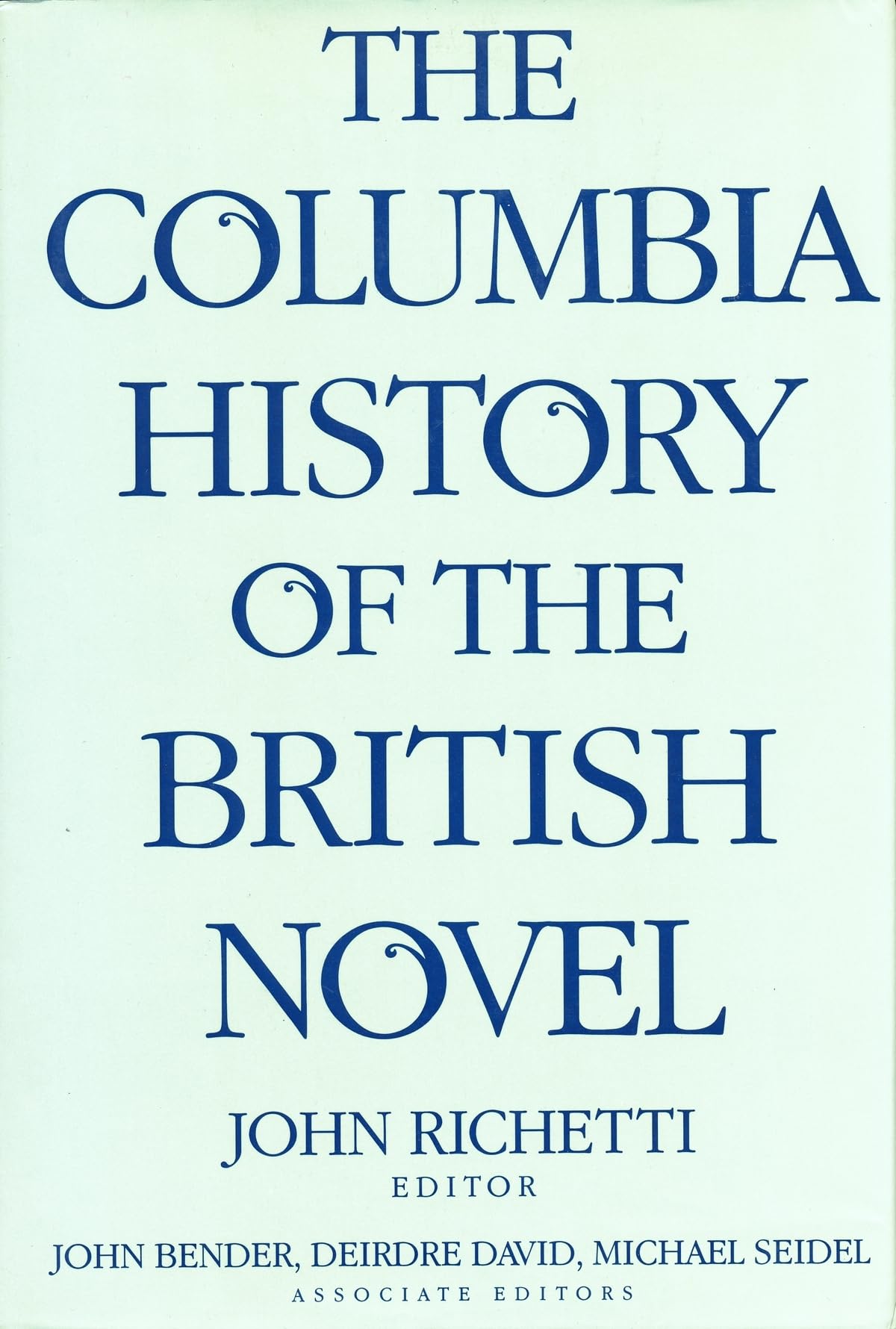
Title
The Columbia History of the British Novel,New
Sold by Ergodebooks, an authorized reseller.
Returns accepted within 30 days | support@ergodebooks.com
Shipping Information
- Free Standard Shipping — United States only
- Processing Time: 3–5 business days
- Estimated Delivery: 6–10 business days after dispatch
- Double-boxed, fully insured & discreetly packaged
- Tracking number sent via email once dispatched
Returns & Refund
Returns accepted within 30 days of delivery.
Damaged or Defective Item
Free return shipping + replacement or full refund
Wrong Item Received
Free return shipping + replacement or full refund
Change of Mind
Return shipping at customer's expense · 25% restocking fee applies
Payment Option

What do Pamela, Shamela, and Evelina have in common? Who is Coningsby? Where is The Moonstone? When does one need A Room of One's Own? Why is it that Oranges Are Not the Only Fruit? And just how good is the British novel? These are just a few of the questions answered in The Columbia History of the British Novel. John Richetti's comprehensive history takes us from the birth of the novel in the eighteenth century through its social and cultureconscious growing pains in the nineteenth century to its angstridden maturity in the twentieth century. Concise, cohesive, and complementary to any collection of mustread classics, The Columbia History of the British Novel challenges and enlightens us by examining canonical writers as well as women and postcolonial novelists. Discover the origins of the novel in the 'scandalous' books of Aphra Behn, Eliza Haywood, and Delarivier Manley and follow its development through Samuel Richardson, Henry Fielding, and Laurence Sterne against the backdrop of the novel's meteoric rise in the 1700s. Follow Frances Burney and the rise of the woman novelist, and the gothic novel as invented by Horace Walpole and perfected by Mary Shelley and Matthew Lewis. Remember remarkable reunions in Jane Austen; the bond between chivalry, Waverley, and Sir Walter Scott; the Brontes, Amelia Opie, Maria Edgeworth, and the tradition of Romantic women's fiction; Charles Dickens and the professionalization of literature; George Eliot and the novel of ideas; and Wilkie Collins and the sensation mania of the 1860s. Continue through the nineteenth century with the 'Condition of England' novels of Benjamin Disraeli and Elizabeth Gaskell, Hardy's tales of class and sexualdifference, and AngloIndian perspectives on the empire from Rudyard Kipling and Philip Meadows Taylor. Enter the twentieth century and examine the modern novel with Joseph Conrad, James Joyce, and Virginia Woolf. Then trace the antimodernist movement with Kingsley Amis, C. P. Snow, and A
⚠️ WARNING (California Proposition 65):
This product may contain chemicals known to the State of California to cause cancer, birth defects, or other reproductive harm.
For more information, please visit www.P65Warnings.ca.gov.