
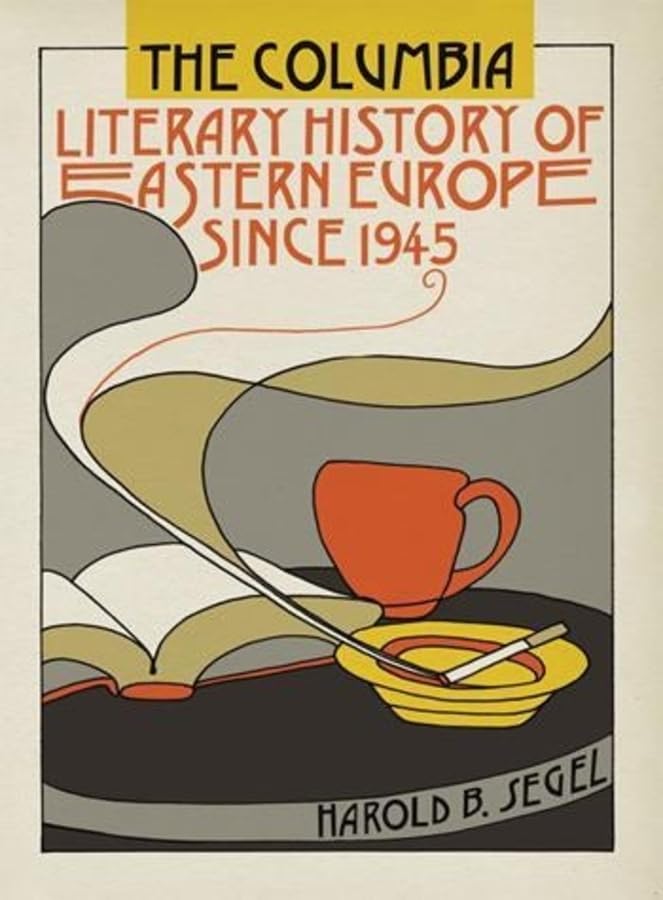
Title
The Columbia Literary History Of Eastern Europe Since 1945
Sold by Ergodebooks, an authorized reseller.
Returns accepted within 30 days | support@ergodebooks.com
Shipping Information
- Free Standard Shipping — United States only
- Processing Time: 3–5 business days
- Estimated Delivery: 6–10 business days after dispatch
- Double-boxed, fully insured & discreetly packaged
- Tracking number sent via email once dispatched
Returns & Refund
Returns accepted within 30 days of delivery.
Damaged or Defective Item
Free return shipping + replacement or full refund
Wrong Item Received
Free return shipping + replacement or full refund
Change of Mind
Return shipping at customer's expense · 25% restocking fee applies
Payment Option

Covering Albania, Bosniaherzegovina, Bulgaria, Croatia, The Czech Republic, East Germany, Hungary, Lithuania, Macedonia, Poland, Romania, Serbia, Slovakia, Slovenia, And Ukraine, Harold B. Segel, A Longtime Scholar Of Slavic Literatures And Of Comparative Literature, Writes A Clear, Concise, And Balanced History Of Eastern European Literature. Segel Not Only Examines The Literary Response To The Quasicolonial Oppression That Stretched Across Eastern Europe Between 1945 And 1991 But Also Details The Impact Of The Downfall Of Communism And The Way In Which The Challenges Of The Postcommunist Period Are Being Met.Segel'S History Follows A Unique Chronologicaltopical Approach That Begins With The Treatment Of World War Ii In Eastern European Fiction And Follows With Such Topics As The Postwar Imposition Of Sovietstyle Literary Controls, Primarily In The Form Of Socialist Realism; Literary Responses To The Brutal Campaign Of Collectivization After 1945; The Impact Of The Death Of Stalin And Expectations Of Change; Exile And Creativity; Strategies Of Literary Evasion And Subterfuge; Writing Born From The Experience Of Prison And Labor Camps; And The Rise Of Solidarity In Poland. He Also Handles Varieties Of Postmodernism Throughout The Region; Poetry By Women And The Continued Struggle For Freedom Of Expression; The Resonance Of The Yugoslav Wars Of The 1990S On Imaginative Literature; Eastern European Writers And Their Relationship To America; And The Major Postcommunist Trends Of New Urbanism, Nostalgia, Emigration, And Minority Concerns.
⚠️ WARNING (California Proposition 65):
This product may contain chemicals known to the State of California to cause cancer, birth defects, or other reproductive harm.
For more information, please visit www.P65Warnings.ca.gov.
- Q: What is the binding type of the book? A: The binding type is hardcover. This sturdy format is ideal for preserving the book's quality over time.
- Q: How many pages does the book have? A: The book contains four hundred twenty-four pages. This length provides a comprehensive overview of Eastern European literature.
- Q: What are the dimensions of the book? A: The dimensions are seven point one three inches in length, one point one four inches in width, and ten point two four inches in height. These measurements make it a manageable size for reading.
- Q: Who is the author of this book? A: The author is Harold B. Segel. He is a recognized scholar in Slavic literatures and comparative literature.
- Q: What topics does the book cover? A: The book covers topics such as Eastern European literature's response to oppression, postcommunist challenges, and literary forms. It provides a broad understanding of the region's literary evolution.
- Q: What is the target audience for this book? A: The book is suitable for readers interested in Eastern European literature and history. It appeals to both scholars and general readers alike.
- Q: How should I handle the book to keep it in good condition? A: Handle the book with clean hands and store it upright on a shelf. Avoid exposing it to moisture or direct sunlight to preserve its condition.
- Q: Is the book suitable for young readers? A: The book is not specifically targeted at young readers. It deals with complex themes that may be more suitable for older teens and adults.
- Q: Can this book be used as a reference for academic work? A: Yes, this book can be used as a reference for academic work. It provides detailed historical context and literary analysis relevant to Eastern European studies.
- Q: Is there a warranty for this book? A: Books typically do not come with a warranty. However, check the seller's return policy for any issues upon delivery.
- Q: What if the book arrives damaged? A: If the book arrives damaged, contact the seller immediately. Most sellers offer a return or exchange policy for damaged items.
- Q: Are there any specific care instructions for the book? A: Keep the book away from extreme temperatures and humidity. Regularly dust it to maintain its appearance.
- Q: How do I store the book properly? A: Store the book upright on a shelf, away from direct sunlight. Use bookends if necessary to prevent it from toppling.
- Q: What themes are explored in the book? A: Themes include literary responses to oppression, postwar literary movements, and the impact of communism. The book provides a thorough exploration of these significant topics.
- Q: Is this book a good choice for someone new to Eastern European literature? A: Yes, the book is a good introductory resource. It offers a clear and concise overview of the region's literary history.
- Q: Does the book include illustrations or photographs? A: The book does not specifically mention illustrations or photographs. It primarily focuses on text and analysis.