
Title
The Common Law in Colonial America: Volume IV: Law and the Constitution on the Eve of Independence, 17351776,Used
Sold by Ergodebooks, an authorized reseller.
Returns accepted within 30 days | support@ergodebooks.com
Shipping Information
- Free Standard Shipping — United States only
- Processing Time: 3–5 business days
- Estimated Delivery: 6–10 business days after dispatch
- Double-boxed, fully insured & discreetly packaged
- Tracking number sent via email once dispatched
Returns & Refund
Returns accepted within 30 days of delivery.
Damaged or Defective Item
Free return shipping + replacement or full refund
Wrong Item Received
Free return shipping + replacement or full refund
Change of Mind
Return shipping at customer's expense · 25% restocking fee applies
Payment Option

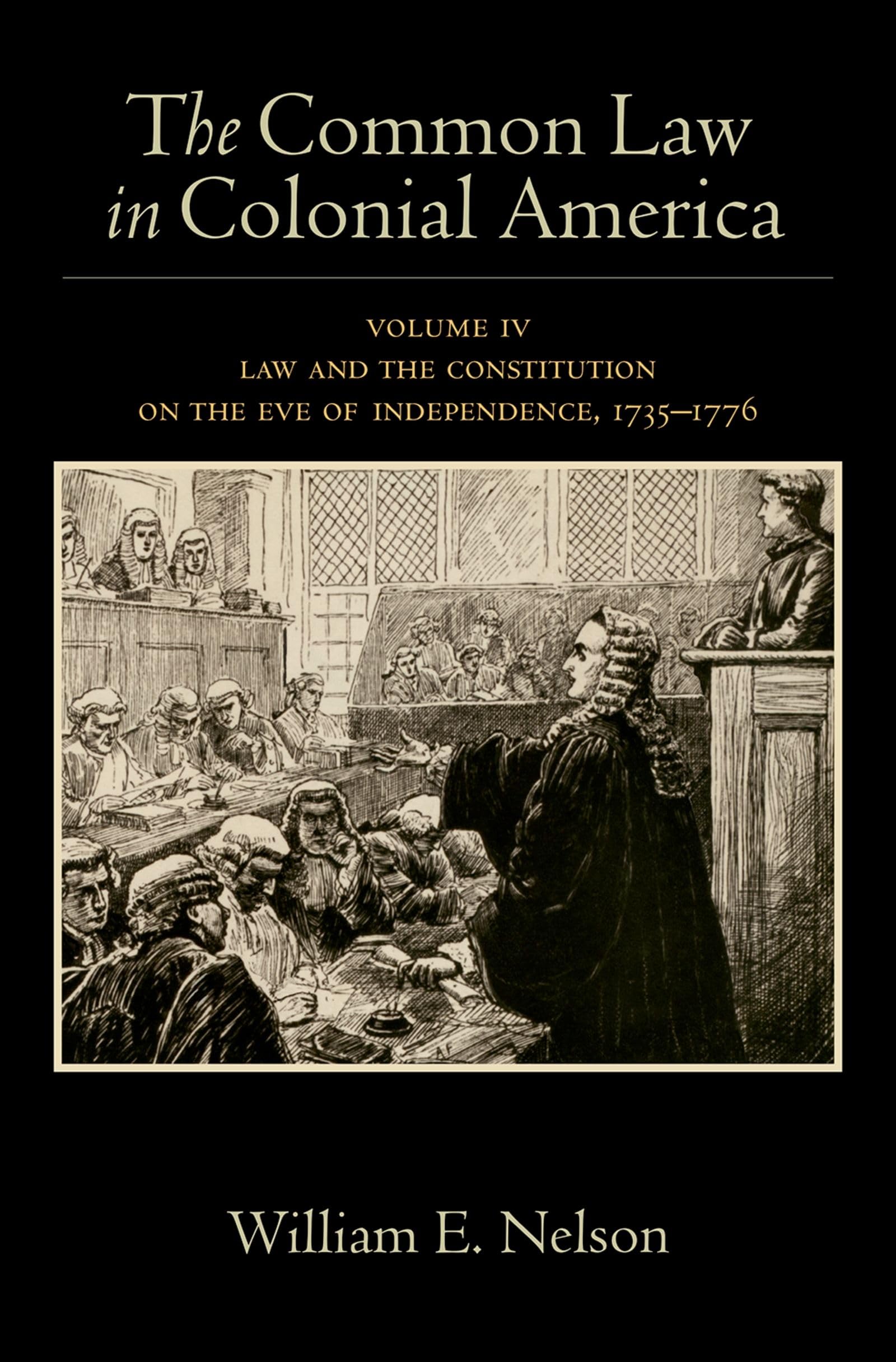
The eminent legal historian William E. Nelson's magisterial fourvolume The Common Law in Colonial America traces how the many legal orders of Britain's thirteen North American colonies gradually evolved into one American system. Initially established on divergent political, economic, and religious grounds, the various colonial systems slowly converged until it became possible by the 1770s to imagine that all thirteen participated in a common American legal order, which diverged in its details but differed far more substantially from English common law.This fourth and final volume begins where volume three ended. It focuses on the laws of the thirteen colonies in the mideighteenth century and on constitutional events leading up to the American Revolution. Nelson first examines procedural and substantive law and looks at important shifts in the law to show how the mideighteenth century colonial legal system in large part functioned effectively in the interests both of Great Britain and of its thirteen colonies.Nelson then turns to constitutional events leading to the Revolution. Here he shows how lawyers deployed ideological arguments not for their own sake, but in order to protect colonial institutional structures and the socioeconomic interests of their clients. As lawyers deployed the arguments, they developed them into a constitutional theory that gave primacy to commonlaw constitutional rights and local selfgovernment. In the process, the lawyers became leaders of the revolutionary movement and a dominant political force in the new United States.
⚠️ WARNING (California Proposition 65):
This product may contain chemicals known to the State of California to cause cancer, birth defects, or other reproductive harm.
For more information, please visit www.P65Warnings.ca.gov.