
Title
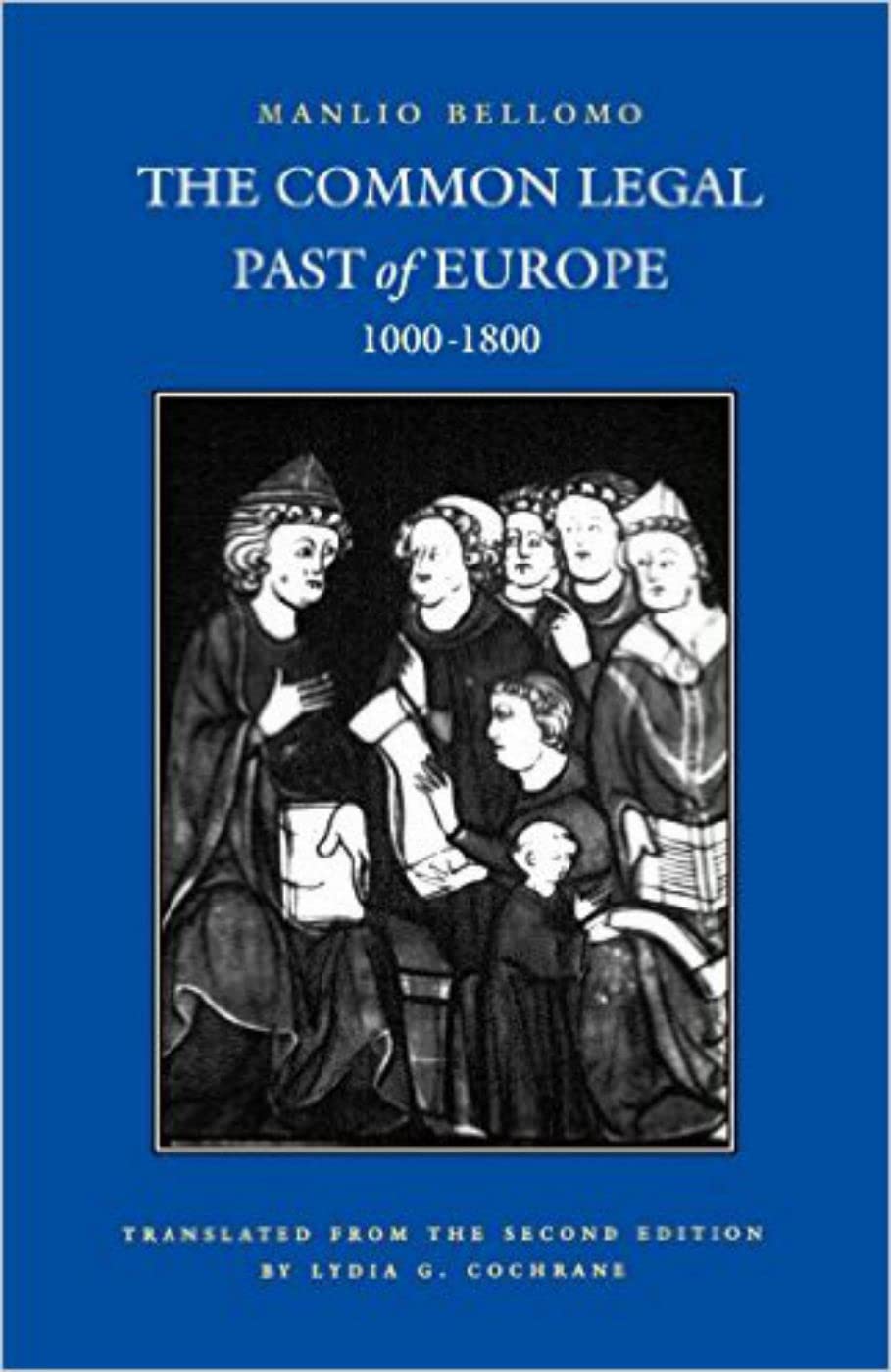
The Common Legal Past Of Europe, 10001800 (Studies In Medieval And Early Modern Canon Law),New
Sold by Ergodebooks, an authorized reseller.
Returns accepted within 30 days | support@ergodebooks.com
Shipping Information
- Free Standard Shipping — United States only
- Processing Time: 3–5 business days
- Estimated Delivery: 6–10 business days after dispatch
- Double-boxed, fully insured & discreetly packaged
- Tracking number sent via email once dispatched
Returns & Refund
Returns accepted within 30 days of delivery.
Damaged or Defective Item
Free return shipping + replacement or full refund
Wrong Item Received
Free return shipping + replacement or full refund
Change of Mind
Return shipping at customer's expense · 25% restocking fee applies
Payment Option

With a vigor and passion rarely found in a scholarly text, Manlio Bellomo has written a broad history of the western European legal tradition. It is now made available to an Englishspeaking audience in an elegant and lucid translation from the original Italian.From the modern age the author looks back to a time when Europe had a common law that transcended national and legal boundaries. This common law, which Bellomo calls the ius commune, developed in the twelfth century from the fusion of Roman, canon, and feudal law. Existing within the framework of the ius commune were the local laws or iura propriathe myriad laws of everyday life, the laws particular to the various kingdoms, principalities, cities, guilds, and secular and ecclesiastical corporations. Bellomo illustrates how for centuries the ius commune permeated every aspect of the iura propria, marking European law indelibly with its stamp. Because the iura propria emerged from the unifying norms and principles of the ius commune, one cannot properly understand local European systems of law without first understanding the ius commune and its influence on the legal concepts, institutions, procedures, documents, and doctrines of the iura propria.Linking his extensive history to modernday concerns, Bellomo begins by arguing that the codification that occurred in European countries during the eighteenth and nineteenth centuries has introduced ambiguity, rigidity, and uncertainty into legal systems. A new common law for the whole of Europe, he asserts, would provide a much better vehicle for legal change and development in a time when the economic barriers between European nations are crumbling. Having set the stage for a historical treatment of the topic, Bellomo then describes the beginnings of the ius commune in the schools of the twelfth century, discusses the development of Italian, French, and German iura propria, and sketches the great jurists who gave common law its intellectual vigorGratian, Accursius, Odofredus, Cinus, and Bartolus. He concludes with an account of the humanist jurists of the fifteenth, sixteenth, and early seventeenth centuries.Instructors will find this text ideal for use in courses in legal history, political history, and the history of canon law.ABOUT THE AUTHOR:Manlio Bellomo studied under Francesco Calasso at the University of Rome and now teaches legal history at the University of Catania. He is codirector of the International School of Ius Commune in Erice, Sicily, and editor of the journal Rivista internazionale di diritto comune.
⚠️ WARNING (California Proposition 65):
This product may contain chemicals known to the State of California to cause cancer, birth defects, or other reproductive harm.
For more information, please visit www.P65Warnings.ca.gov.