
Title
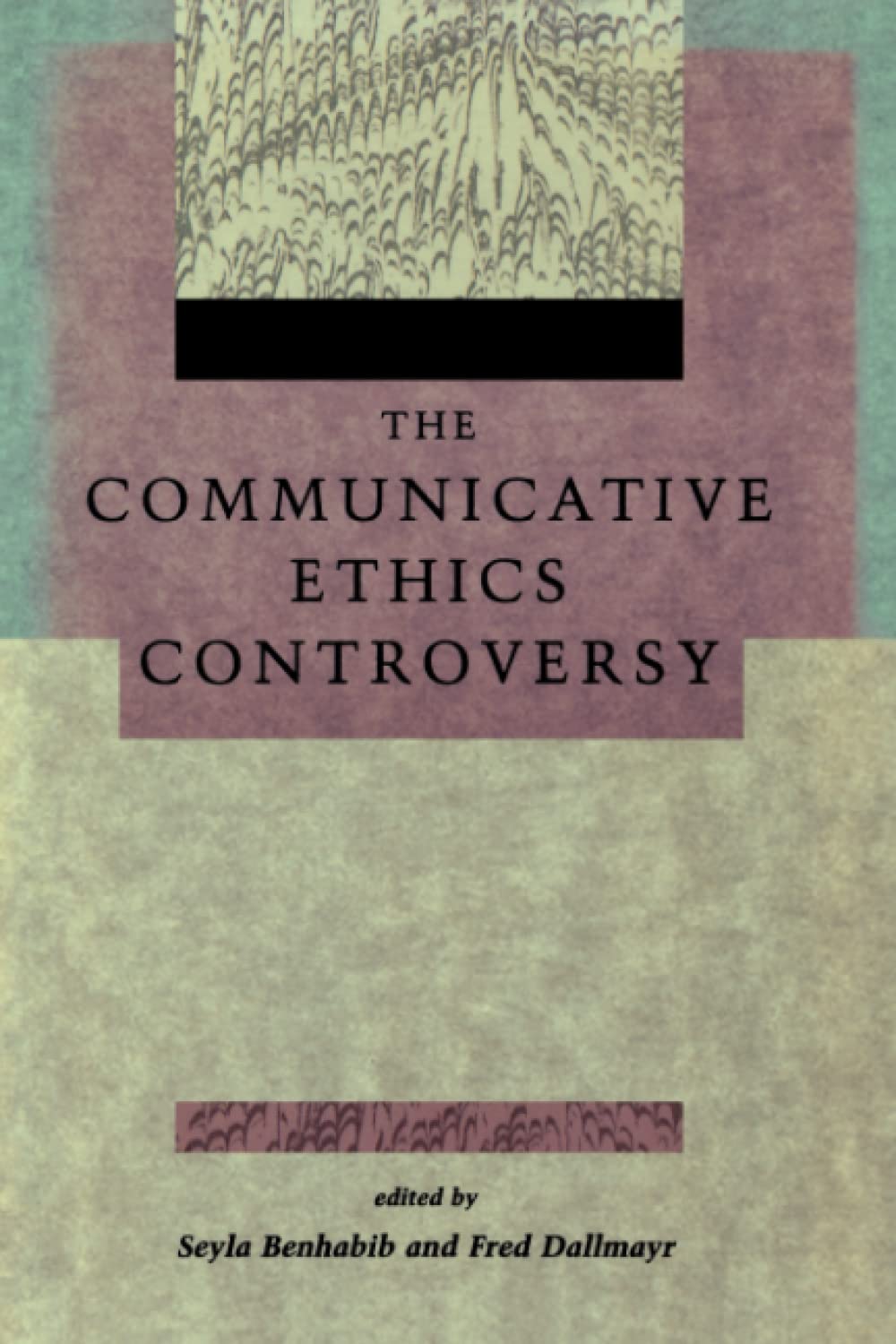
The Communicative Ethics Controversy (Studies in Contemporary German Social Thought),Used
Sold by Ergodebooks, an authorized reseller.
Returns accepted within 30 days | support@ergodebooks.com
Shipping Information
- Free Standard Shipping — United States only
- Processing Time: 3–5 business days
- Estimated Delivery: 6–10 business days after dispatch
- Double-boxed, fully insured & discreetly packaged
- Tracking number sent via email once dispatched
Returns & Refund
Returns accepted within 30 days of delivery.
Damaged or Defective Item
Free return shipping + replacement or full refund
Wrong Item Received
Free return shipping + replacement or full refund
Change of Mind
Return shipping at customer's expense · 25% restocking fee applies
Payment Option

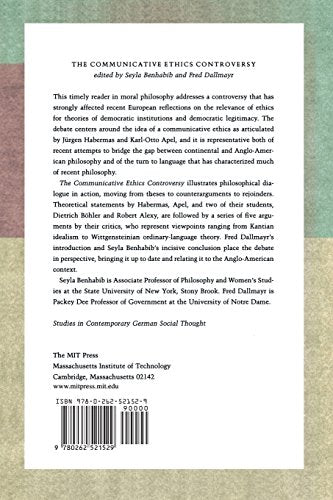
This timely reader in moral philosophy addresses a controversy that strongly affected recent European reflections on the relevance of ethics for theories of democratic institutions and democratic legitimacy. The debate centers around the idea of a communicative ethics as articulated by Jrgen Habermas and KarlOtto Apel, and it is representative both of recent attempts to bridge the gap between Continental and AngloAmerican philosophy and of the turn to language that has characterized much of recent philosophy. The Communicative Ethics Controversy illustrates philosophical dialogue in action, moving from theses to counterarguments to rejoinders. Theoretical statements by Habermas, Apel, and two of their leading students, Dietrich Bhler and Robert Alexy, are followed by a series of five arguments by their leading critics, who represent viewpoints ranging from Kantian idealism to Wittgensteinian ordinarylanguage theory. Fred Dallmayr's introduction and Seyla Benhabib's incisive conclusion place the debate in perspective, bringing it up to date and relating it to the AngloAmerican context.Seyla Benhabib is Associate Professor of Philosophy and Women's Studies at the State University of New York, Stony Brook. Fred Dallmayr is Packey Dee Professor of Government at the University of Notre Dame. Contributors: Robert Alexy. KarlOtto Apel. Seyla Benhabib. Dietrich Bohler. Jurgen Habermas. Otfried Hoffe. KarlHeinz Ilting. Hermann Lubbe. Herbert Schnadelbach. Albrecht Wellmer.
⚠️ WARNING (California Proposition 65):
This product may contain chemicals known to the State of California to cause cancer, birth defects, or other reproductive harm.
For more information, please visit www.P65Warnings.ca.gov.