
Title
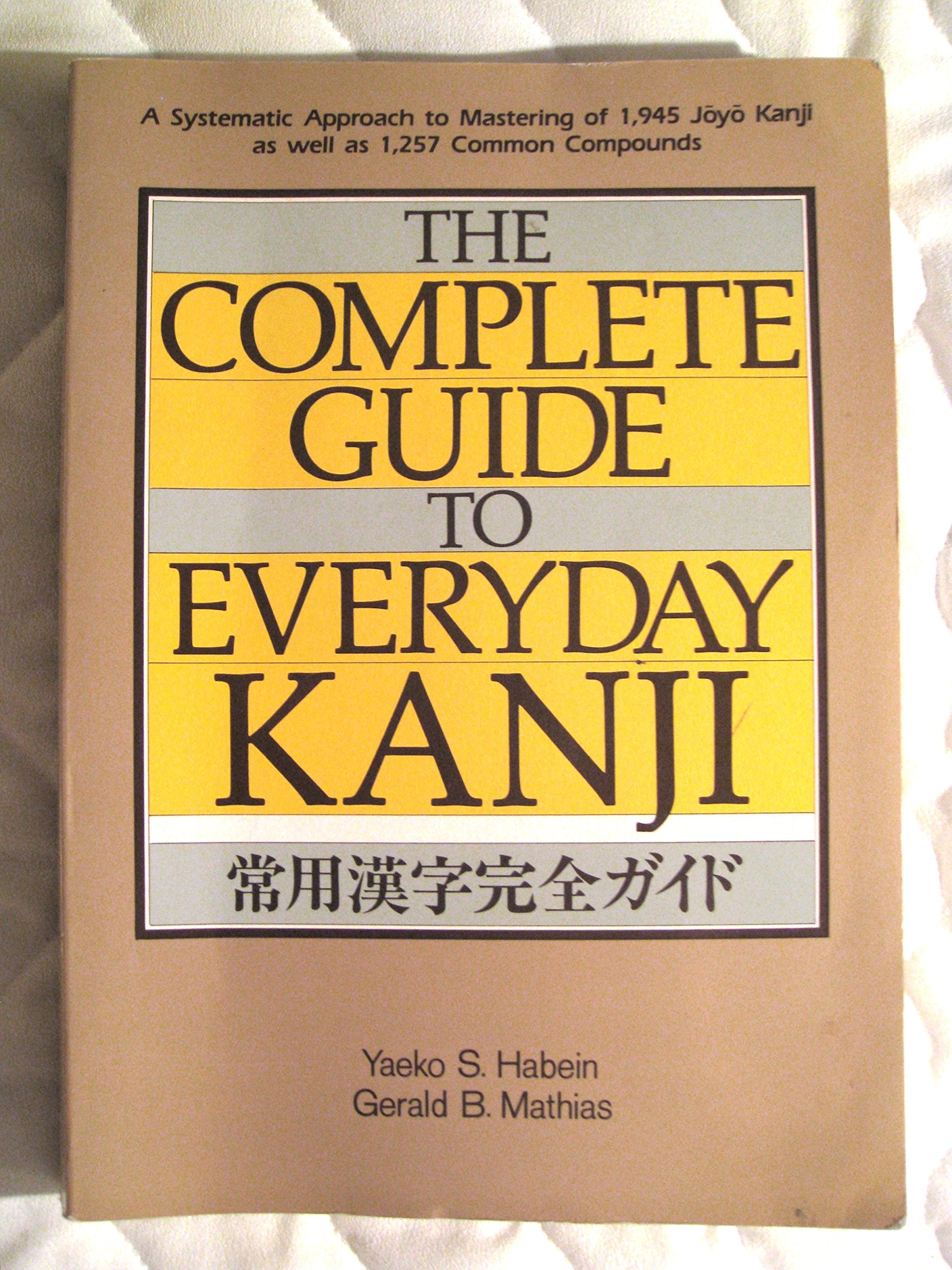
The Complete Guide To Everyday Kanji (English And Japanese Edition),Used
Sold by Ergodebooks, an authorized reseller.
Returns accepted within 30 days | support@ergodebooks.com
Shipping Information
- Free Standard Shipping — United States only
- Processing Time: 3–5 business days
- Estimated Delivery: 6–10 business days after dispatch
- Double-boxed, fully insured & discreetly packaged
- Tracking number sent via email once dispatched
Returns & Refund
Returns accepted within 30 days of delivery.
Damaged or Defective Item
Free return shipping + replacement or full refund
Wrong Item Received
Free return shipping + replacement or full refund
Change of Mind
Return shipping at customer's expense · 25% restocking fee applies
Payment Option

[The Following, From The Introduction To The Book, Gives A Good Summary Of Its Contents.]The Goal Of This Book Is To Make The Kanji Learner'S Task A Little Easier By Clarifying Two Fundamental Relationships: The Formmeaning Relationship Of A Kanji, And Formonyomi Relationships Of Kanji. Toward This End, Special Care Has Been Taken With Regard To The Order Of Presentation. After A Brief Chapter On The Stroke Order Of Kanji, The Complete Set Of 1,945 Joyo Kanji, The 'Common Use' Characters Listed By The Japanese Ministry Of Education In 1981, Will Be Introduced In Three Categories, One Chapter For Each, In The Following Sequence.1. Basicform Kanji. These Are 152 Independent Kanji That, Having Originated In Unitary Pictures Or Signs, Cannot Be Analyzed Into Components. If One Becomes Familiar With These First, Complex Kanji That Include Them Will Be Easier To Learn Later.2. Semantic Compound Kanji. These Are Kanji Made Up Of Some Combination Of Two Or More Basic Forms Or Components That Would Have Been Basic Forms Had They Not Lost Their Status As Independent Kanji (At Least As Far As The J~Y~ Kanji Are Concerned). The 483 Kanji In This Chapter Are Made Of Components That Together Suggest The Meaning Of The Kanji (Although A Few Of Them Also Have Characteristics Of The Third, Phonetic, Category). The Emphasis Of This Chapter Is Thus On The Association Of Meanings With Forms.3. Phonetic Compound Kanji. These Are Kanji That Can Be Analyzed Into A Meaningrepresenting (Or Semantic) Component And A Soundrepresenting (Or Phonetic) Component. Although Most Of The Phonetic Components Have, Or At Least Had, Their Own Semantic Significance As Well, This Chapter Emphasizes The Relationship Between The Phonetic Components And The Onyomi Of The 1,310 Kanji Listed.Within The Chapters On Semantic And Phonetic Compound Kanji, The Characters Are Presented In An Order That Builds Upon Kanji And Components Previously Introduced.Whenever Possible, We List The Surmised Earliest Meanings Of The Kanji. Among The Later Variations On The Meanings, We Concentrate On Those That Are Relevant To Modern Japanese. Occasionally It Is Noted That A Meaning Applies Only To Japanese, Particularly When A Peculiar Usage In Japanese Seems Unrelated To The Chinese History Of The Kanji.
⚠️ WARNING (California Proposition 65):
This product may contain chemicals known to the State of California to cause cancer, birth defects, or other reproductive harm.
For more information, please visit www.P65Warnings.ca.gov.