
Title
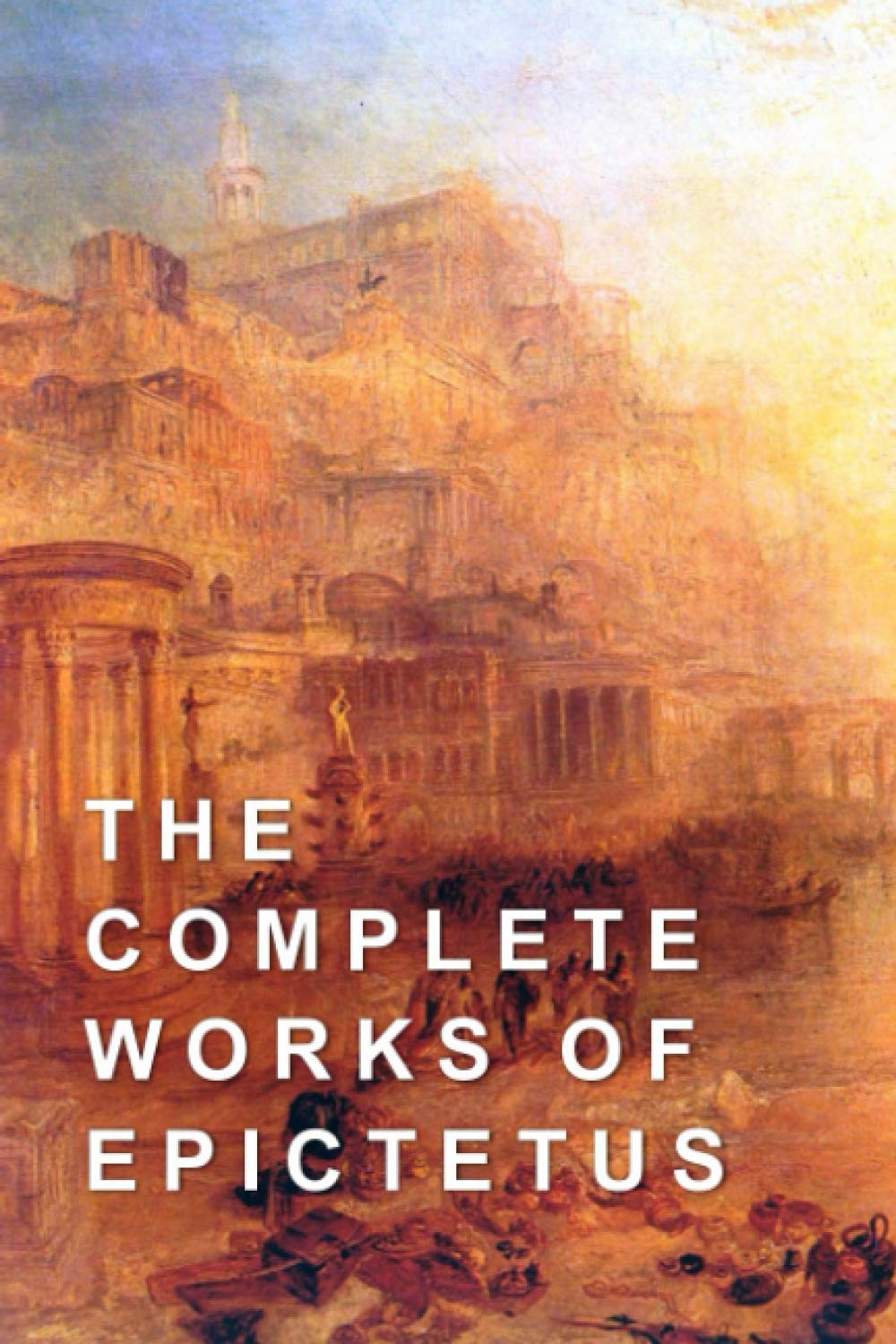
The Complete Works of Epictetus,Used
Sold by Ergodebooks, an authorized reseller.
Returns accepted within 30 days | support@ergodebooks.com
Shipping Information
- Free Standard Shipping — United States only
- Processing Time: 3–5 business days
- Estimated Delivery: 6–10 business days after dispatch
- Double-boxed, fully insured & discreetly packaged
- Tracking number sent via email once dispatched
Returns & Refund
Returns accepted within 30 days of delivery.
Damaged or Defective Item
Free return shipping + replacement or full refund
Wrong Item Received
Free return shipping + replacement or full refund
Change of Mind
Return shipping at customer's expense · 25% restocking fee applies
Payment Option

This collection includes Epictetus Discourses, The Enchiridion, and Fragments scholars have attributed to Epictetus or are in the spirit of Epictetus brand of stoicism. Epictetus (AD 50 135) was a Greek Stoic philosopher. He was born a slave at Hierapolis, Phrygia (present day Pamukkale, Turkey) and lived in Rome until his banishment, when he went to Nicopolis in northwestern Greece for the rest of his life. His teachings were written down and published by his pupil Arrian in his Discourses and Enchiridion.Epictetus taught that philosophy is a way of life and not just a theoretical discipline. To Epictetus, all external events are beyond our control; we should accept calmly and dispassionately whatever happens. However, individuals are responsible for their own actions, which they can examine and control through rigorous selfdiscipline.No writings by Epictetus are truly known. His discourses were transcribed and compiled by his pupil Arrian (author of the Anabasis Alexandri). The main work is The Discourses, four books of which have been preserved (out of the original eight). Arrian also compiled a popular digest, entitled the Enchiridion, or Handbook. In a preface to the Discourses that is addressed to Lucius Gellius, Arrian states that 'whatever I heard him say I used to write down, word for word, as best I could, endeavouring to preserve it as a memorial, for my own future use, of his way of thinking and the frankness of his speech.'Epictetus maintains that the foundation of all philosophy is selfknowledge, that is, the conviction of our ignorance and gullibility ought to be the first subject of our study. Logic provides valid reasoning and certainty in judgment, but it is subordinate to practical needs. The first and most necessary part of philosophy concerns the application of doctrine, for example, that people should not lie. The second concerns reasons, e.g. why people should not lie. While the third, lastly, examines and establishes the reasons. This is the logical part, which finds reasons, shows what is a reason, and that a given reason is a correct one. This last part is necessary, but only on account of the second, which again is rendered necessary by the first.
⚠️ WARNING (California Proposition 65):
This product may contain chemicals known to the State of California to cause cancer, birth defects, or other reproductive harm.
For more information, please visit www.P65Warnings.ca.gov.