If you have any questions, you are always welcome to contact us. We'll get back to you as soon as possible, withing 24 hours on weekdays.
Customer service
All questions about your order, return and delivery must be sent to our customer service team by e-mail at yourstore@yourdomain.com
Sale & Press
If you are interested in selling our products, need more information about our brand or wish to make a collaboration, please contact us at press@yourdomain.com
Help
If you have any questions, you are always welcome to contact us. We'll get back to you as soon as possible, withing 24 hours on weekdays.
Customer service
All questions about your order, return and delivery must be sent to our customer service team by e-mail at yourstore@yourdomain.com
Sale & Press
If you are interested in selling our products, need more information about our brand or wish to make a collaboration, please contact us at press@yourdomain.com
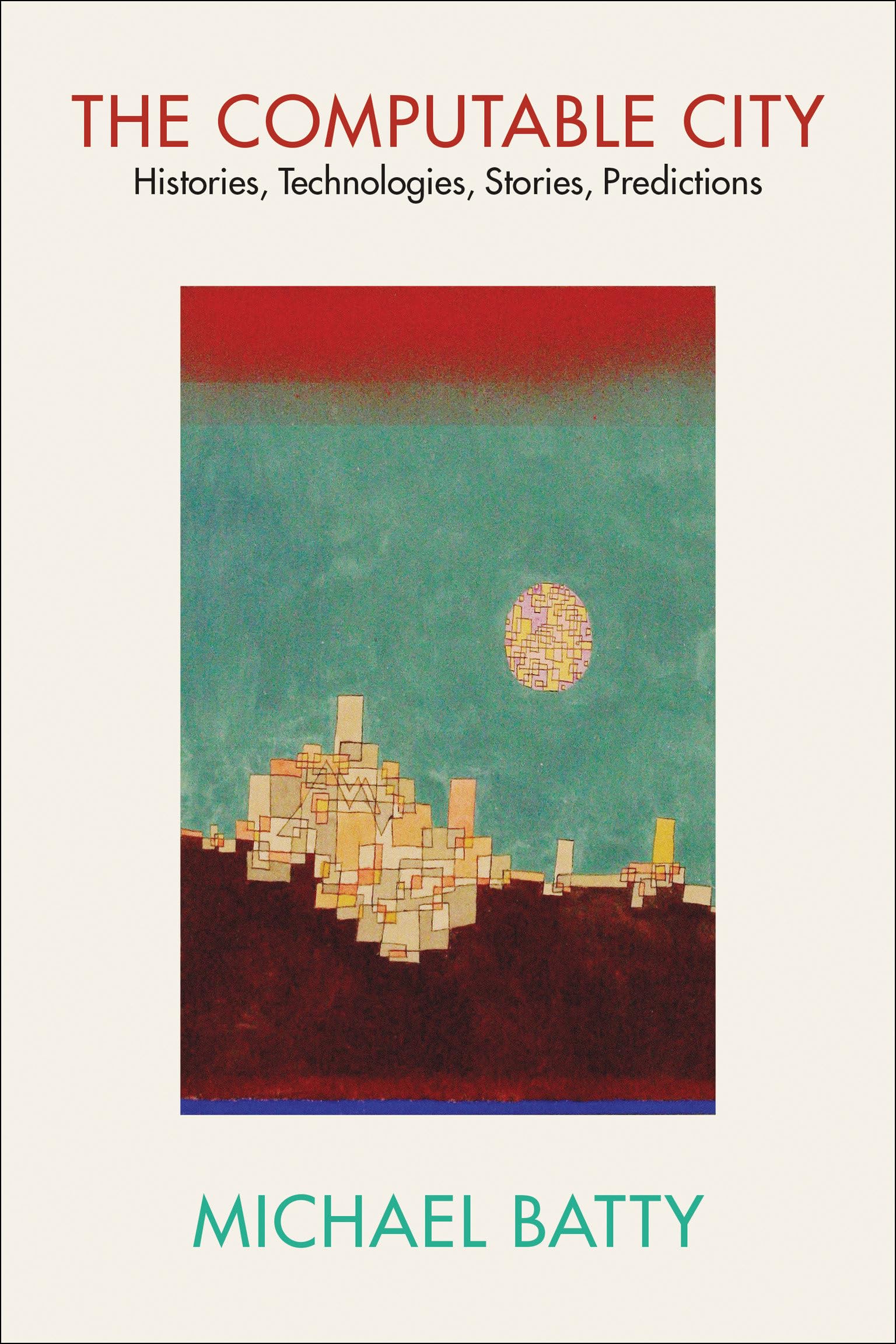
How computers simulate cities and how they are also being embedded in cities, changing our behavior and the way in which cities evolve.At every stage in the history of computers and communications, it is safe to say we have been unable to predict what happens next. When computers first appeared nearly seventyfive years ago, primitive computer models were used to help understand and plan cities, but as computers became faster, smaller, more powerful, and ever more ubiquitous, cities themselves began to embrace them. As a result, the smart city emerged. In The Computable City, Michael Batty investigates the circularity of this peculiar evolution: how computers and communications changed the very nature of our city models, which, in turn, are used to simulate systems composed of those same computers.Batty first charts the origins of computers and examines how our computational urban models have developed and how they have been enriched by computer graphics. He then explores the sequence of digital revolutions and how they are converging, focusing on continual changes in new technologies, as well as the twentyfirstcentury surge in social media, platform economies, and the planning of the smart city. He concludes by revisiting the digital transformation as it continues to confound us, with the understanding that the city, now a highfrequency twentyfourhour version of itself, changes our understanding of what is possible.
⚠️ WARNING (California Proposition 65):
This product may contain chemicals known to the State of California to cause cancer,
birth defects, or other reproductive harm.
For MAP (Minimum Advertised Price) violations and Intellectual Property (IP) or Trademark concerns, please contact:
support@ergodebooks.com
⚠️ California Proposition 65 Warning: Some products sold on this website may expose you to chemicals known to the State of California to cause cancer, birth defects, or other reproductive harm. For more information, visit www.P65Warnings.ca.gov.