
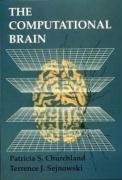
Title
The Computational Brain (Computational Neuroscience),Used
Sold by Ergodebooks, an authorized reseller.
Returns accepted within 30 days | support@ergodebooks.com
Shipping Information
- Free Standard Shipping — United States only
- Processing Time: 3–5 business days
- Estimated Delivery: 6–10 business days after dispatch
- Double-boxed, fully insured & discreetly packaged
- Tracking number sent via email once dispatched
Returns & Refund
Returns accepted within 30 days of delivery.
Damaged or Defective Item
Free return shipping + replacement or full refund
Wrong Item Received
Free return shipping + replacement or full refund
Change of Mind
Return shipping at customer's expense · 25% restocking fee applies
Payment Option

Churchland and Sejnowski address the foundational ideas of the emerging field of computational neuroscience, examine a diverse range of neural network models, and consider future directions of the field.How do groups of neurons interact to enable the organism to see, decide, and move appropriately? What are the principles whereby networks of neurons represent and compute? These are the central questions probed by The Computational Brain. Churchland and Sejnowski address the foundational ideas of the emerging field of computational neuroscience, examine a diverse range of neural network models, and consider future directions of the field. The Computational Brain is the first unified and broadly accessible book to bring together computational concepts and behavioral data within a neurobiological framework.Computer models constrained by neurobiological data can help reveal hownetworks of neurons subserve perception and behaviorbow their physical interactions can yield global results in perception and behavior, and how their physical properties are used to code information and compute solutions. The Computational Brain focuses mainly on three domains: visual perception, learning and memory, and sensorimotor integration. Examples of recent computer models in these domains are discussed in detail, highlighting strengths and weaknesses, and extracting principles applicable to other domains. Churchland and Sejnowski show how both abstract models and neurobiologically realistic models can have useful roles in computational neuroscience, and they predict the coevolution of models and experiments at many levels of organization, from the neuron to the system.The Computational Brain addresses a broad audience: neuroscientists, computer scientists, cognitive scientists, and philosophers. It is written for both the expert and novice. A basic overview of neuroscience and computational theory is provided, followed by a study of some of the most recent and sophisticated modeling work in the context of relevant neurobiological research. Technical terms are clearly explained in the text, and definitions are provided in an extensive glossary. The appendix contains a prcis of neurobiological techniques.The Computational Brain is the first unified and broadly accessible book to bring together computational concepts and behavioral data within a neurobiological framework. Churchland and Sejnowski address the foundational ideas of the emerging field of computational neuroscience, examine a diverse range of neural network models, and consider future directions of the field.A Bradford BookComputational Neuroscience series
⚠️ WARNING (California Proposition 65):
This product may contain chemicals known to the State of California to cause cancer, birth defects, or other reproductive harm.
For more information, please visit www.P65Warnings.ca.gov.
- Q: How many pages does The Computational Brain have? A: The Computational Brain has five hundred sixty pages. This makes it a comprehensive resource for understanding computational neuroscience.
- Q: What is the binding type of The Computational Brain? A: The book is available in paperback binding. This makes it lightweight and easy to handle for reading.
- Q: What are the dimensions of The Computational Brain? A: The dimensions of the book are one point two six inches in thickness, seven point two five inches in width, and ten inches in height. These dimensions make it a standard size for academic texts.
- Q: Who is the author of The Computational Brain? A: The author of The Computational Brain is Patricia Smith Churchland. She is a renowned figure in the field of cognitive science and neuroscience.
- Q: What topics does The Computational Brain cover? A: The book covers topics like visual perception, learning and memory, and sensorimotor integration. This broad approach helps bridge computational models with behavioral data.
- Q: Is The Computational Brain suitable for beginners? A: Yes, it is suitable for both experts and novices. The book provides a basic overview of neuroscience and computational theory, making it accessible to beginners.
- Q: Can I use The Computational Brain for academic research? A: Yes, it is an excellent resource for academic research. It integrates computational concepts with neurobiological frameworks, making it valuable for various scientific fields.
- Q: Is there a glossary in The Computational Brain? A: Yes, the book includes an extensive glossary. This glossary helps clarify technical terms for readers who may be unfamiliar with the subject matter.
- Q: What is the main focus of The Computational Brain? A: The main focus is on the interaction of neural networks and their role in perception and behavior. This is crucial for understanding cognitive processes.
- Q: What type of audience does The Computational Brain target? A: The book targets neuroscientists, computer scientists, cognitive scientists, and philosophers. It is designed to appeal to a broad audience interested in computational neuroscience.
- Q: How should I care for The Computational Brain? A: To care for the book, keep it in a dry place away from direct sunlight. This will help preserve its quality and longevity.
- Q: Can I return The Computational Brain if I don't like it? A: Yes, you can return the book if it does not meet your expectations. Check the return policy for specific details.
- Q: What if The Computational Brain arrives damaged? A: If the book arrives damaged, you should contact customer service for a replacement or refund. It's important to address such issues promptly.
- Q: Is there any mention of neurobiological techniques in the book? A: Yes, there is an appendix that contains a précis of neurobiological techniques. This adds depth to the understanding of the subject matter.
- Q: Does The Computational Brain include recent modeling work? A: Yes, it discusses recent computer models in various domains. This provides insights into the latest developments in computational neuroscience.
- Q: Is The Computational Brain a part of a series? A: Yes, it is part of the Computational Neuroscience series published by MIT Press. This indicates its relevance in ongoing research and scholarship.