
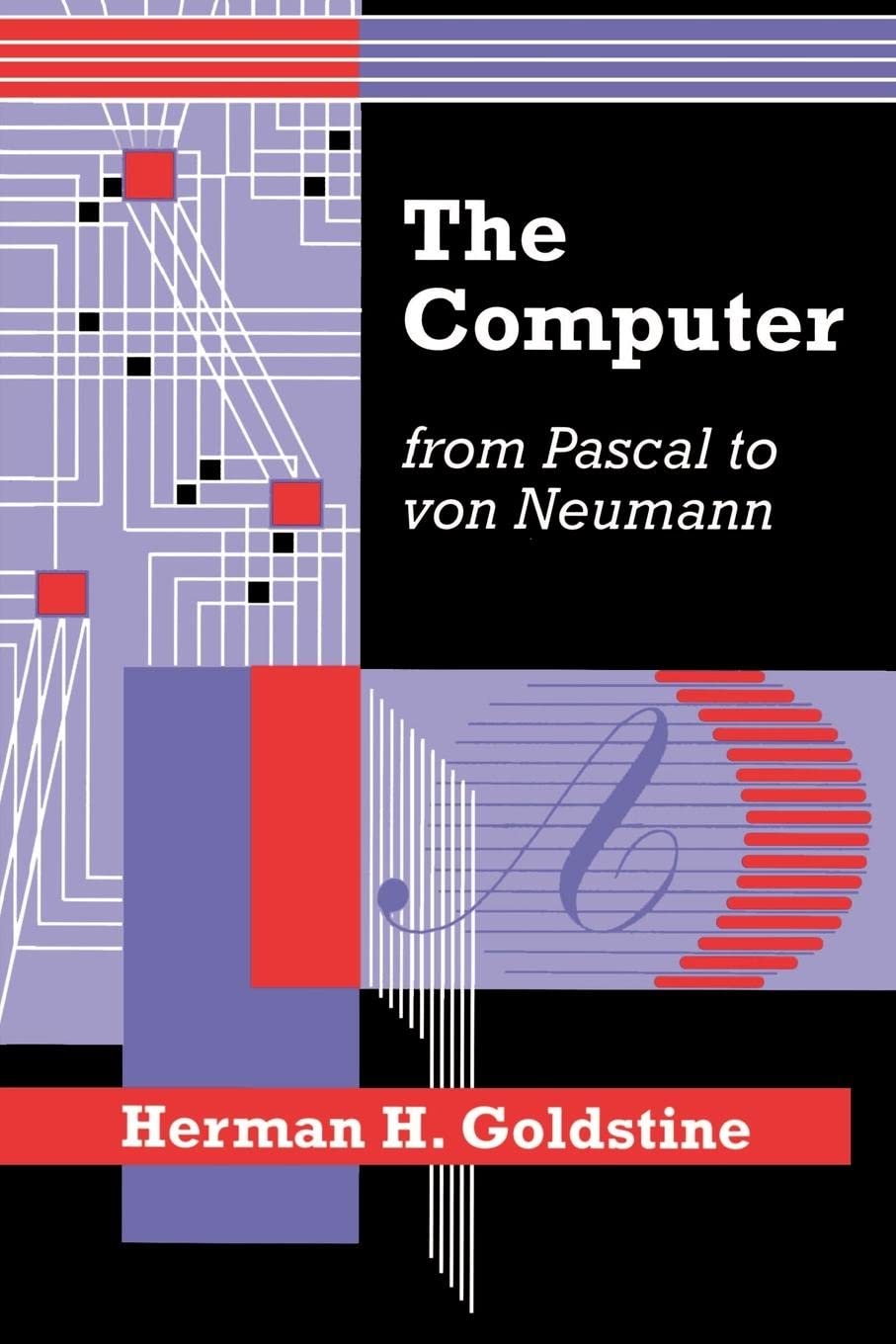
Title
The Computer From Pascal To Von Neumann,Used
Sold by Ergodebooks, an authorized reseller.
Returns accepted within 30 days | support@ergodebooks.com
Shipping Information
- Free Standard Shipping — United States only
- Processing Time: 3–5 business days
- Estimated Delivery: 6–10 business days after dispatch
- Double-boxed, fully insured & discreetly packaged
- Tracking number sent via email once dispatched
Returns & Refund
Returns accepted within 30 days of delivery.
Damaged or Defective Item
Free return shipping + replacement or full refund
Wrong Item Received
Free return shipping + replacement or full refund
Change of Mind
Return shipping at customer's expense · 25% restocking fee applies
Payment Option

In 1942, Lt. Herman H. Goldstine, A Former Mathematics Professor, Was Stationed At The Moore School Of Electrical Engineering At The University Of Pennsylvania. It Was There That He Assisted In The Creation Of The Eniac, The First Electronic Digital Computer. The Eniac Was Operational In 1945, But Plans For A New Computer Were Already Underway. The Principal Source Of Ideas For The New Computer Was John Von Neumann, Who Became Goldstine'S Chief Collaborator. Together They Developed Edvac, Successor To Eniac. After World War Ii, At The Institute For Advanced Study, They Built What Was To Become The Prototype Of The Presentday Computer. Herman Goldstine Writes As Both Historian And Scientist In This First Examination Of The Development Of Computing Machinery, From The Seventeenth Century Through The Early 1950S. His Personal Involvement Lends A Special Authenticity To His Narrative, As He Sprinkles Anecdotes And Stories Liberally Through His Text.
⚠️ WARNING (California Proposition 65):
This product may contain chemicals known to the State of California to cause cancer, birth defects, or other reproductive harm.
For more information, please visit www.P65Warnings.ca.gov.
- Q: What is the size of 'The Computer from Pascal to von Neumann'? A: The book measures six inches in length and nine and a quarter inches in height, making it a standard hardcover size.
- Q: How many pages does this book have? A: This book contains three hundred sixty-five pages, providing an in-depth exploration of computing history.
- Q: What type of binding does this book have? A: The book is bound in hardcover, which offers durability and a classic appearance.
- Q: Who is the author of this book? A: The author is Herman H. Goldstine, a notable figure in computing history and a collaborator on the ENIAC project.
- Q: What genre does this book belong to? A: This book is categorized under History & Philosophy, specifically focusing on the development of computing.
- Q: How do I read this book? A: You can read this book as a historical account of computing, suitable for anyone interested in technology's evolution.
- Q: Is this book suitable for beginners in computing? A: Yes, this book is accessible for beginners as it provides foundational knowledge about early computers and their creators.
- Q: What age group is this book appropriate for? A: The book is suitable for adults and older teens due to its historical context and complexity.
- Q: How should I store this book? A: Store this book upright on a shelf in a cool, dry place to maintain its condition and avoid damage.
- Q: Can this book be cleaned? A: Yes, you can gently wipe the cover with a dry cloth to remove dust, but avoid using water or cleaning solutions.
- Q: What if the book arrives damaged? A: If the book arrives damaged, you should contact the seller for return options or a replacement.
- Q: Is there a warranty for this book? A: Typically, books do not come with a warranty, but return policies may apply depending on the retailer.
- Q: What if I lose my book? A: If you lose your book, you will need to purchase a new copy, as there are no replacement options.
- Q: How does this book compare to other computing history books? A: This book offers a unique perspective due to the author's personal involvement in early computing, differing from other histories that may lack firsthand accounts.
- Q: Is this book recommended for academic purposes? A: Yes, this book is recommended for academic purposes as it provides valuable insights and historical context for computing studies.
- Q: What themes are explored in this book? A: The book explores themes of innovation, collaboration, and the evolution of technology from the seventeenth century through the early 1950s.