
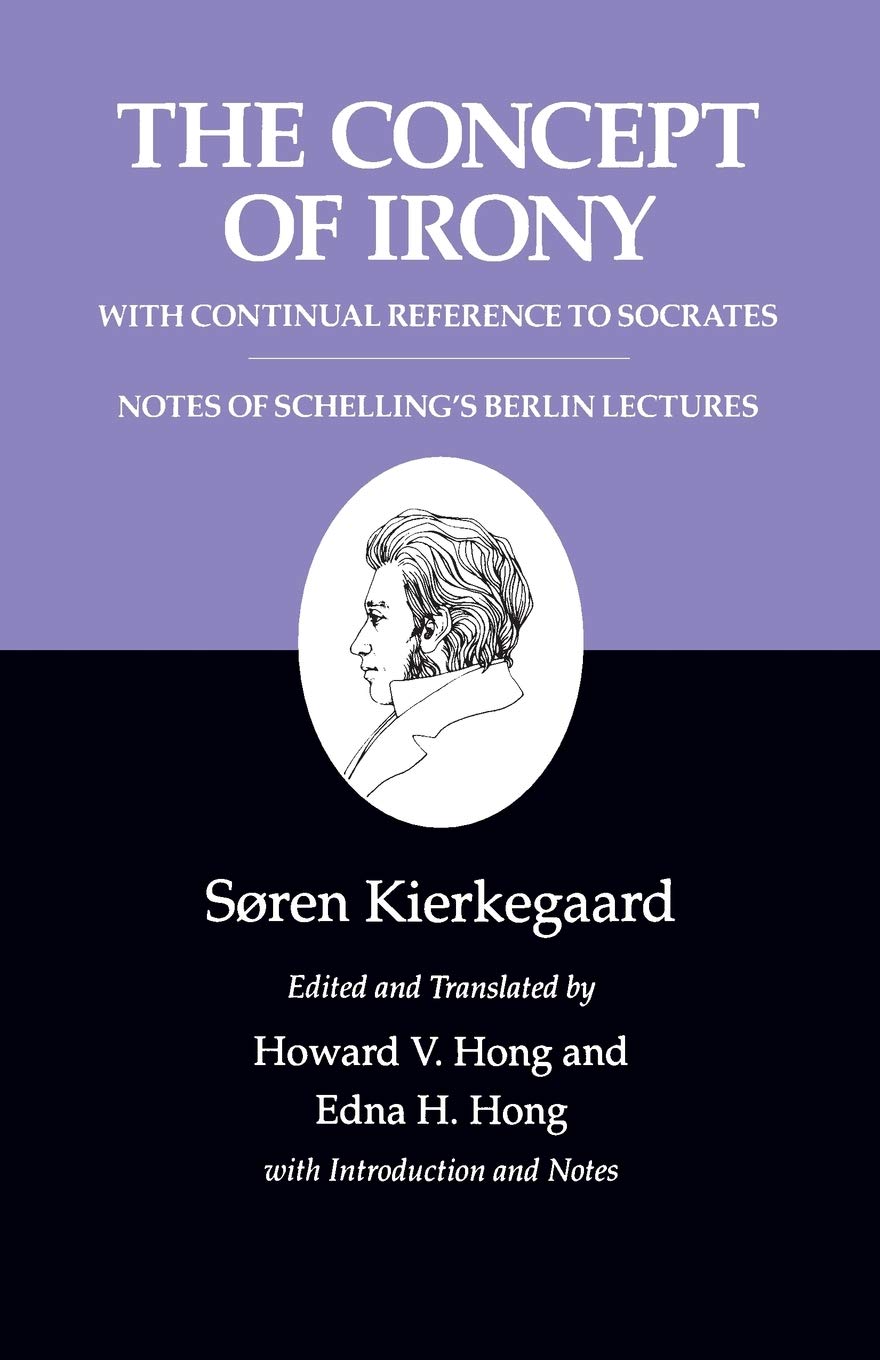
Title
The Concept Of Irony/Schelling Lecture Notes : Kierkegaard'S Writings, Vol. 2 (Kierkegaard'S Writings, 2),Used
Sold by Ergodebooks, an authorized reseller.
Returns accepted within 30 days | support@ergodebooks.com
Shipping Information
- Free Standard Shipping — United States only
- Processing Time: 3–5 business days
- Estimated Delivery: 6–10 business days after dispatch
- Double-boxed, fully insured & discreetly packaged
- Tracking number sent via email once dispatched
Returns & Refund
Returns accepted within 30 days of delivery.
Damaged or Defective Item
Free return shipping + replacement or full refund
Wrong Item Received
Free return shipping + replacement or full refund
Change of Mind
Return shipping at customer's expense · 25% restocking fee applies
Payment Option

A Work That 'Not Only Treats Of Irony But Is Irony,' Wrote A Contemporary Reviewer Of The Concept Of Irony, With Continual Reference To Socrates. Presented Here With Kierkegaard'S Notes Of The Celebrated Berlin Lectures On 'Positive Philosophy' By F.W.J. Schelling, The Book Is A Seedbed Of Kierkegaard'S Subsequent Work, Both Stylistically And Thematically. Part One Concentrates On Socrates, The Master Ironist, As Interpreted By Xenophon, Plato, And Aristophanes, With A Word On Hegel And Hegelian Categories. Part Two Is A More Synoptic Discussion Of The Concept Of Irony In Kierkegaard'S Categories, With Examples From Other Philosophers And With Particular Attention Given To A. W. Schlegel'S Novel Lucinde As An Epitome Of Romantic Irony.The Concept Of Irony And The Notes Of Schelling'S Berlin Lectures Belong To The Momentous Year 1841, Which Included Not Only The Completion Of Kierkegaard'S University Work And His Sojourn In Berlin, But Also The End Of His Engagement To Regine Olsen And The Initial Writing Of Either/Or.
⚠️ WARNING (California Proposition 65):
This product may contain chemicals known to the State of California to cause cancer, birth defects, or other reproductive harm.
For more information, please visit www.P65Warnings.ca.gov.
- Q: How many pages does this book have? A: This book has six hundred sixty-four pages. It provides an in-depth exploration of irony in philosophy.
- Q: What is the binding type of this book? A: The binding type is paperback. This makes it flexible and lightweight for easy reading.
- Q: What are the dimensions of this book? A: The dimensions are five point five one inches in length, one point two six inches in width, and eight point five inches in height. These dimensions make it a manageable size for reading.
- Q: Who is the author of this book? A: The author is Søren Kierkegaard. He is well-known for his contributions to existential philosophy and literature.
- Q: What is the main theme of The Concept of Irony? A: The main theme revolves around the concept of irony, particularly in relation to Socratic philosophy. It examines how irony influences understanding and interpretation.
- Q: Is this book suitable for beginners in philosophy? A: Yes, this book can be suitable for beginners. However, it might be more beneficial for readers with some prior knowledge of philosophical concepts.
- Q: What is the focus of Part One of this book? A: Part One focuses on Socrates as the master ironist. It discusses interpretations by philosophers like Xenophon, Plato, and Aristophanes.
- Q: How does this book explore Kierkegaard's ideas? A: This book explores Kierkegaard's ideas through his notes on Schelling's lectures. It delves into both stylistic and thematic aspects of his work.
- Q: What is the recommended reading level for this book? A: The recommended reading level is for those with an intermediate understanding of philosophy. Some familiarity with Kierkegaard's work is helpful.
- Q: Is there a specific audience this book targets? A: Yes, this book targets students and enthusiasts of philosophy. It is particularly relevant for those interested in existentialism and irony.
- Q: How should this book be stored to maintain its condition? A: This book should be stored upright on a shelf in a dry place. Avoid exposure to direct sunlight and moisture to prevent damage.
- Q: What is the best way to clean this book? A: To clean this book, gently dust the cover with a soft cloth. Avoid using any liquids that may damage the pages.
- Q: Can this book be returned if damaged? A: Yes, this book can typically be returned if it arrives damaged. Check with the retailer for their specific return policy.
- Q: What should I do if I receive the wrong book? A: If you receive the wrong book, contact customer service immediately. They can assist you with the return and replacement process.
- Q: Does this book have any special features? A: Yes, this book features notes from Kierkegaard's lectures and discusses the concept of irony in depth, enhancing the reading experience.
- Q: Is this book suitable for group study? A: Yes, this book is suitable for group study. Its complex themes provide rich material for discussion and debate.