
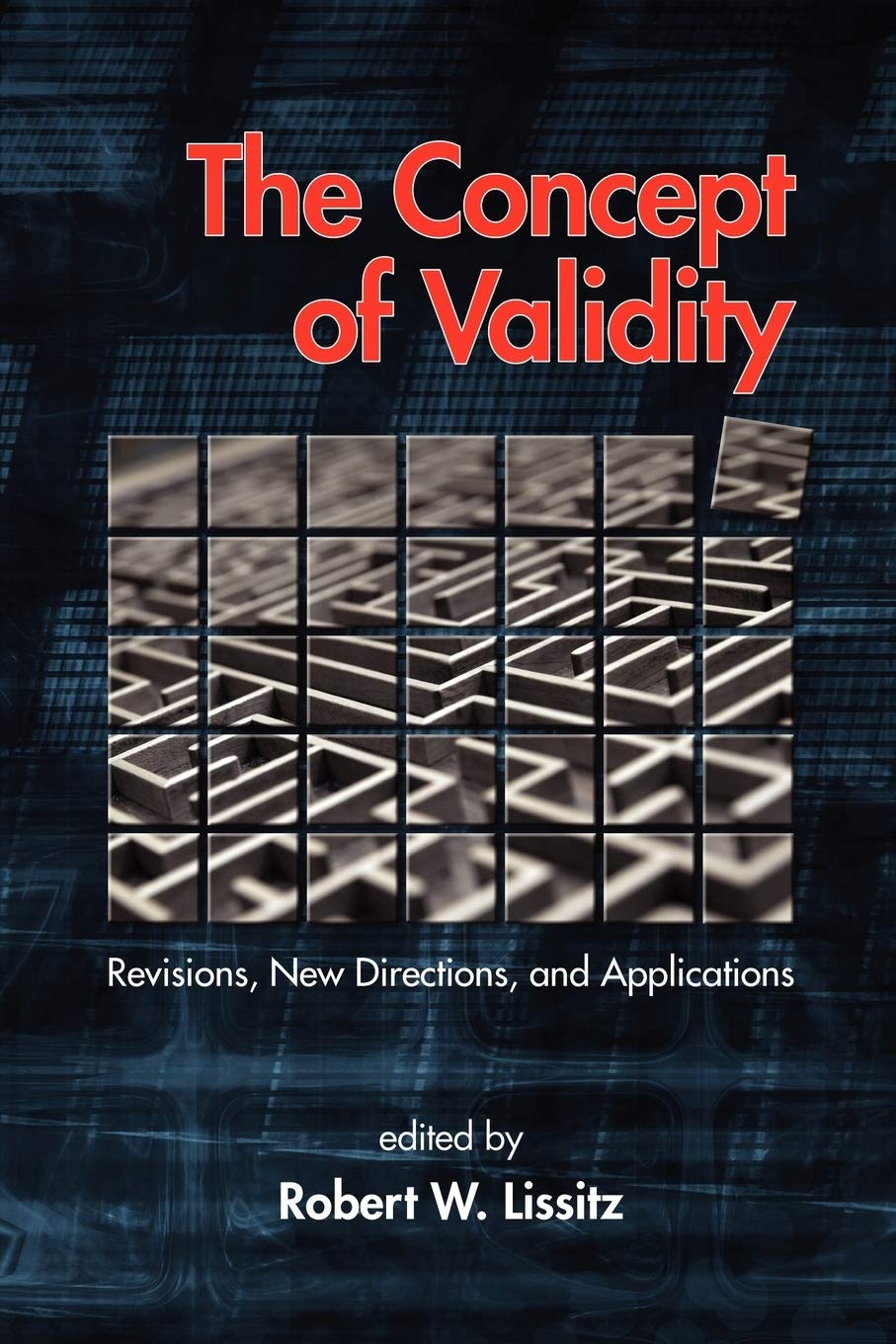
Title
The Concept Of Validity: Revisions, New Directions And Applications (Na)
Sold by Ergodebooks, an authorized reseller.
Returns accepted within 30 days | support@ergodebooks.com
Shipping Information
- Free Standard Shipping — United States only
- Processing Time: 3–5 business days
- Estimated Delivery: 6–10 business days after dispatch
- Double-boxed, fully insured & discreetly packaged
- Tracking number sent via email once dispatched
Returns & Refund
Returns accepted within 30 days of delivery.
Damaged or Defective Item
Free return shipping + replacement or full refund
Wrong Item Received
Free return shipping + replacement or full refund
Change of Mind
Return shipping at customer's expense · 25% restocking fee applies
Payment Option

Validity Is Widely Held To Be The Most Important Criterion For An Assessment. Nevertheless, Assessment Professionals Have Disagreed About The Meaning Of Validity Almost From The Introduction Of The Term As Applied To Testing About 100 Years Ago. Over The Years, The Best And Brightest People In Assessment Have Contributed Their Thinking To This Problem And The Fact That They Have Not Agreed Is Testimony To The Complexity And Importance Of Validity. Even Today, Ways To Define Validity Are Being Debated In The Published Literature In The Assessment Profession. How Can Such A Fundamental Concept Be So Controversial? This Book Brings Focus To Diverse Perspectives About Validity. Its Chapter Authors Were Chosen Because Of Their Expertise And Because They Differ From Each Other In The Ways They Think About The Validity Construct. Its Introduction And Ten Chapters Bridge Both The Theoretical And The Practical. Contributors Include Most Prominent Names In The Field Of Validity And Their Perspectives Are At Once Cogent And Controversial. From These Diverse And Wellinformed Discussions, The Reader Will Gain A Deep Understanding Of The Core Issues In Validity Along With Directions Toward Possible Resolutions. The Debate That Exists Among These Authors Is A Rich One That Will Stimulate The Reader'S Own Understanding And Opinion. Several Chapters Are Oriented More Practically. Ways To Study Validity Are Presented By Professionals Who Blend Current Assessment Practice With New Suggestions For What Sort Of Evidence To Develop And How To Generate The Needed Information. In Addition They Provide Examples Of Some Of The Options On How To Present The Validity Argument In The Most Effective Ways. The Initial Chapter By The Editor Is An Effort To Orient The Reader As Well As Providing An Overview Of The Book. Bob Lissitz Has Provided A Brief Perspective On Each Of The Subsequent Chapters As Well As Presenting A Series Of Questions Regarding Validation That The Reader Will Want To Try To Answer For Themselves, As He Or She Reads Through This Book. This Book'S Topic Is Fundamental To Assessment, Its Authors Are Distinguished, And Its Scope Is Broad. It Deserves To Become Established As A Fundamental Reference On Validity For Years To Come.
⚠️ WARNING (California Proposition 65):
This product may contain chemicals known to the State of California to cause cancer, birth defects, or other reproductive harm.
For more information, please visit www.P65Warnings.ca.gov.
- Q: How many pages does the book contain? A: The book has two hundred seventy pages. This length allows for comprehensive coverage of the topic of validity in assessments.
- Q: What is the binding type of the book? A: The book is paperback bound. This makes it lightweight and flexible, suitable for easy handling and reading.
- Q: What are the dimensions of the book? A: The book measures six point fourteen inches in length, zero point fifty-seven inches in width, and nine point twenty-one inches in height. These dimensions make it portable and easy to store.
- Q: Who is the author of this book? A: The book is authored by Robert W. Lissitz. He is well-regarded in the field of assessment and validity.
- Q: What is the main subject of the book? A: The book focuses on the concept of validity in assessments. It explores various perspectives and debates surrounding this critical topic.
- Q: How is the book structured? A: The book contains an introduction and ten chapters. Each chapter presents diverse viewpoints on validity from distinguished experts.
- Q: Is this book suitable for beginners in assessment? A: Yes, the book is suitable for beginners. It provides a comprehensive overview of validity, making complex concepts accessible.
- Q: Can this book be used as a reference for professionals? A: Yes, it serves as a valuable reference for professionals in assessment. The insights from leading experts provide depth and clarity.
- Q: Does the book include practical examples? A: Yes, several chapters offer practical examples. These examples illustrate how to study and present validity effectively.
- Q: Is there a specific audience for this book? A: The book targets assessment professionals and educators. It addresses their needs for understanding validity in testing.
- Q: What should I do if the book arrives damaged? A: If the book arrives damaged, you should contact customer support for assistance. They can guide you through the return or replacement process.
- Q: What is the return policy for this book? A: The return policy typically allows for returns within thirty days of purchase. Ensure the book is in its original condition for a refund.
- Q: How should I store this book? A: Store the book in a dry, cool place. Avoid direct sunlight to prevent fading and damage to the cover and pages.
- Q: Can I highlight or write in this book? A: Yes, you can highlight or write in the book. Many readers find it helpful for note-taking and emphasizing key concepts.
- Q: Does this book cover modern perspectives on validity? A: Yes, it includes modern perspectives on validity. The discussions reflect current debates and advancements in the field of assessment.
- Q: Is the book suitable for use in academic settings? A: Yes, the book is suitable for academic settings. It can be used in courses related to assessment and measurement.