
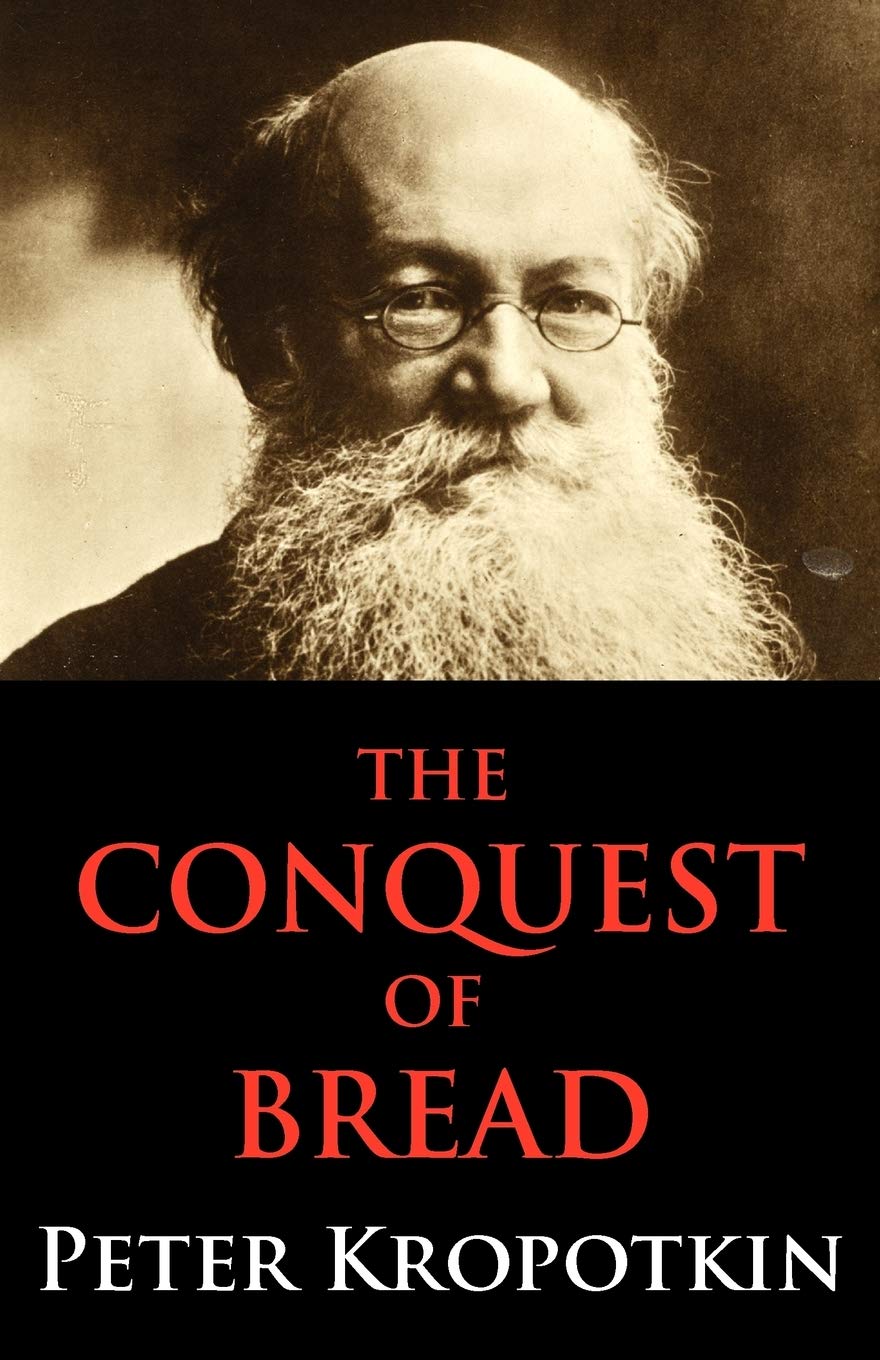
Title
The Conquest Of Bread: Dialectics Annotated Edition,New
Sold by Ergodebooks, an authorized reseller.
Returns accepted within 30 days | support@ergodebooks.com
Shipping Information
- Free Standard Shipping — United States only
- Processing Time: 3–5 business days
- Estimated Delivery: 6–10 business days after dispatch
- Double-boxed, fully insured & discreetly packaged
- Tracking number sent via email once dispatched
Returns & Refund
Returns accepted within 30 days of delivery.
Damaged or Defective Item
Free return shipping + replacement or full refund
Wrong Item Received
Free return shipping + replacement or full refund
Change of Mind
Return shipping at customer's expense · 25% restocking fee applies
Payment Option

In The Conquest Of Bread, Peter Kropotkin Describes How The Revolution Can Achieve A Free, Egalitarian, And Selfsufficient Anarchocommunist Society. In Issuing His Argument For This Society, Kropotkin Critiques The Various Economic Systems, From Pure Capitalism To Staterun Socialism To Collectivism. Additionally, He Provides The Reader With A History Of The Revolution, Analyzing The Failures And Successes Of Past Revolutions, Including The French Revolutions Of 1789, 1848, And 1871. Throughout, Kropotkin Emphasizes Humanity'S Ability To Cooperate And Advance Through Mutual Aid And Science Abilities Critical To The Success Of The Revolution And Postrevolution Society. The Conquest Of Bread Is An Important And Enduring Work Of Political Theory And Anarchist Thought.This Dialectics Edition Includes Nearly 100 New Historical And Biographical Footnotes And Notes On The English Translation From The Original French Text. Also Included Are Nine Historic Lithographs, Etchings, And Woodblock Prints Depicting The Periods Discussed In The Book. These Notes And Illustrations Help To Make The Conquest Of Bread As Relevant Today As When It Was First Published.Introductionpeter Alexeyevitch Kropotkin (18421921) Was Born Into Russian Nobility But Abandoned His Princely Title At The Age Of Twelve. An Ardent Intellectual, He Read Widely In Politics And Science. As His Education Progressedand His Exposure To Revolutionary Writingshe Became More Concerned With The Plight Of The Peasants And Workers. After Graduating From An Elite Military School, He Pursued Geography, Undertaking Important Research Expeditions And Becoming A Member Of The Russiangeographical Society.In 1872, He Traveled To Switzerland, Where He Briefly Joined The International Working Mens Association. He Also Stayed With The Jura Federation, Coming Away Deeply Influenced By That Unique Association And Taking Up The Anarchist Cause.He Returned To Russia And Was Arrested In 1874 For Belonging To A Secret, Revolutionary Group. After Two Years In Prison, And Just Before His Trial, He Escaped With The Help Of Friends, Fleeing To England. He Lived In Exile Until The Overthrow Of The Tsar In 1917.He Settled In With The Jura Federation, Where He Edited The Newspaper Le Rvolt. In 1881, He Was Expelled From Switzerland. He Went To England, And Then France. In France He Was Arrested And Imprisoned At Clairvaux Until An Early Release In 1886. Again, He Returned To England, Where He Stayed Until His Final Return To Russia. In England, He Started The Anarchist Newspaper, Freedom, And Restarted Le Rvolt As La Rvolte. The Conquest Of Bread First Appeared In These Papers.In The Conquest Of Bread, Kropotkin Details An Anarchocommunist Society. The Book Is Not Only A Rejection Of Government In All Forms, But Also A Rejection Of The Wages System, Including The Laborbased Wages System That The Collectivists Espoused. Further, His Lifelong Passion For Science Is Evident In The Vision That He Brings Forth.With The February Revolution Of 1917, Kropotkin Was Finally Able To Return To Russia. He Took Interest In The Revolution And Briefly Stayed In Moscow. However, The Bolsheviks Took Power During The October Revolution Of 1917, And Kropotkin Moved To The Town Of Dmitrov Where He Did Not Participate In The Local Soviet. He Died In 1921 At The Age Of Seventyeight.In An Effort To Bridge The Gap Between The Original Publication Of The Conquest Of Bread And Today, Dialectics Has Included Footnotes That Give Brief Biographies, Histories, And Commentaries On The Translations.
⚠️ WARNING (California Proposition 65):
This product may contain chemicals known to the State of California to cause cancer, birth defects, or other reproductive harm.
For more information, please visit www.P65Warnings.ca.gov.
- Q: How many pages does The Conquest of Bread have? A: The Conquest of Bread has two hundred twenty pages. This comprehensive work by Peter Kropotkin offers an in-depth exploration of anarcho-communist theory.
- Q: What is the binding type of this book? A: The binding type is paperback. This makes the book lightweight and easy to handle for reading.
- Q: What are the dimensions of The Conquest of Bread? A: The dimensions are five point five one inches in length, zero point five five inches in width, and eight point five inches in height. These measurements make it a standard-sized book.
- Q: Who is the author of The Conquest of Bread? A: The author is Peter Kropotkin. He was a notable Russian philosopher and political theorist known for his contributions to anarchist thought.
- Q: Is The Conquest of Bread suitable for young readers? A: Yes, it is suitable for mature young readers. The themes discussed are complex and may require critical thinking skills to fully understand.
- Q: How can I engage with the content of this book? A: You can engage with the content by reading it thoroughly and reflecting on Kropotkin's critiques of various economic systems. Discussions with others interested in political theory can also enhance understanding.
- Q: How should I care for The Conquest of Bread? A: To care for the book, keep it in a dry area and avoid exposing it to direct sunlight. This will help maintain the quality of both the cover and the pages.
- Q: Are there any special features in this edition? A: Yes, this edition includes nearly one hundred new historical and biographical footnotes. It also features nine historic lithographs, etchings, and woodblock prints.
- Q: Can I return The Conquest of Bread if I don't like it? A: Yes, you can return the book if you are not satisfied. Check the retailer's return policy for specific details and timelines.
- Q: What historical events are discussed in The Conquest of Bread? A: The book discusses significant events like the French revolutions of seventeen eighty-nine, eighteen forty-eight, and eighteen seventy-one. Kropotkin analyzes the successes and failures of these revolutions.
- Q: Is there a glossary or index in The Conquest of Bread? A: No, there is no formal glossary or index. However, the footnotes provide context and additional information to support the main text.
- Q: How can I find discussions or analyses of The Conquest of Bread? A: You can find discussions or analyses by searching online forums, academic articles, or joining book clubs focused on political theory.
- Q: What is the main theme of The Conquest of Bread? A: The main theme is the critique of various economic systems and the advocacy for an anarcho-communist society. Kropotkin emphasizes cooperation and mutual aid.
- Q: Are there illustrations in The Conquest of Bread? A: Yes, there are nine historic illustrations included. These visuals enhance the understanding of the periods discussed in the text.
- Q: What is the publication history of The Conquest of Bread? A: The Conquest of Bread was first published in the late nineteenth century. This edition offers modern annotations to connect with contemporary readers.