
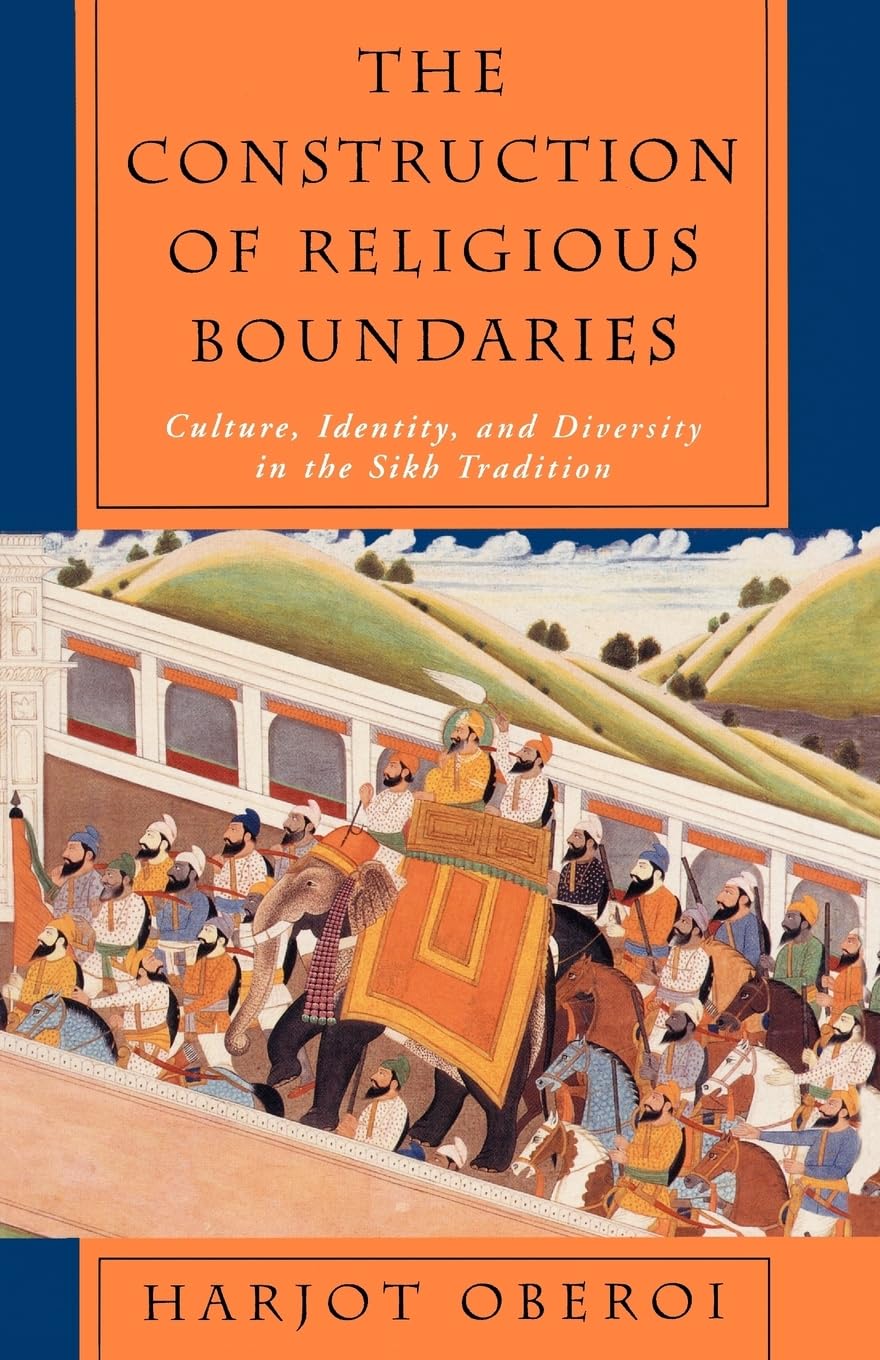
Title
The Construction Of Religious Boundaries: Culture, Identity, And Diversity In The Sikh Tradition
Sold by Ergodebooks, an authorized reseller.
Returns accepted within 30 days | support@ergodebooks.com
Shipping Information
- Free Standard Shipping — United States only
- Processing Time: 3–5 business days
- Estimated Delivery: 6–10 business days after dispatch
- Double-boxed, fully insured & discreetly packaged
- Tracking number sent via email once dispatched
Returns & Refund
Returns accepted within 30 days of delivery.
Damaged or Defective Item
Free return shipping + replacement or full refund
Wrong Item Received
Free return shipping + replacement or full refund
Change of Mind
Return shipping at customer's expense · 25% restocking fee applies
Payment Option

In This Major Reinterpretation Of Religion And Society In India, Harjot Oberoi Challenges Earlier Accounts Of Sikhism, Hinduism And Islam As Historically Given Categories Encompassing Welldemarcated Units Of Religious Identity. Through A Searching Examination Of Sikh Historical Materials, He Shows That Early Sikh Tradition Was Not Concerned With Establishing Distinct Religious Boundaries. Most Sikhs Recognized Multiple Identities Grounded In Local, Regional, Religious, And Secular Loyalties. Consequently, Religious Identities Were Highly Blurred And Several Competing Definitions Of What Constituted A Sikh Were Possible.In The Closing Decades Of The Nineteenth Century, However, The Singh Sabha, A Powerful New Sikh Movement, Began To View The Multiplicity In Sikh Identity With Suspicion And Hostility. Aided By Social And Cultural Forces Unleashed By The British Raj, The Singh Sabha Sought To Recast Sikh Tradition And Purge It Of Diversity. The Ethnocentric Logic Of A New Elite Dissolved Alternative Ideals Under The Highly Codified Culture Of Modern Sikhism.A Study Of The Process By Which A Pluralistic Religious World View Is Replaced By A Monolithic One, This Important Book Calls Into Question Basic Assumptions About The Efficacy Of Fundamentalist Claims And The Construction Of All Social And Religious Identities. An Essential Book For The Field Of South Asian Religions, This Work Is Also An Important Contribution To Cultural Anthropology, Postcolonial Studies, And The History Of Religion In General.
⚠️ WARNING (California Proposition 65):
This product may contain chemicals known to the State of California to cause cancer, birth defects, or other reproductive harm.
For more information, please visit www.P65Warnings.ca.gov.
- Q: How many pages does this book have? A: This book has five hundred sixteen pages. It offers an in-depth exploration of religious identity within Sikhism.
- Q: What is the binding type of this book? A: The binding type is paperback. This makes it lightweight and easy to handle for reading.
- Q: What are the dimensions of this book? A: The dimensions are eight point four eight inches in length, five point four nine inches in width, and one point zero seven inches in height. This size is suitable for both shelf storage and portability.
- Q: What themes are explored in this book? A: This book explores themes of culture, identity, and diversity within the Sikh tradition. It provides a critical analysis of how these themes shape religious boundaries.
- Q: Is this book suitable for academic study? A: Yes, this book is suitable for academic study. It is a significant contribution to the fields of South Asian religions and cultural anthropology.
- Q: Who is the author of this book? A: The author is Harjot Oberoi. He is recognized for his scholarly work related to Sikhism and religious identity.
- Q: How does this book address the concept of religious boundaries? A: The book challenges traditional views of rigid religious boundaries. It discusses how Sikh identities were historically more fluid and diverse.
- Q: What audience is this book intended for? A: This book is intended for scholars, students, and anyone interested in the complexities of Sikh identity. It appeals to those studying religious and cultural anthropology.
- Q: Does this book include historical analysis? A: Yes, the book includes a thorough historical analysis. It examines Sikh historical materials to reveal the evolution of religious identities.
- Q: How does this book compare to other works on Sikhism? A: This book offers a unique reinterpretation compared to other works. It provides a broader perspective on the historical fluidity of Sikh identity.
- Q: What kind of research did the author conduct? A: The author conducted extensive research on Sikh historical materials. This research forms the basis of his arguments regarding identity and religious boundaries.
- Q: Can this book help in understanding modern Sikhism? A: Yes, the book helps in understanding modern Sikhism by tracing its historical roots and the factors that led to its current form.
- Q: Is this book relevant to postcolonial studies? A: Yes, this book is relevant to postcolonial studies. It addresses how colonial influences shaped Sikh identity and religious boundaries.
- Q: What is the significance of the Singh Sabha movement discussed in the book? A: The Singh Sabha movement is significant as it represents a shift towards a more codified and less diverse interpretation of Sikhism. The book critiques this transformation.
- Q: Does this book contain any illustrations or images? A: No, this book does not contain illustrations or images. It focuses primarily on text and scholarly analysis.