If you have any questions, you are always welcome to contact us. We'll get back to you as soon as possible, withing 24 hours on weekdays.
Customer service
All questions about your order, return and delivery must be sent to our customer service team by e-mail at yourstore@yourdomain.com
Sale & Press
If you are interested in selling our products, need more information about our brand or wish to make a collaboration, please contact us at press@yourdomain.com
Help
If you have any questions, you are always welcome to contact us. We'll get back to you as soon as possible, withing 24 hours on weekdays.
Customer service
All questions about your order, return and delivery must be sent to our customer service team by e-mail at yourstore@yourdomain.com
Sale & Press
If you are interested in selling our products, need more information about our brand or wish to make a collaboration, please contact us at press@yourdomain.com
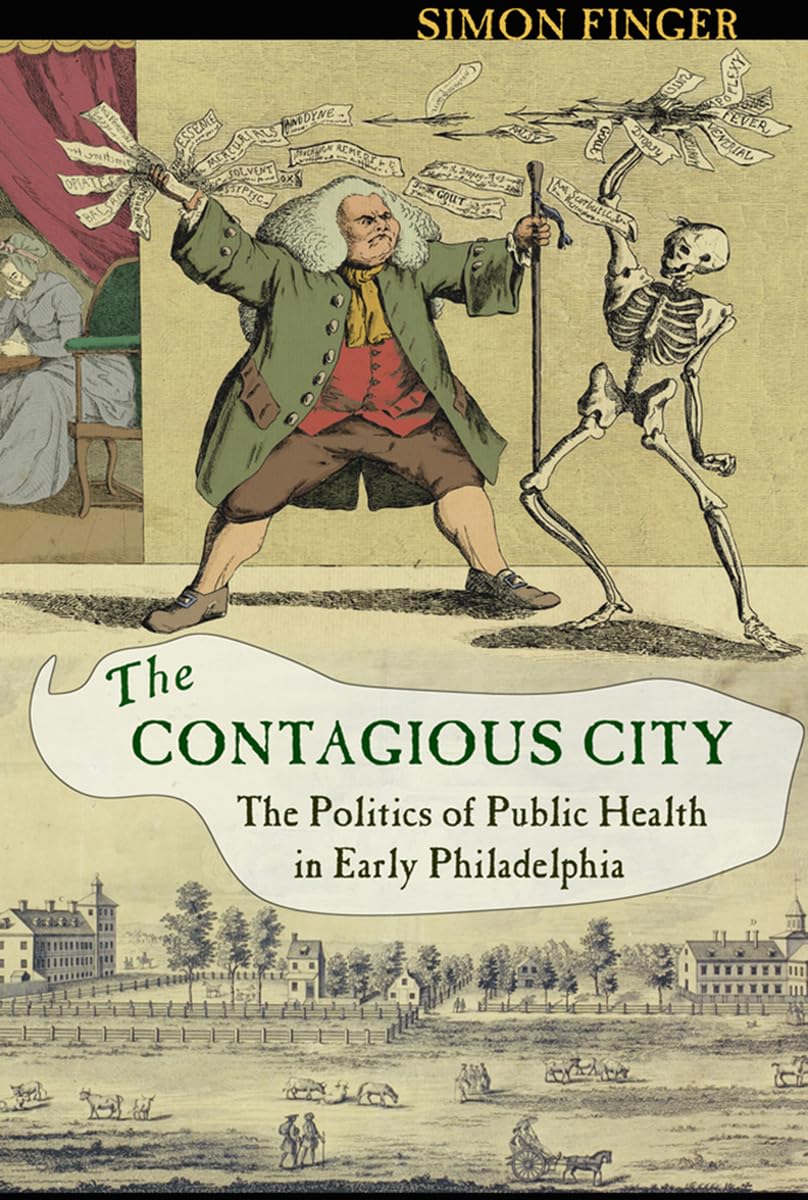
By the time William Penn was planning the colony that would come to be called Pennsylvania, with Philadelphia at its heart, Europeans on both sides of the ocean had long experience with the hazards of city life, disease the most terrifying among them. Drawing from those experiences, colonists hoped to create new urban forms that combined the commercial advantages of a seaport with the health benefits of the country. The Contagious City details how early Americans struggled to preserve their collective health against both the strange new perils of the colonial environment and the familiar dangers of the traditional city, through a period of profound transformation in both politics and medicine.Philadelphia was the paramount example of this reforming tendency. Tracing the citys history from its founding on the banks of the Delaware River in 1682 to the yellow fever outbreak of 1793, Simon Finger emphasizes the importance of public health and population control in decisions made by the citys planners and leaders. He also shows that key figures in the citys history, including Benjamin Franklin and Benjamin Rush, brought their keen interest in science and medicine into the political sphere. Throughout his account, Finger makes clear that medicine and politics were inextricably linked, and that both undergirded the debates over such crucial concerns as the citys location, its urban plan, its immigration policy, and its creation of institutions of public safety. In framing the history of Philadelphia through the imperatives of public health, The Contagious City offers a bold new vision of the urban history of colonial America.
⚠️ WARNING (California Proposition 65):
This product may contain chemicals known to the State of California to cause cancer,
birth defects, or other reproductive harm.
For MAP (Minimum Advertised Price) violations and Intellectual Property (IP) or Trademark concerns, please contact:
support@ergodebooks.com
⚠️ California Proposition 65 Warning: Some products sold on this website may expose you to chemicals known to the State of California to cause cancer, birth defects, or other reproductive harm. For more information, visit www.P65Warnings.ca.gov.