
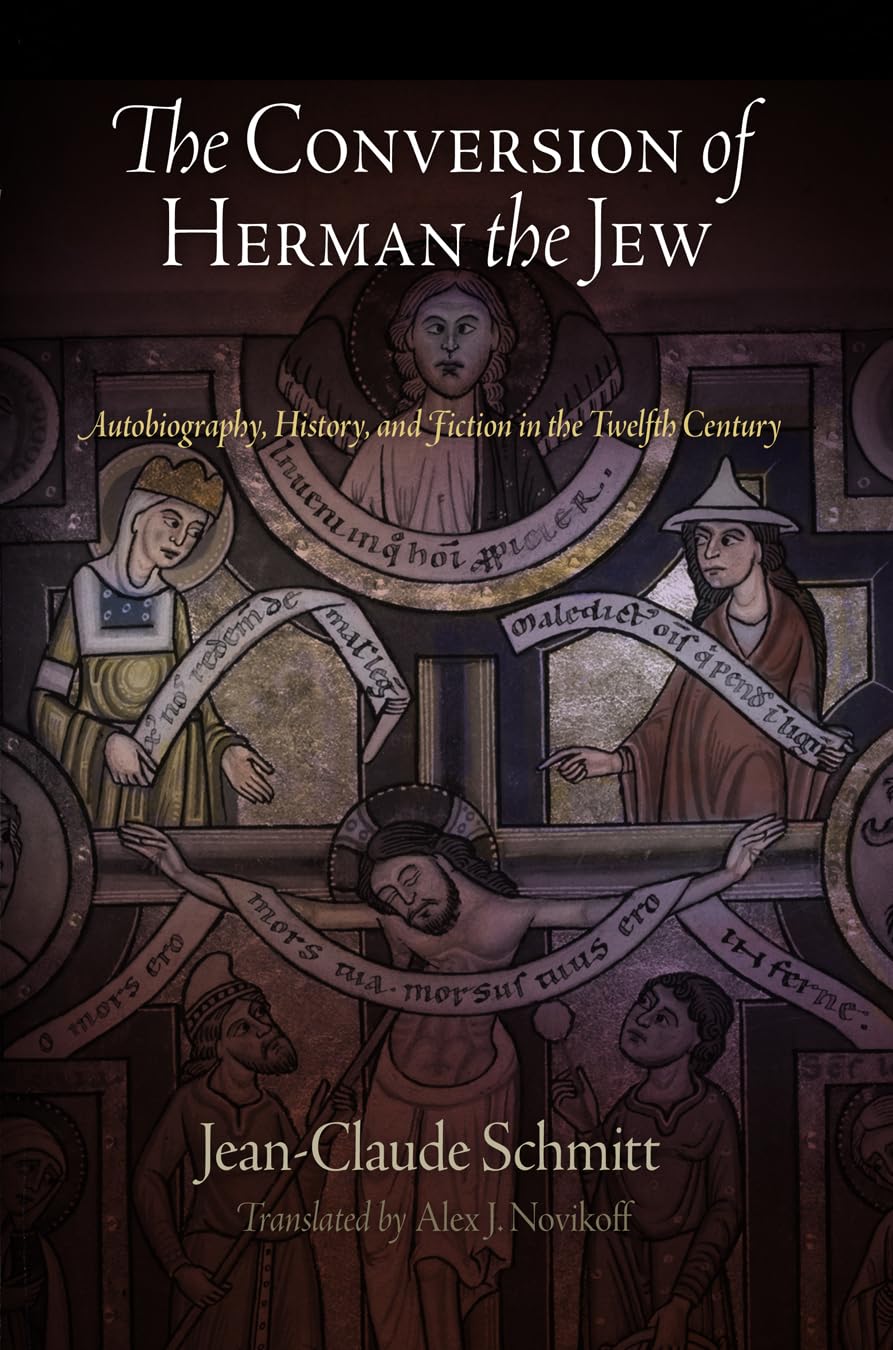
Title
The Conversion Of Herman The Jew: Autobiography, History, And Fiction In The Twelfth Century (The Middle Ages Series),New
Sold by Ergodebooks, an authorized reseller.
Returns accepted within 30 days | support@ergodebooks.com
Shipping Information
- Free Standard Shipping — United States only
- Processing Time: 3–5 business days
- Estimated Delivery: 6–10 business days after dispatch
- Double-boxed, fully insured & discreetly packaged
- Tracking number sent via email once dispatched
Returns & Refund
Returns accepted within 30 days of delivery.
Damaged or Defective Item
Free return shipping + replacement or full refund
Wrong Item Received
Free return shipping + replacement or full refund
Change of Mind
Return shipping at customer's expense · 25% restocking fee applies
Payment Option

Sometime Toward The Middle Of The Twelfth Century, It Is Supposed, An Otherwise Obscure Figure, Born A Jew In Cologne And Later Ordained As A Priest In Cappenberg In Westphalia, Wrote A Latin Account Of His Conversion To Christianity. Known As The Opusculum, This Book Purportedly By 'Herman, The Former Jew' May Well Be The First Autobiography To Be Written In The West After The Confessions Of Saint Augustine. It May Also Be Something Else Entirely.In The Conversion Of Herman The Jew The Eminent French Historian Jeanclaude Schmitt Examines This Singular Text And The Ways In Which It Has Divided Its Readers. Where Some Have Seen It As An Authentic Conversion Narrative, Others Have Asked Whether It Is Not A Complete Fabrication Forged By Christian Clerics. For Schmitt The Question Is Poorly Posed. The Work Is At Once True And Fictional, And The Search For Its Lone Authorwhether Converted Jew Or Notfruitless. Herman May Well Have Existed And Contributed To The Writing Of His Life, But The Opusculum Is A Collective Work, Perhaps Framed To Meet A Specific Institutional Agenda.With Agility And Erudition, Schmitt Examines The Text To Explore Its Meaning Within The Society And Culture Of Its Period And Its Participation In Both A Christian And Jewish Imaginary. What Can It Tell Us About Autobiography And Subjectivity, About The Function Of Dreams And The Legitimacy Of Religious Images, About Individual And Collective Conversion, And About Names And Identities? In The Conversion Of Herman The Jew Schmitt Masterfully Seizes Upon The Debates Surrounding The Opusculum (The Text Of Which Is Newly Translated For This Volume) To Ponder More Fundamentally The Ways In Which Historians Think And Write.
⚠️ WARNING (California Proposition 65):
This product may contain chemicals known to the State of California to cause cancer, birth defects, or other reproductive harm.
For more information, please visit www.P65Warnings.ca.gov.