
Title
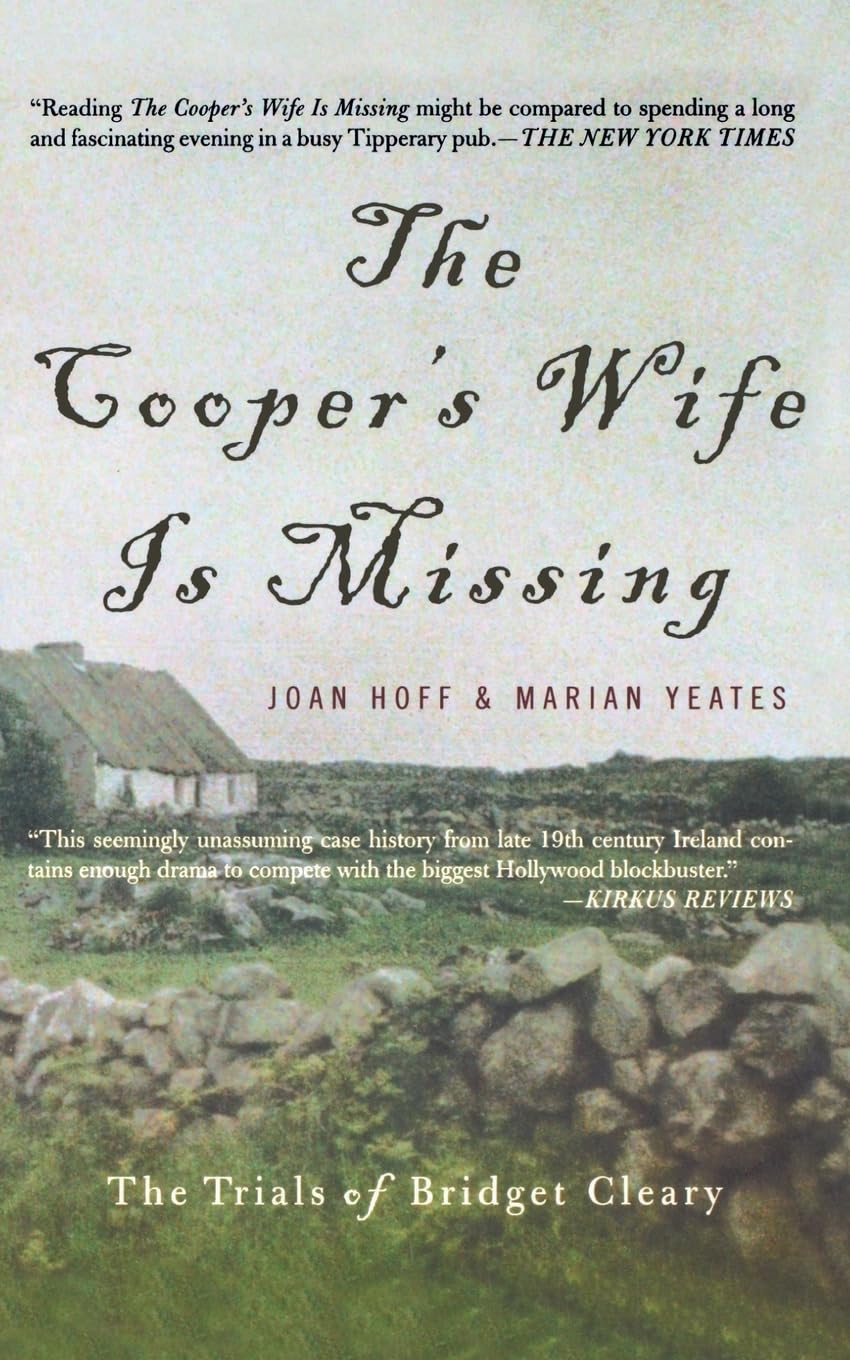
The Cooper'S Wife Is Missing: The Trials Of Bridget Cleary
Sold by Ergodebooks, an authorized reseller.
Returns accepted within 30 days | support@ergodebooks.com
Shipping Information
- Free Standard Shipping — United States only
- Processing Time: 3–5 business days
- Estimated Delivery: 6–10 business days after dispatch
- Double-boxed, fully insured & discreetly packaged
- Tracking number sent via email once dispatched
Returns & Refund
Returns accepted within 30 days of delivery.
Damaged or Defective Item
Free return shipping + replacement or full refund
Wrong Item Received
Free return shipping + replacement or full refund
Change of Mind
Return shipping at customer's expense · 25% restocking fee applies
Payment Option

On March 15, 1895, twentyeight year old Bridget Cleary, a cooper's wife, disappeared from her cottage in rural County Tipperary. Immediately, strange and lurid rumors began circulating the neighborhood about what had happened. Some said she ran off with an egg seller; others supposed it was an aristocratic foxhunter who had taken young Bridget away. Swirling amid rumors was the barely whispered, but widely held, belief that Bridget had gone with no mortal man; rather, she had gone off with the fairies. The mystery deepened when seven days later her body was discovered, bent, broken and badly burned in a shallow grave. Within a few days, the unimaginable truth came to light: for almost a week before her death Bridget had been confined, ritually starved, threatened, physically and verbally abused, exorcised, and, finally, burned to death by her husband, Michael Cleary, her father, and extended family who confused bronchitis with a 'fairy dart.' They had all become convinced that 'their Bridgie' had been taken from them and her fairypossessed body left behind to deceive them. In The Cooper's Wife Is Missing, Joan Hoff and Marian Yeates make sense of this ancient, rarely publicized, ritual exorcism and explain how the incident went on to become a national and international incident. Set against a backdrop of renewed Irish nationalism, a Church crackdown on lingering pagan practices and the ongoing British humiliation of Catholic Ireland, the authors deftly map the dislocating anxieties that beset the rural peasantry in late nineteenthcentury Ireland. Bewildered and frightened by the changes occurring all around them, pulled in all directions by their politicians, priests, landlords and English overlords, the Clearys were not alone in retreating to the relative comfort of pagan ritual. Drawing on firsthand accounts, contemporary newspaper reports, police records, trial testimony and a rich wealth of folklore, the authors weave a mesmerizing tale that touches upon magic, madness and mystery as it details, day by day, Bridget's ordeal and the resulting investigation. This is narrative history at its evocative best. It fascinates as it illuminates.
⚠️ WARNING (California Proposition 65):
This product may contain chemicals known to the State of California to cause cancer, birth defects, or other reproductive harm.
For more information, please visit www.P65Warnings.ca.gov.
- Q: How many pages are in 'The Cooper's Wife Is Missing'? A: This book contains four hundred sixty-four pages. It's a comprehensive narrative exploring the historical events surrounding Bridget Cleary's tragic story.
- Q: What is the binding type of this book? A: The binding type is paperback. This makes it lightweight and easy to handle, perfect for reading at home or on the go.
- Q: What are the dimensions of the book? A: The book measures five point thirteen inches in length, one point nineteen inches in width, and seven point ninety-five inches in height. These dimensions make it a convenient size for most readers.
- Q: Who is the author of 'The Cooper's Wife Is Missing'? A: The authors are Joan Hoff and Marian Yeates. They delve into the historical context and the tragic events surrounding Bridget Cleary.
- Q: What genre does this book belong to? A: This book falls under the genre of Murder & Mayhem. It investigates a gripping historical murder case filled with intrigue and folklore.
- Q: How do I approach reading this book? A: You can read this book as a historical narrative or as a study of cultural practices. It's suitable for anyone interested in true crime, Irish history, or folklore.
- Q: Is this book suitable for young readers? A: No, this book is not suitable for young readers. The content deals with mature themes such as domestic abuse and murder, which may not be appropriate for children.
- Q: How should I store this book to keep it in good condition? A: Store the book in a cool, dry place, away from direct sunlight. Keeping it on a shelf upright or in a protective cover can also help maintain its condition.
- Q: Does this book contain illustrations? A: No, this book does not contain illustrations. It focuses on the narrative and historical context rather than visual elements.
- Q: What should I do if the book arrives damaged? A: If the book arrives damaged, you should contact the seller for a return or exchange. Most retailers have policies in place for handling damaged goods.
- Q: Are there any notable features of this book? A: The book offers a rich narrative history and draws on first-hand accounts, making it a unique exploration of a rarely publicized incident.
- Q: How does this book compare to other true crime books? A: This book is unique in its focus on Irish folklore and cultural history. It provides a narrative that blends true crime with an exploration of pagan rituals.
- Q: What historical events does this book cover? A: The book covers the disappearance and murder of Bridget Cleary in eighteen ninety-five, highlighting the cultural and social tensions of the time.
- Q: Is there a specific audience for this book? A: Yes, this book is aimed at readers interested in historical true crime, Irish culture, and the intersection of folklore and reality.
- Q: Can I find more information about the authors? A: Yes, both authors, Joan Hoff and Marian Yeates, are known for their works on history and cultural studies, providing insightful perspectives in this book.