
Title
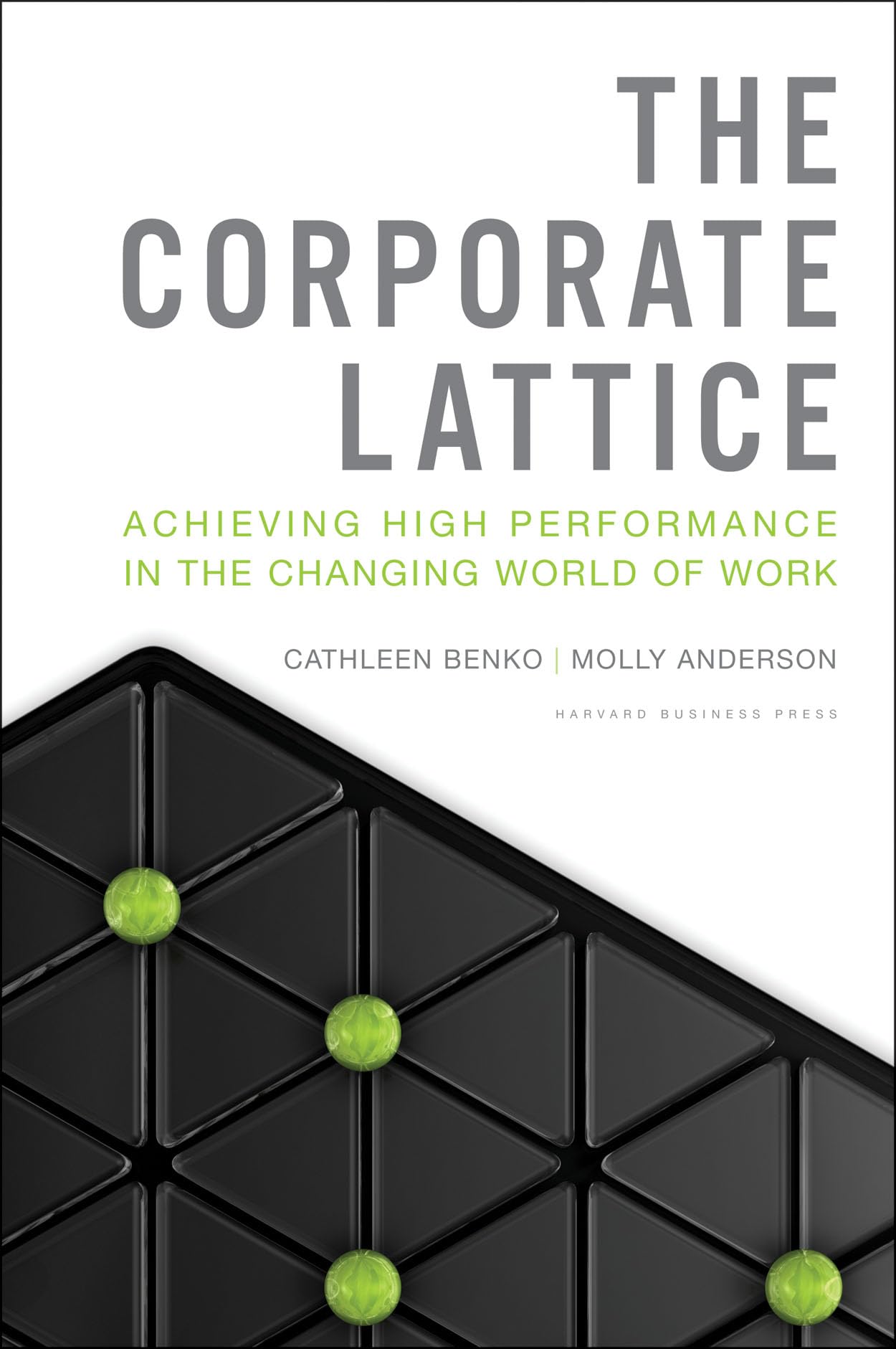
The Corporate Lattice: Achieving High Performance In The Changing World Of Work
Sold by Ergodebooks, an authorized reseller.
Returns accepted within 30 days | support@ergodebooks.com
Shipping Information
- Free Standard Shipping — United States only
- Processing Time: 3–5 business days
- Estimated Delivery: 6–10 business days after dispatch
- Double-boxed, fully insured & discreetly packaged
- Tracking number sent via email once dispatched
Returns & Refund
Returns accepted within 30 days of delivery.
Damaged or Defective Item
Free return shipping + replacement or full refund
Wrong Item Received
Free return shipping + replacement or full refund
Change of Mind
Return shipping at customer's expense · 25% restocking fee applies
Payment Option

The Corporate Ladder Has Been The Prevailing Model For How Companies Manage Their Work And Their People Since The Beginning Of The Industrial Revolution A Century Ago. The Ladder Represents An Inflexible View In Which Prestige, Rewards, Access To Information, Influence, Power, Etc. Are Tied To The Rung One Occupies. The Problem Is, The Authors Argue, We No Longer Live In The Industrial Age.The Pace Of Change Is Faster. Work Is Increasingly Virtual, Collaborative, And Dispersed. Organizations Are Flatter. Companies Are Much Easier To See Into. Careers Zig And Zag. Work Is Done Wherever, Whenever. And Information Flows In All Directions. The Result? The Ladder Model Along With The Outdated Norms And Expectations That Defined It Is Collapsing.In Their Bestselling Book, The Corporate Lattice: Achieving High Performance In The Changing World Of Work, Author Cathy Benko And Coauthor Molly Anderson Define The Emerging Corporate Latticetm Model And Argue Convincingly That A Lattice Is Better Suited For Todays Global Business Environment. They Describe The Shift Across Three Dimensions:How Careers Are Built: From Straight Up To Zigzag. Rather Than A Series Of Linear Career Paths, Lattice Organizations Offer Customized Options For Growth And Development. Lattice Ways To Build Careers Attract And Engage The Best Talent And Create Versatile Employees Well Suited To Respond To Change.How Work Gets Done: From Where You Go To What You Do. Rather Than Expecting People To Sit At Their Desks Clocking Face Time From 9 To 5, Lattice Organizations Offer Options For When, Where, And How People Do Their Work. Lattice Ways To Work Increase Productivity And Retention While Increasing Strategic Flexibility In Business Operations.How Participation Is Fostered: From Topdown To Allin. Instead Of Directed, Topdown Communications, Lattice Organizations Nurture Transparent Cultures, Providing Multiple Ways For People To Share Ideas, Learn, And Team. Lattice Ways To Participate Tap The Power Of An Inclusive Workplace To Drive Innovation, Growth, And Agility.Offering Much More Than Theory, The Authors Illustrate The Lattice Model Using Rich, Indepth Case Studies Of Exemplars Including Cisco, Deloitte Llp, And Thomson Reuters. They Also Explore The Changing Role Each Individual Plays In Directing His Or Her Own Lattice Journey.
⚠️ WARNING (California Proposition 65):
This product may contain chemicals known to the State of California to cause cancer, birth defects, or other reproductive harm.
For more information, please visit www.P65Warnings.ca.gov.
- Q: How many pages does the book have? A: The book has two hundred twenty-four pages. This length makes it a manageable read for those interested in modern workplace dynamics.
- Q: What is the binding type of this book? A: The book is a hardcover edition. This makes it durable and suitable for regular handling.
- Q: What are the dimensions of the book? A: The book measures six point four two inches in length, zero point seven nine inches in width, and nine point two nine inches in height. These dimensions make it easy to store on a bookshelf.
- Q: Who are the authors of this book? A: The authors are Cathleen Benko and Molly Anderson. Both authors bring valuable insights into organizational dynamics and career development.
- Q: What genre does this book fall under? A: The book falls under the genre of business and management. It focuses on contemporary workplace strategies.
- Q: Is this book suitable for beginners in business? A: Yes, this book is suitable for beginners. It explains complex concepts in an accessible manner, making it easy to understand organizational changes.
- Q: Can I use this book for a book club discussion? A: Yes, this book is great for book clubs. It provides rich case studies that can stimulate engaging discussions.
- Q: How do I keep this book in good condition? A: To keep the book in good condition, store it upright on a shelf. Avoid exposing it to direct sunlight to prevent fading.
- Q: Is this book safe for young readers? A: Yes, the book is safe for young readers. It focuses on general workplace themes and does not contain inappropriate content.
- Q: What if the book arrives damaged? A: If the book arrives damaged, contact customer support for assistance. Most retailers offer a return or exchange policy for damaged items.
- Q: Can I gift this book to a friend interested in career development? A: Yes, this book makes an excellent gift for anyone interested in career development. Its insights are valuable for personal and professional growth.
- Q: Is there a digital version of this book available? A: Yes, a digital version of this book is available. You can find it on various platforms for e-readers.
- Q: What case studies are included in the book? A: The book includes case studies from companies like Cisco, Deloitte LLP, and Thomson Reuters. These examples illustrate the corporate lattice model in action.
- Q: Does the book provide practical strategies for workplace improvement? A: Yes, the book provides practical strategies for improving workplace dynamics. It encourages organizations to adopt more flexible and inclusive methods.
- Q: How does the book address the changing nature of work? A: The book addresses the changing nature of work by comparing the traditional corporate ladder model with the modern corporate lattice model. It emphasizes adaptability in career paths.