
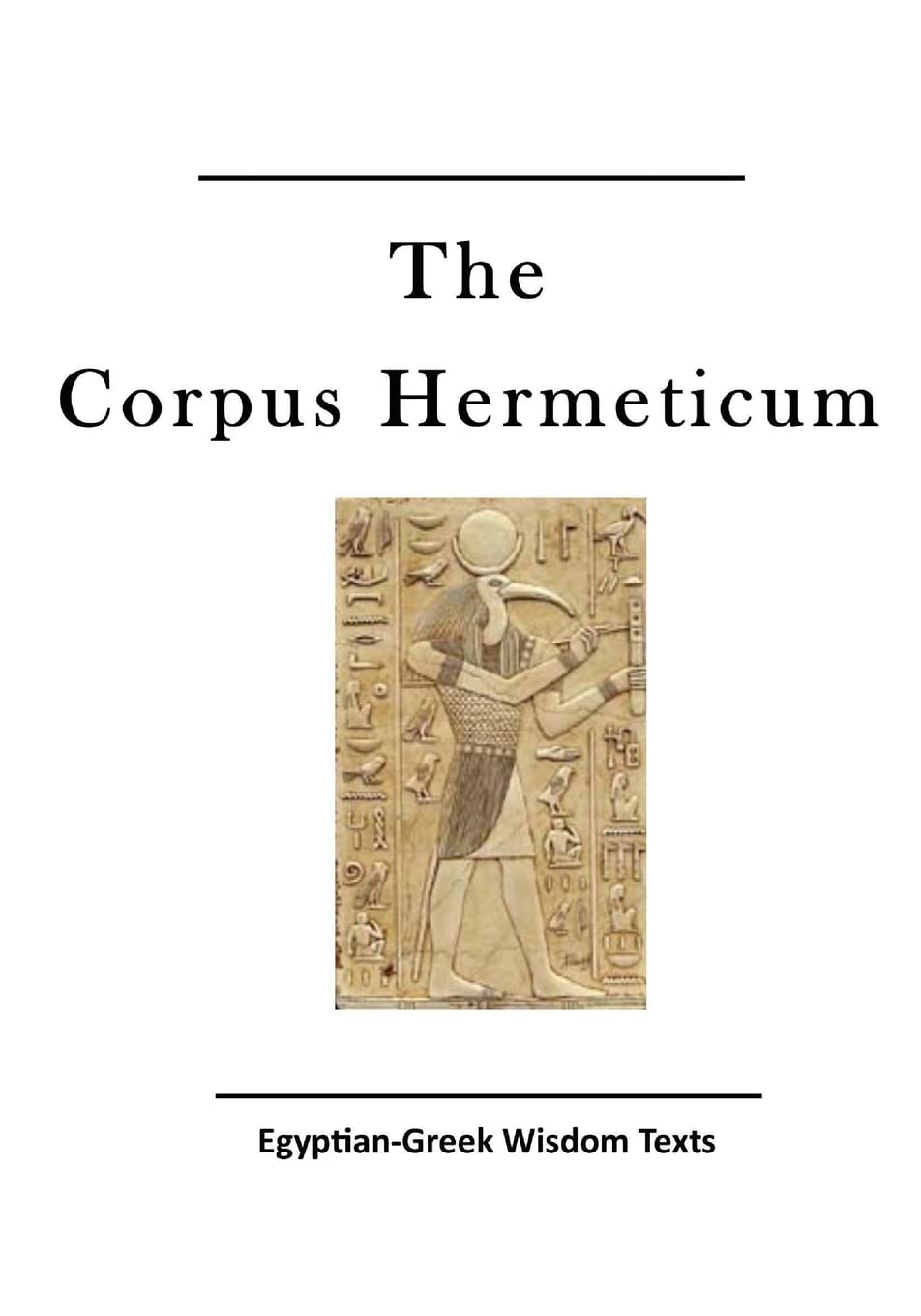
Title
The Corpus Hermeticum: Egyptiangreek Wisdom Texts
Sold by Ergodebooks, an authorized reseller.
Returns accepted within 30 days | support@ergodebooks.com
Shipping Information
- Free Standard Shipping — United States only
- Processing Time: 3–5 business days
- Estimated Delivery: 6–10 business days after dispatch
- Double-boxed, fully insured & discreetly packaged
- Tracking number sent via email once dispatched
Returns & Refund
Returns accepted within 30 days of delivery.
Damaged or Defective Item
Free return shipping + replacement or full refund
Wrong Item Received
Free return shipping + replacement or full refund
Change of Mind
Return shipping at customer's expense · 25% restocking fee applies
Payment Option

The Corpus Hermeticumthe Corpus Hermeticum Are The Core Documents Of The Hermetic Traditionhermesan Introduction To The Corpus Hermeticum By John Michael Greerthe Hermetica Are Egyptiangreek Wisdom Texts From The 2Nd And 3Rd Centuries Ad, Which Are Mostly Presented As Dialogues In Which A Teacher, Generally Identified As Hermes Trismegistus (Thricegreatest Hermes), Enlightens A Disciple. The Texts Form The Basis Of Hermeticism. They Discuss The Divine, The Cosmos, Mind, And Nature. Some Touch Upon Alchemy, Astrology, And Related Concepts.The Fifteen Tractates Of The Corpus Hermeticum, Along With The Perfect Sermon Or Asclepius, Are The Foundation Documents Of The Hermetic Tradition. Written By Unknown Authors In Egypt Sometime Before The End Of The Third Century C.E., They Were Part Of A Once Substantial Literature Attributed To The Mythic Figure Of Hermes Trismegistus, A Hellenistic Fusion Of The Greek God Hermes And The Egyptian God Thoth.This Literature Came Out Of The Same Religious And Philosophical Ferment That Produced Neoplatonism, Christianity, And The Diverse Collection Of Teachings Usually Lumped Together Under The Label Gnosticism: A Ferment Which Had Its Roots In The Impact Of Platonic Thought On The Older Traditions Of The Hellenized East. There Are Obvious Connections And Common Themes Linking Each Of These Traditions, Although Each Had Its Own Answer To The Major Questions Of The Time.The Treatises We Now Call The Corpus Hermeticum Were Collected Into A Single Volume In Byzantine Times, And A Copy Of This Volume Survived To Come Into The Hands Of Lorenzo De Medici'S Agents In The Fifteenth Century. Marsilio Ficino, The Head Of The Florentine Academy, Was Pulled Off The Task Of Translating The Dialogues Of Plato In Order To Put The Corpus Hermeticum Into Latin First. His Translation Saw Print In 1463, And Was Reprinted At Least Twentytwo Times Over The Next Century And A Half.The Treatises Divide Up Into Several Groups. The First (Ch I), The Poemandres, Is The Account Of A Revelation Given To Hermes Trismegistus By The Being Poemandres Or Manshepherd, An Expression Of The Universal Mind. The Next Eight (Ch Iiix), The General Sermons, Are Short Dialogues Or Lectures Discussing Various Basic Points Of Hermetic Philosophy. There Follows The Key (Ch X), A Summary Of The General Sermons, And After This A Set Of Four Tractates Mind Unto Hermes, About The Common Mind, The Secret Sermon On The Mountain, And The Letter Of Hermes To Asclepius (Ch Xixiv) Touching On The More Mystical Aspects Of Hermeticism. The Collection Is Rounded Off By The Definitions Of Asclepius Unto King Ammon (Ch Xv), Which May Be Composed Of Three Fragments Of Longer Works.The Perfect Sermonthe Perfect Sermon Or Asclepius, Which Is Also Included Here, Reached The Renaissance By A Different Route. It Was Translated Into Latin In Ancient Times, Reputedly By The Same Lucius Apuleius Of Madaura Whose Comicserious Masterpiece The Golden Ass Provides Some Of The Best Surviving Evidence On The Worship Of Isis In The Roman World. Augustine Of Hippo Quotes From The Old Latin Translation At Length In His City Of God, And Copies Remained In Circulation In Medieval Europe All The Way Up To The Renaissance. The Original Greek Version Was Lost, Although Quotations Survive In Several Ancient Sources.The Perfect Sermon Is Substantially Longer Than Any Other Surviving Work Of Ancient Hermetic Philosophy. It Covers Topics Which Also Occur In The Corpus Hermeticum, But Touches On Several Other Issues As Well Among Them Magical Processes For The Manufacture Of Gods And A Long And Gloomy Prophecy Of The Decline Of Hermetic Wisdom And The End Of The World.
⚠️ WARNING (California Proposition 65):
This product may contain chemicals known to the State of California to cause cancer, birth defects, or other reproductive harm.
For more information, please visit www.P65Warnings.ca.gov.
- Q: What is the page count of The Corpus Hermeticum? A: The book has eighty-two pages. This length provides a concise overview of the Hermetic philosophy and teachings.
- Q: What are the dimensions of The Corpus Hermeticum? A: The dimensions are seven point zero one inches in length, zero point two inches in width, and ten inches in height. These measurements make it a portable paperback.
- Q: What type of binding does The Corpus Hermeticum have? A: It is a paperback binding. This allows for easy handling and reading, suitable for both home and travel.
- Q: How should I read The Corpus Hermeticum? A: You can read it as a philosophical text or as a guide to Hermetic thought. It's suitable for anyone interested in spiritual and philosophical traditions.
- Q: Is The Corpus Hermeticum suitable for beginners? A: Yes, it is suitable for beginners. The dialogues are structured to introduce fundamental concepts of Hermetic philosophy.
- Q: Can I use The Corpus Hermeticum for academic purposes? A: Yes, it can be used for academic purposes. Many scholars study its themes, relevance to Neoplatonism, and connections to Gnosticism.
- Q: How should I store The Corpus Hermeticum? A: Store it in a dry, cool place away from direct sunlight. This will help preserve the quality of the paperback binding and pages.
- Q: Is The Corpus Hermeticum safe for children? A: No, it is not specifically designed for children. The philosophical content may be complex and not suitable for younger audiences.
- Q: What if The Corpus Hermeticum arrives damaged? A: Contact the seller for a return or exchange. Most sellers have a policy for damaged items upon delivery.
- Q: Does The Corpus Hermeticum have any adult content? A: No, it does not contain explicit adult content. However, it does explore complex philosophical themes.
- Q: What is the main topic of The Corpus Hermeticum? A: The main topic is Hermetic philosophy. It discusses the divine, the cosmos, and the nature of reality through dialogues.
- Q: How does The Corpus Hermeticum compare to other philosophical texts? A: It offers unique insights into Egyptian-Greek thought, distinguishing it from other philosophical texts of its time.
- Q: Is there a warranty for The Corpus Hermeticum? A: Typically, there is no warranty for books. However, check with the seller for specific return policies.
- Q: What should I do if I have issues with The Corpus Hermeticum? A: Reach out to customer support for assistance. They can guide you through any issues regarding your purchase.
- Q: Can I find The Corpus Hermeticum in libraries? A: Yes, many libraries carry it. You can check your local library's catalog for availability.