
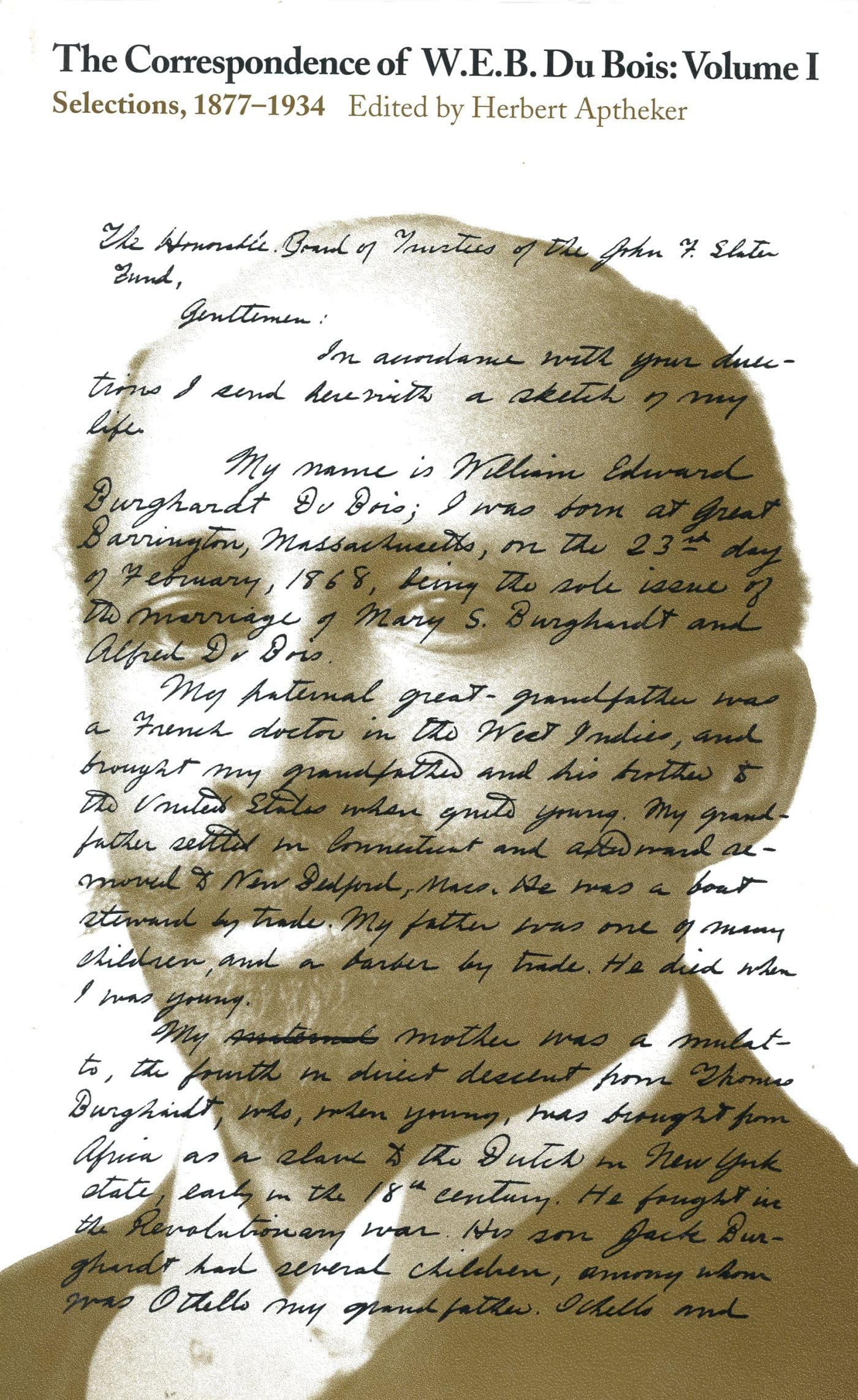
Title
The Correspondence Of W.E.B. Du Bois, Volume I: Selections, 18771934 (Volume 1),Used
Sold by Ergodebooks, an authorized reseller.
Returns accepted within 30 days | support@ergodebooks.com
Shipping Information
- Free Standard Shipping — United States only
- Processing Time: 3–5 business days
- Estimated Delivery: 6–10 business days after dispatch
- Double-boxed, fully insured & discreetly packaged
- Tracking number sent via email once dispatched
Returns & Refund
Returns accepted within 30 days of delivery.
Damaged or Defective Item
Free return shipping + replacement or full refund
Wrong Item Received
Free return shipping + replacement or full refund
Change of Mind
Return shipping at customer's expense · 25% restocking fee applies
Payment Option

Scholar, Author, Editor, Teacher, Reformer, And Civil Rights Leader, W.E.B. Du Bois (18681963) Was A Major Figure In American Life And One Of The Earliest Proponents Of Equality For Black Americans. He Was A Founder And Leader Of The Niagara Movement, The Naacp, And The Panafrican Movement; A Progenitor Of The 1920S Harlem Renaissance; An Advocate Of Anticolonialism, Antiimperialism, Unionism, And Equality For Women; And A Champion Of The Rights Of Oppressed People Around The World. The Threevolume Correspondence Of W.E.B. Du Bois Offers A Unique Perspective On Du Bois'S Experiences And Views. In Recognition Of The Significance Of The Correspondence, The Final Volume Was Named A Best Book Of The Year By The New York Times Book Review. Herbert Aptheker Has Provided An Introduction And Notes To Each Volume, Illuminating The Circumstances And Identifying The Personalities Involved In The Correspondence. A Long Time Friend And Colleague Of Du Bois, Aptheker Is A Wellknown Historian Of The African American Experience. In 1939 And Again In 1969, He Won The History Award Given By The Association For The Study Of Negro Life And History. Among His Most Prominent Works Are American Negro Slave Revolts And The Threevolume Documentary History Of The Negro People In The United States.
⚠️ WARNING (California Proposition 65):
This product may contain chemicals known to the State of California to cause cancer, birth defects, or other reproductive harm.
For more information, please visit www.P65Warnings.ca.gov.
- Q: What is the subject of 'The Correspondence of W.E.B. Du Bois, Volume I'? A: This volume focuses on the life, thoughts, and correspondence of W.E.B. Du Bois, an influential scholar and civil rights leader, covering his experiences and views from 1877 to 1934.
- Q: Who is the author of this book? A: The book is edited by Herbert Aptheker, a noted historian of the African American experience and a long-time friend of W.E.B. Du Bois.
- Q: What is the binding type of this book? A: The book is bound in hardcover, ensuring durability and a premium feel.
- Q: How many pages are in this volume? A: This volume contains a total of 510 pages.
- Q: When was this edition published? A: This first edition was published on October 15, 1973.
- Q: What significant movements was W.E.B. Du Bois associated with? A: W.E.B. Du Bois was a key figure in the Niagara Movement, the NAACP, and the Pan-African Movement, advocating for equality and civil rights.
- Q: Is there any critical acclaim for this book? A: Yes, the final volume of the Correspondence was named a Best Book of the Year by the New York Times Book Review, highlighting its significance.
- Q: What themes are explored in the correspondence? A: The correspondence delves into themes of equality, civil rights, anticolonialism, and the experiences of black Americans during Du Bois's lifetime.
- Q: Can this book be used for academic purposes? A: Yes, the book serves as a valuable resource for students and scholars studying African American history and civil rights.
- Q: What additional content does the book include? A: The book features an introduction and notes by Herbert Aptheker, providing context and insights into the correspondence and the people involved.