
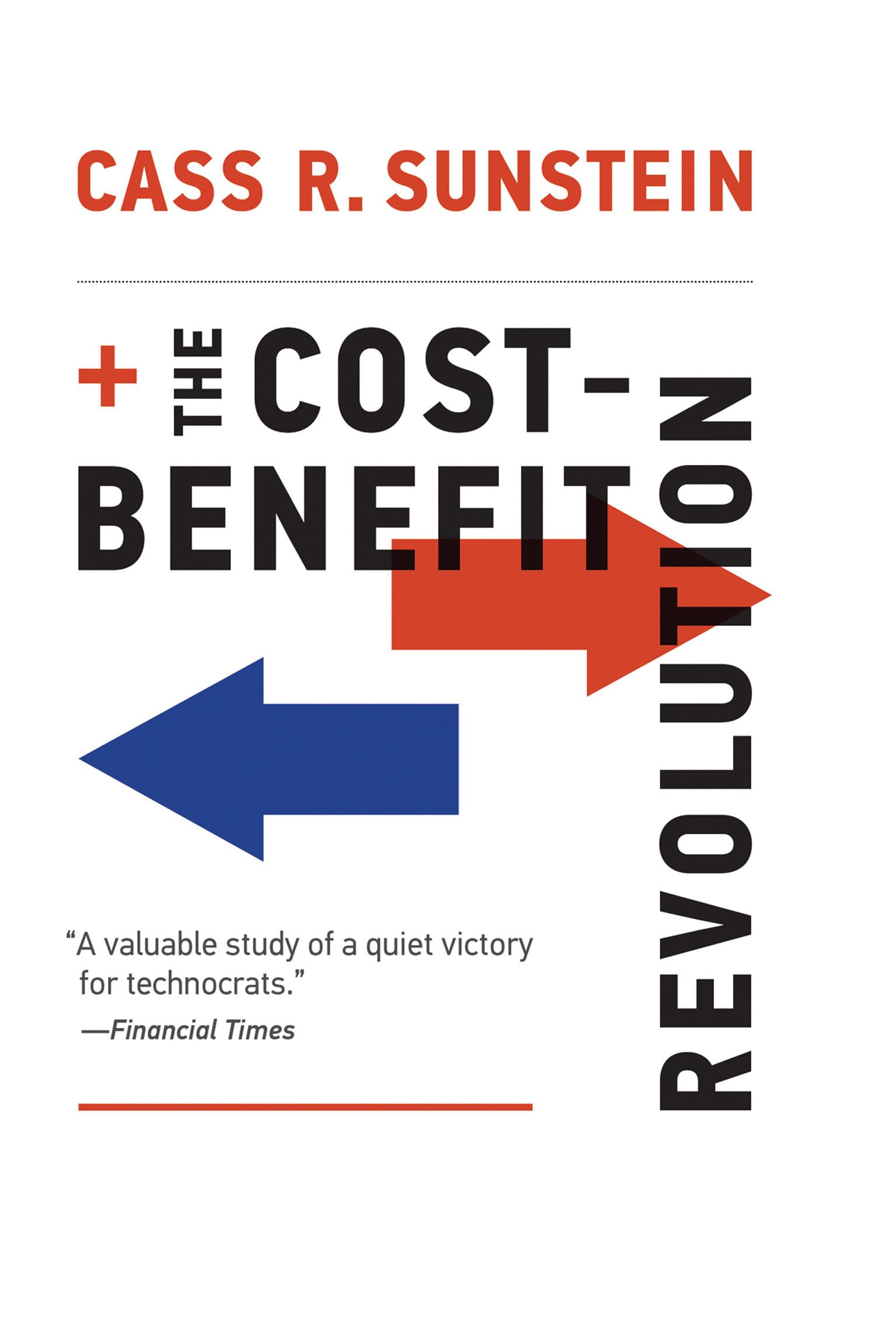
Title
The CostBenefit Revolution (Mit Press),Used
Sold by Ergodebooks, an authorized reseller.
Returns accepted within 30 days | support@ergodebooks.com
Shipping Information
- Free Standard Shipping — United States only
- Processing Time: 3–5 business days
- Estimated Delivery: 6–10 business days after dispatch
- Double-boxed, fully insured & discreetly packaged
- Tracking number sent via email once dispatched
Returns & Refund
Returns accepted within 30 days of delivery.
Damaged or Defective Item
Free return shipping + replacement or full refund
Wrong Item Received
Free return shipping + replacement or full refund
Change of Mind
Return shipping at customer's expense · 25% restocking fee applies
Payment Option

Why policies should be based on careful consideration of their costs and benefits rather than on intuition, popular opinion, interest groups, and anecdotes.Opinions on government policies vary widely. Some people feel passionately about the child obesity epidemic and support government regulation of sugary drinks. Others argue that people should be able to eat and drink whatever they like. Some people are alarmed about climate change and favor aggressive government intervention. Others don't feel the need for any sort of climate regulation. In The CostBenefit Revolution, Cass Sunstein argues our major disagreements really involve facts, not values. It follows that government policy should not be based on public opinion, intuitions, or pressure from interest groups, but on numbersmeaning careful consideration of costs and benefits. Will a policy save one life, or one thousand lives? Will it impose costs on consumers, and if so, will the costs be high or negligible? Will it hurt workers and small businesses, and, if so, precisely how much?As the Obama administration's regulatory czar, Sunstein knows his subject in both theory and practice. Drawing on behavioral economics and his wellknown emphasis on nudging, he celebrates the costbenefit revolution in policy making, tracing its defining moments in the Reagan, Clinton, and Obama administrations (and pondering its uncertain future in the Trump administration). He acknowledges that public officials often lack information about costs and benefits, and outlines stateoftheart techniques for acquiring that information. Policies should make people's lives better. Quantitative costbenefit analysis, Sunstein argues, is the best available method for making this happeneven if, in the future, new measures of human wellbeing, also explored in this book, may be better still.
⚠️ WARNING (California Proposition 65):
This product may contain chemicals known to the State of California to cause cancer, birth defects, or other reproductive harm.
For more information, please visit www.P65Warnings.ca.gov.
- Q: What is the main focus of 'The Cost-Benefit Revolution'? A: 'The Cost-Benefit Revolution' by Cass Sunstein emphasizes the importance of basing government policies on careful analysis of costs and benefits rather than public opinion or intuition.
- Q: Who is the author of this book? A: The author of 'The Cost-Benefit Revolution' is Cass R. Sunstein, who served as the regulatory czar during the Obama administration.
- Q: What topics does the book cover? A: The book discusses economic policy, the significance of quantitative cost-benefit analysis, and the evolution of policy-making through different U.S. administrations.
- Q: How many pages does this book have? A: 'The Cost-Benefit Revolution' contains 288 pages, providing a comprehensive exploration of its themes.
- Q: What type of binding does this book have? A: This edition of 'The Cost-Benefit Revolution' is available in paperback binding.
- Q: When was 'The Cost-Benefit Revolution' published? A: 'The Cost-Benefit Revolution' was published on September 24, 2019.
- Q: Is this book suitable for someone interested in economics? A: Yes, 'The Cost-Benefit Revolution' is particularly suitable for readers interested in economic policy and development.
- Q: What is the condition of the book? A: 'The Cost-Benefit Revolution' is offered in new condition, ensuring that it is in pristine condition for readers.
- Q: Does the book include practical examples of cost-benefit analysis? A: Yes, Cass Sunstein includes practical examples and techniques for conducting cost-benefit analysis based on his experiences in government.
- Q: What is the significance of cost-benefit analysis according to the author? A: Cass Sunstein argues that cost-benefit analysis is the best available method for shaping policies that improve people's lives, emphasizing its role in effective governance.