
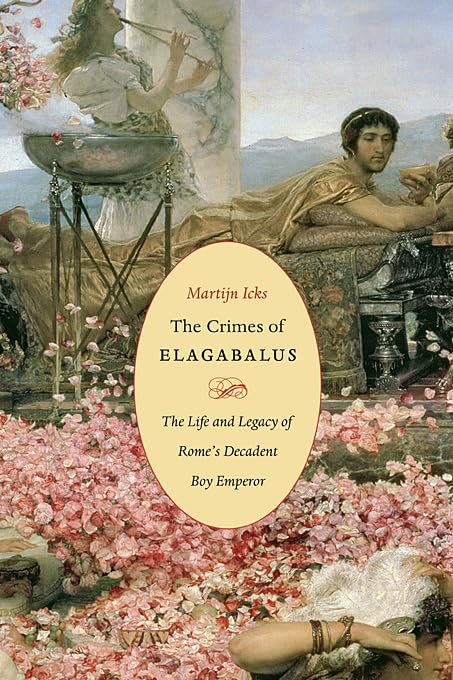
Title
The Crimes Of Elagabalus: The Life And Legacy Of Rome'S Decadent Boy Emperor
Sold by Ergodebooks, an authorized reseller.
Returns accepted within 30 days | support@ergodebooks.com
Shipping Information
- Free Standard Shipping — United States only
- Processing Time: 3–5 business days
- Estimated Delivery: 6–10 business days after dispatch
- Double-boxed, fully insured & discreetly packaged
- Tracking number sent via email once dispatched
Returns & Refund
Returns accepted within 30 days of delivery.
Damaged or Defective Item
Free return shipping + replacement or full refund
Wrong Item Received
Free return shipping + replacement or full refund
Change of Mind
Return shipping at customer's expense · 25% restocking fee applies
Payment Option

The Four Short Years Of Elagabaluss Rule Have Generated Nearly Two Millennia Of Sustained Attention, From Salacious Rumor To Scholarly Analysis To Novels That Cast Him As A Gay Hero Avant La Lettre. Here, Martijn Icks Succeeds In Distinguishing The Reality Of The Emperors Brief Life From The Myth That Clouds Itand In Tracing The Meaning Of The Myth Itself To The Present Day.In 219 Ce, When The Fourteenyearold Syrian Arrived In Rome To Assume The Throne, He Brought With Him A Conical Black Stone, Which He Declared Was The Earthly Form Of The Sun God Elgabal, Who Gave Elagabalus His Name And Lifelong Office As High Priest. Shoving Jupiter Aside, The New Emperor Did The Unthinkable, Installing Elgabal At The Head Of The Roman Pantheon And Marrying A Vestal Virgin. Whether For These Offenses, His Neglect Of The Empire, Or Weariness From Watching The Emperor Dance At The Elaborate Daily Sacrifices, The Imperial Guards Murdered Elagabalus And Put Elgabal In A Packing Crate.Sifting Through Later Accounts Of The Emperors Outrageous Behavior, Icks Finds The Invented Elagabalus As Compelling As The Historical Figure. In Literature, Art, And Music From The Fifteenth Century On, Elagabalus Appears In Many Guises, From Evil Tyrant To Anarchist Rebel, From Mystical Androgyne To Modern Gay Teenager, From Decadent Sensualist To Pop Star. These Many Reincarnations Reveal As Much About The Ages That Produced Them, Icks Shows, As They Do About The Badboy Emperor Himself.
⚠️ WARNING (California Proposition 65):
This product may contain chemicals known to the State of California to cause cancer, birth defects, or other reproductive harm.
For more information, please visit www.P65Warnings.ca.gov.
- Q: What is the main topic of 'The Crimes of Elagabalus'? A: 'The Crimes of Elagabalus' explores the life and legacy of Elagabalus, Rome's controversial boy emperor, distinguishing between the historical facts and the myths surrounding his reign.
- Q: Who is the author of this book? A: The book is authored by Martijn Icks, a scholar who analyzes Elagabalus's life and the interpretations of his character throughout history.
- Q: What is the genre of this book? A: 'The Crimes of Elagabalus' falls under the category of historical biography, focusing on both the individual and the societal implications of his rule.
- Q: How many pages does the book have? A: The book contains 304 pages, providing a comprehensive look at Elagabalus's life and the myths that have developed around him.
- Q: What is the binding type of this book? A: 'The Crimes of Elagabalus' is available in hardcover binding, which is ideal for durability and display.
- Q: When was this book published? A: The book was published on February 29, 2012.
- Q: What condition is the book in? A: The book is in new condition, ensuring that it is free from any wear or damage.
- Q: Is there any specific audience for this book? A: This book is suitable for readers interested in Roman history, biographies, or those studying the cultural impact of historical figures.
- Q: Does this book contain illustrations or images? A: The book does not specifically mention illustrations; it primarily focuses on text and scholarly analysis.
- Q: What makes this book a valuable read? A: This book provides an in-depth analysis that separates fact from fiction regarding Elagabalus, offering insights into how historical narratives are formed and transformed over time.