
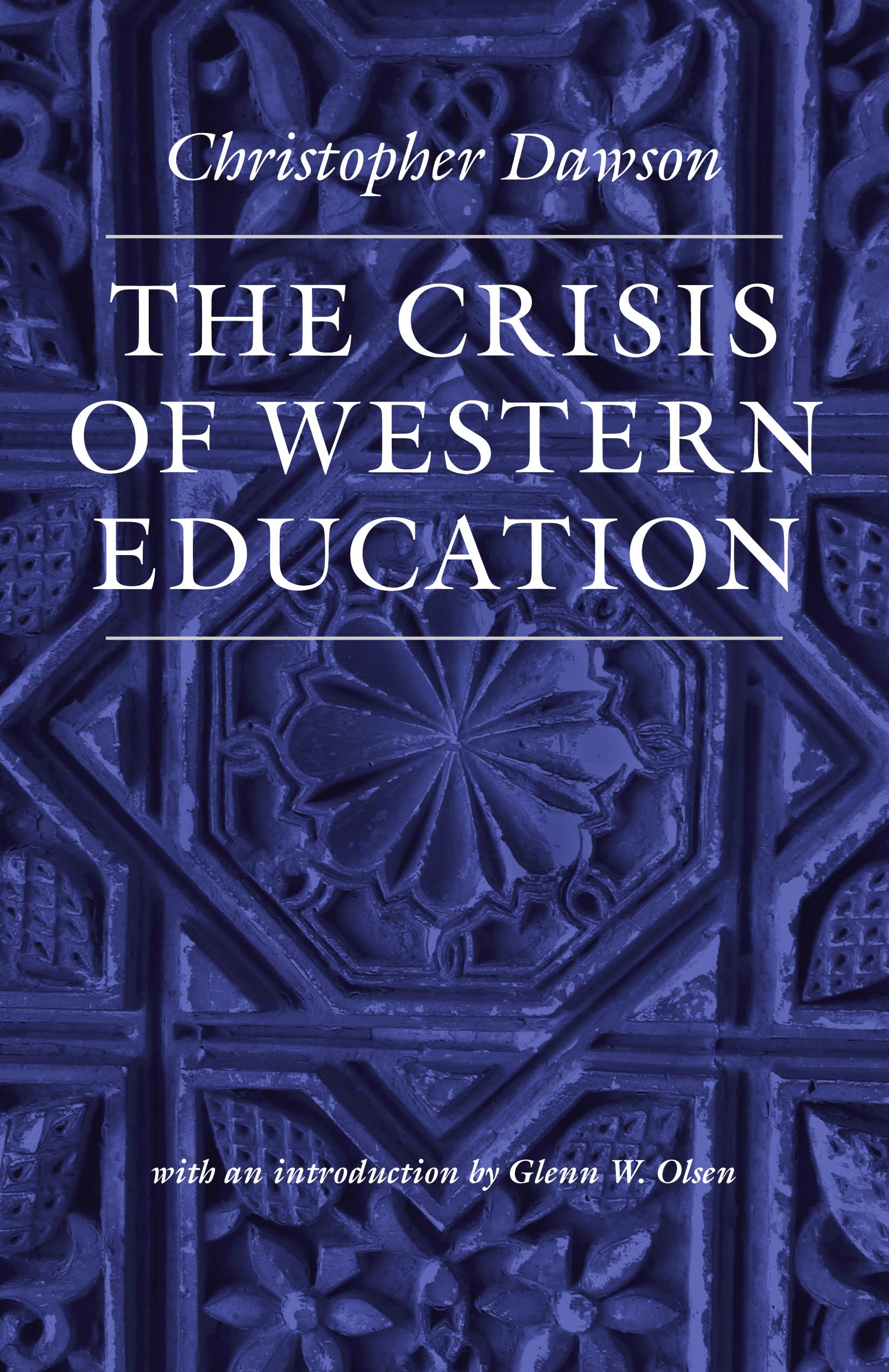
Title
The Crisis of Western Education (Works of Christopher Dawson),New
Sold by Ergodebooks, an authorized reseller.
Returns accepted within 30 days | support@ergodebooks.com
Shipping Information
- Free Standard Shipping — United States only
- Processing Time: 3–5 business days
- Estimated Delivery: 6–10 business days after dispatch
- Double-boxed, fully insured & discreetly packaged
- Tracking number sent via email once dispatched
Returns & Refund
Returns accepted within 30 days of delivery.
Damaged or Defective Item
Free return shipping + replacement or full refund
Wrong Item Received
Free return shipping + replacement or full refund
Change of Mind
Return shipping at customer's expense · 25% restocking fee applies
Payment Option

The Crisis of Western Education, originally published in 1961, served as a capstone of Christopher Dawson's thought on the Western educational system. Long out of print, the book has now been updated with a new introduction by Glenn W. Olsen and is included in the ongoing Works of Christopher Dawson series. In all of his writings, Dawson masterfully brings various disciplinary perspectives and historical sources into a complex unity of expression and applies them to concrete conditions of modern society.Dawson argued that Western culture had become increasingly defined by a set of economic and political preoccupations ultimately hostile to its larger spiritual end. Inevitably, its educational systems also became increasingly technological and pragmatic, undermining the long standing emphasis on liberal learning and spiritual reflection which were hallmarks of the Christian humanism that created it.In this important work on the Western educational system, Dawson traces the history of these developments and argues that Western civilization can only be saved by redirecting its entire educational system from its increasing vocationalism and specialization. He insists that the Christian college must be the cornerstone of such an educational reform. However, he argued that this redirection would require a much more organic and comprehensive study of the living Christian tradition than had been attempted in the past.Dawson had reservations about educational initiatives that had been developed in response to this crisis of education. Among them, he expressed doubts about newly emerging great books programs fearing that they would reduce the great tradition of a living culture to a set of central texts or great ideas. In contrast, he insisted that a Christian education had to be concerned with 'how spiritual forces are transmitted and how they change culture, often in unexpected ways.' This would require an understanding of the living and vital character of culture. As Dawson saw it, 'culture is essentially a network of relations, and it is only by studying a number of personalities that you can trace this network.' Dawson offers a diagnosis of modern education and proposes the retrieval of an organic and living culture which alone has the power to renew Western culture.
⚠️ WARNING (California Proposition 65):
This product may contain chemicals known to the State of California to cause cancer, birth defects, or other reproductive harm.
For more information, please visit www.P65Warnings.ca.gov.
- Q: What is the main focus of 'The Crisis of Western Education'? A: The book examines the decline of the Western educational system and argues for a reorientation towards liberal learning and spiritual reflection.
- Q: Who is the author of this book? A: The author is Christopher Dawson, a noted historian and cultural critic.
- Q: When was 'The Crisis of Western Education' originally published? A: It was originally published in 1961.
- Q: What updates have been made in the new edition? A: The new edition includes a new introduction by Glenn W. Olsen and is part of the ongoing Works of Christopher Dawson series.
- Q: How many pages does the book have? A: The book has 168 pages.
- Q: What type of binding does this book have? A: The book is available in paperback binding.
- Q: What are some key themes discussed in the book? A: Key themes include the impact of economic and political influences on education, the importance of Christian humanism, and the need for educational reform.
- Q: Is this book suitable for educators and students? A: Yes, it provides valuable insights for educators and students interested in understanding the historical and cultural context of Western education.
- Q: What is the significance of Christian colleges according to Dawson? A: Dawson argues that Christian colleges should be the cornerstone of educational reform to address the crisis in education.
- Q: Are there any criticisms of modern educational initiatives in the book? A: Yes, Dawson expresses doubts about programs like great books initiatives, fearing they simplify the complexities of culture and education.