If you have any questions, you are always welcome to contact us. We'll get back to you as soon as possible, withing 24 hours on weekdays.
Customer service
All questions about your order, return and delivery must be sent to our customer service team by e-mail at yourstore@yourdomain.com
Sale & Press
If you are interested in selling our products, need more information about our brand or wish to make a collaboration, please contact us at press@yourdomain.com
Help
If you have any questions, you are always welcome to contact us. We'll get back to you as soon as possible, withing 24 hours on weekdays.
Customer service
All questions about your order, return and delivery must be sent to our customer service team by e-mail at yourstore@yourdomain.com
Sale & Press
If you are interested in selling our products, need more information about our brand or wish to make a collaboration, please contact us at press@yourdomain.com
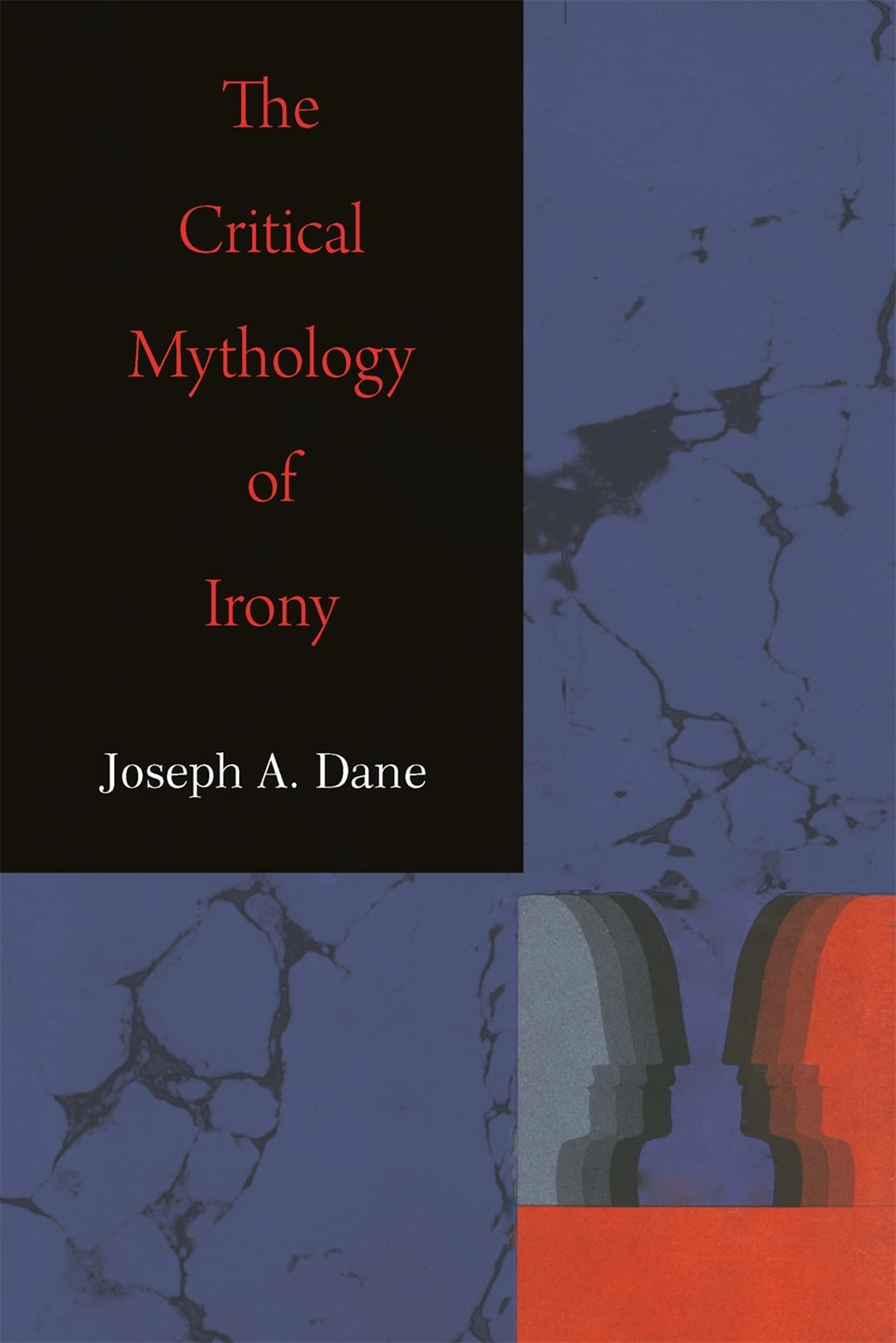
An ambitious theoretical work that ranges from the age of Socrates to the late twentieth century, this book traces the development of the concepts of irony within the history of Western literary criticism. Its purpose is not to promote a universal definition of irony, whether traditional or revisionist, but to examine how such definitions were created in critical history and what their use and invocation imply.Joseph A. Dane argues that the diverse, supposed forms of ironySocratic, rhetorical, romantic, dramatic, to name a feware not so much literary elements embedded in texts, awaiting discovery by critics, as they are notions used by critics of different eras and persuasions to manipulate those texts in various, often selfserving ways. The history of irony, Dane suggests, runs parallel to the history of criticism, and the changing definitions of irony reflect the changing ways in which readers and critics have defined their own roles in relation to literature.Probing and provocative, The Critical Mythology of Irony will appeal to a broad spectrum of critics and scholars, particularly those concerned with the historical basis of critical language and its political and educational implications.
⚠️ WARNING (California Proposition 65):
This product may contain chemicals known to the State of California to cause cancer,
birth defects, or other reproductive harm.
For MAP (Minimum Advertised Price) violations and Intellectual Property (IP) or Trademark concerns, please contact:
support@ergodebooks.com
⚠️ California Proposition 65 Warning: Some products sold on this website may expose you to chemicals known to the State of California to cause cancer, birth defects, or other reproductive harm. For more information, visit www.P65Warnings.ca.gov.