
Title
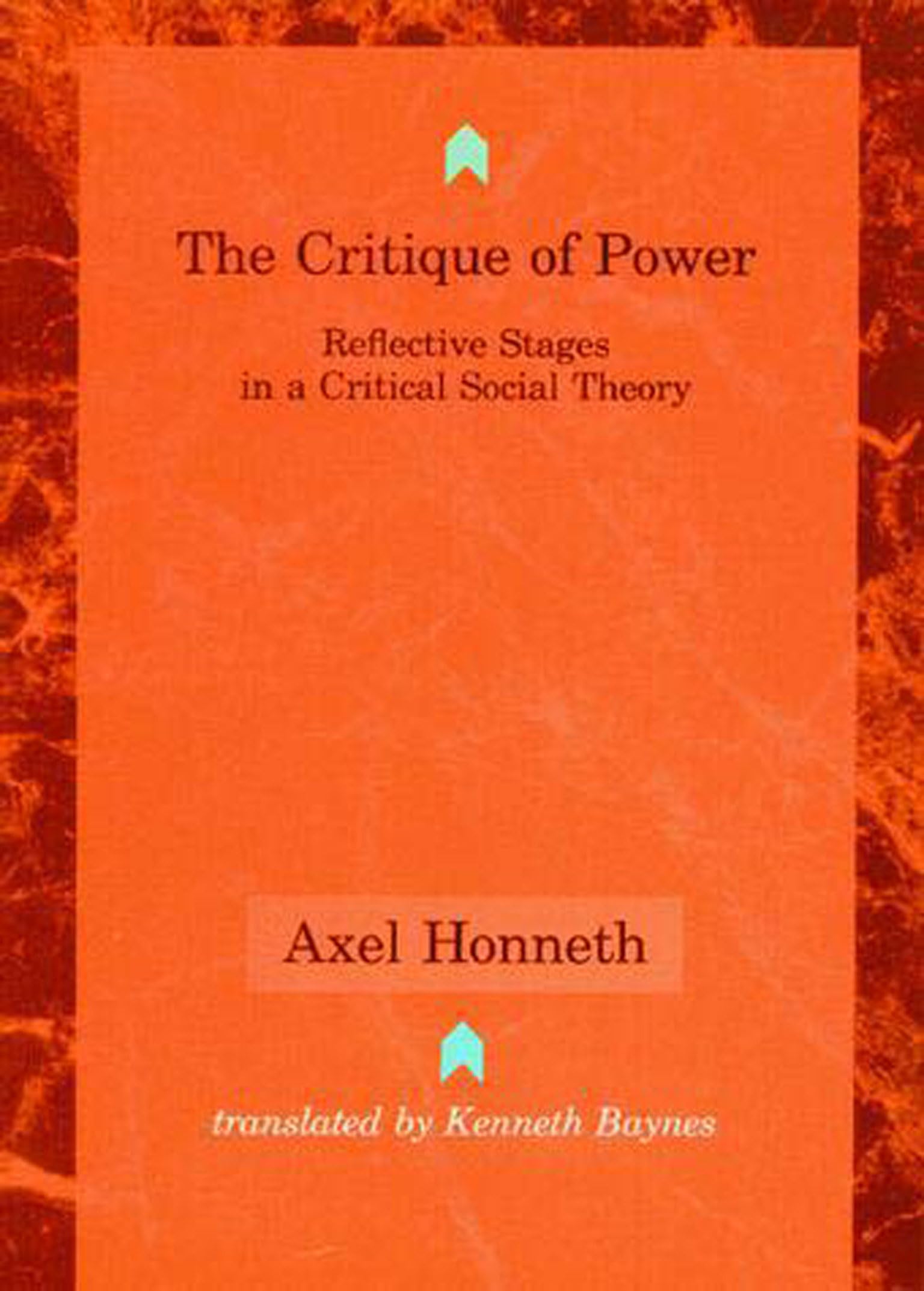
The Critique of Power: Reflective Stages in a Critical Social Theory (Studies in Contemporary German Social Thought),Used
Sold by Ergodebooks, an authorized reseller.
Returns accepted within 30 days | support@ergodebooks.com
Shipping Information
- Free Standard Shipping — United States only
- Processing Time: 3–5 business days
- Estimated Delivery: 6–10 business days after dispatch
- Double-boxed, fully insured & discreetly packaged
- Tracking number sent via email once dispatched
Returns & Refund
Returns accepted within 30 days of delivery.
Damaged or Defective Item
Free return shipping + replacement or full refund
Wrong Item Received
Free return shipping + replacement or full refund
Change of Mind
Return shipping at customer's expense · 25% restocking fee applies
Payment Option

In this rich interpretation of the history of critical theory, Axel Hormeth clarifies critical theory's central problems and emphasizes the social factors that should provide it with a normative and practical orientation.Axel Honneth's Critique of Power is a rich interpretation of the history of critical theory, which clarifies its central problems and emphasizes the 'social' factors that should provide that theory with a normative and practical orientation.Honneth focuses on the dialog between French and German social theory that was beginning at the time of Michel Foucault's death. It traces the common roots of the work of Foucault and Jrgen Habermas to a basic text of the last generation of critical theoristsMax Horkheimer and Theodor Adorno's Dialectic of Enlightenmentand draws from this connection the outline of a program that might unite and surpass their seemingly irreconcilable methods of critiquing power structures. In doing so, Honneth provides a constructive and nonpolemical framework for comparisons between the two theorists. And he presents a novel interpretation of Foucault's analysis of social systems.Honneth traces the internal contradictions in critical theory through an analysis of Horkheimer's early programmatic writings, the Dialectic of Enlightenment, and Adorno's later socialtheoretical writings. He shows how Habermas and Foucault in their distinctive ways reinserted the social world into critical theory but argues that neither operation has been wholly successful. His cogent analysis redirects critical social theory in ways that can draw on the strengths and avoid the weaknesses of the two approaches.
⚠️ WARNING (California Proposition 65):
This product may contain chemicals known to the State of California to cause cancer, birth defects, or other reproductive harm.
For more information, please visit www.P65Warnings.ca.gov.