
Title
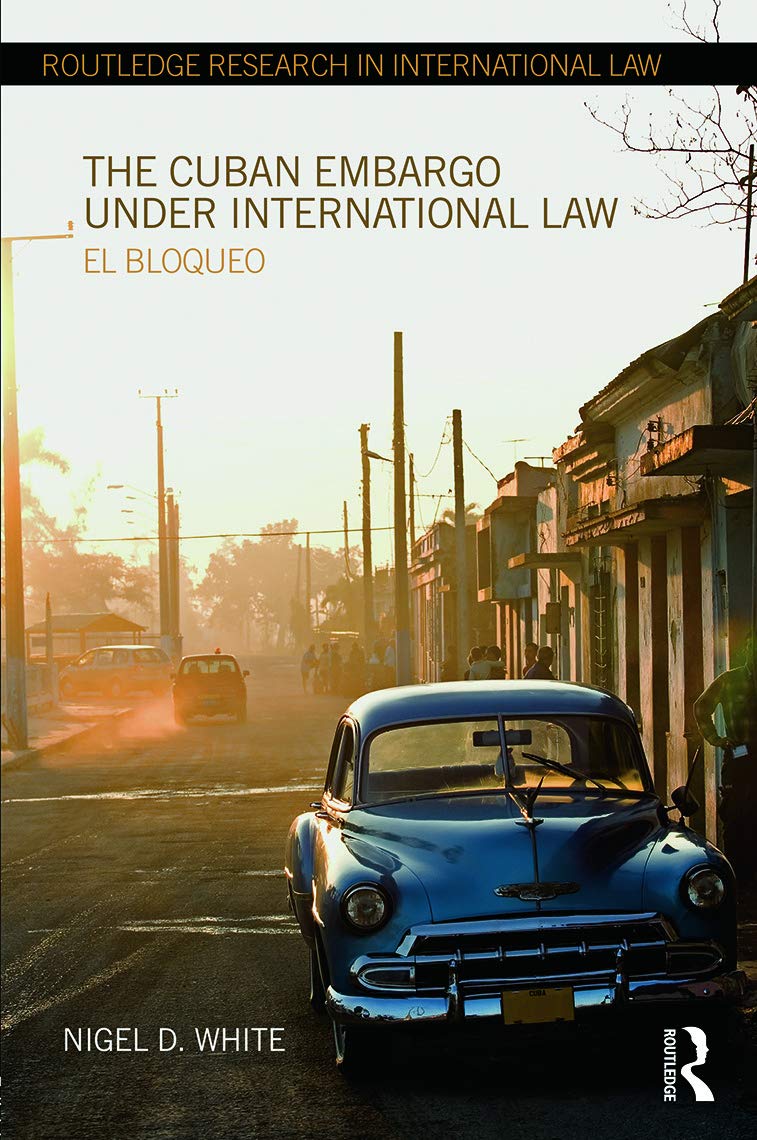
The Cuban Embargo under International Law (Routledge Research in International Law),Used
Sold by Ergodebooks, an authorized reseller.
Returns accepted within 30 days | support@ergodebooks.com
Shipping Information
- Free Standard Shipping — United States only
- Processing Time: 3–5 business days
- Estimated Delivery: 6–10 business days after dispatch
- Double-boxed, fully insured & discreetly packaged
- Tracking number sent via email once dispatched
Returns & Refund
Returns accepted within 30 days of delivery.
Damaged or Defective Item
Free return shipping + replacement or full refund
Wrong Item Received
Free return shipping + replacement or full refund
Change of Mind
Return shipping at customer's expense · 25% restocking fee applies
Payment Option

The United States embargo against Cuba was imposed over fifty years ago initially as a response to the new revolutionary government's seizure of US properties, which was viewed by the US as a violation of international law. However, while sanctions can be legitimate means of enforcing established norms, the Cuban embargo itself appears to be the wrongful act, and its persistence calls into question the importance and function of international law.This book examines the history, legality and effects of US sanctions against Cuba and argues that the embargo has largely become a matter of politics and ideology; subjecting Cuba to apparently illegitimate coercion that has resulted in a prolonged global toleration of what appears to be a serious violation of international law. The book demonstrates how the Cuban embargo undermines the use of sanctions worldwide, and asks whether the refusal of world governments to address the illegality of the embargo reduces international law to tokenism where concepts of sovereign equality and nonintervention are no longer a priority. Despite the weaknesses of international law, Nigel D. White argues that in certain political conditions it will be possible to end the embargo as part of a bilateral agreement to restore normal relations between the US and Cuba and, furthermore, that such an agreement, if it is to succeed, will have to be shaped by the broad parameters of law and justice.As a fierce reevaluation of international law through the story of a country under siege, this book will be of great interest and use to researchers and students of public international law, international relations, and US and Latin American politics.
⚠️ WARNING (California Proposition 65):
This product may contain chemicals known to the State of California to cause cancer, birth defects, or other reproductive harm.
For more information, please visit www.P65Warnings.ca.gov.