
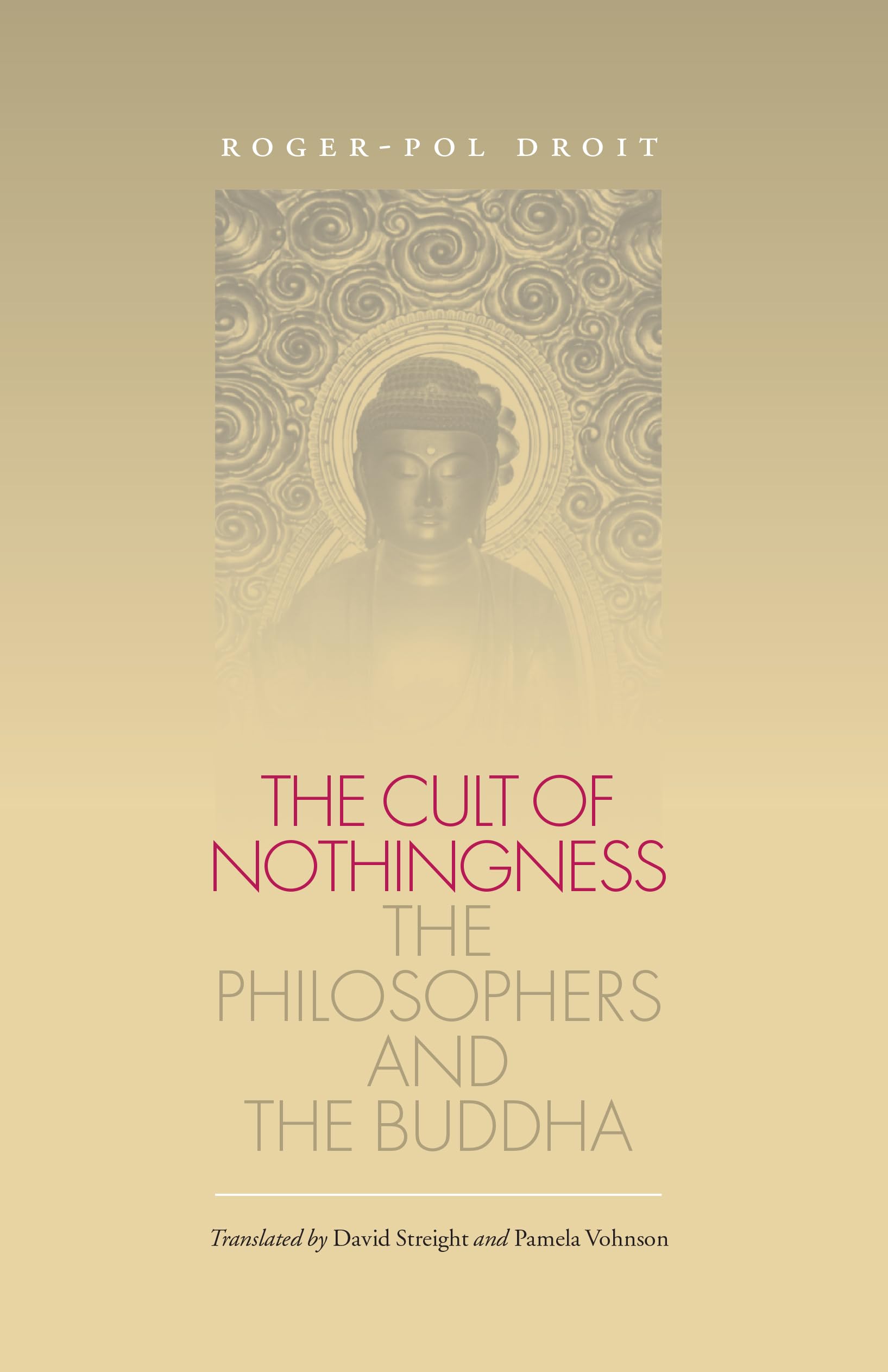
Title
The Cult Of Nothingness: The Philosophers And The Buddha,Used
Sold by Ergodebooks, an authorized reseller.
Returns accepted within 30 days | support@ergodebooks.com
Shipping Information
- Free Standard Shipping — United States only
- Processing Time: 3–5 business days
- Estimated Delivery: 6–10 business days after dispatch
- Double-boxed, fully insured & discreetly packaged
- Tracking number sent via email once dispatched
Returns & Refund
Returns accepted within 30 days of delivery.
Damaged or Defective Item
Free return shipping + replacement or full refund
Wrong Item Received
Free return shipping + replacement or full refund
Change of Mind
Return shipping at customer's expense · 25% restocking fee applies
Payment Option

Droit traces the history of the Western understanding of Buddhism following the late 18thcentury beginnings of the translation of the Buddhist canon. He reveals how major 19thcentury Western philosophers such as Schopenhauer, Nietzsche, Schlegel, Hegel, and others in fact misinterpreted the Buddha's teaching of nirvana as a lifedetesting and negative annihilation of the individual.
⚠️ WARNING (California Proposition 65):
This product may contain chemicals known to the State of California to cause cancer, birth defects, or other reproductive harm.
For more information, please visit www.P65Warnings.ca.gov.
- Q: What is the page count of this book? A: This book has three hundred four pages. It provides an in-depth analysis of Western interpretations of Buddhism.
- Q: What are the dimensions of 'The Cult of Nothingness'? A: The book measures six inches in length, nine inches in height, and zero point six three inches in width. These dimensions make it a convenient size for reading.
- Q: What type of binding does this book have? A: This book features paperback binding. Paperback editions are known for being flexible and lightweight.
- Q: Who is the author of 'The Cult of Nothingness'? A: The author is Roger-Pol Droit. He is recognized for his scholarly work on philosophy and Buddhism.
- Q: What is the main theme of 'The Cult of Nothingness'? A: The main theme explores the misinterpretation of Buddha's teachings by Western philosophers. It addresses how these misunderstandings shaped Western perceptions of Buddhism.
- Q: Is this book suitable for beginners interested in Buddhism? A: Yes, this book is suitable for beginners. It provides accessible insights into complex philosophical ideas surrounding Buddhism.
- Q: Can this book be used as a reference for academic studies? A: Yes, it can be used as a reference for academic studies. The book offers scholarly analysis backed by historical context.
- Q: How does one read this book effectively? A: To read this book effectively, take notes on key concepts. Engaging with the text by reflecting on the philosophical themes enhances understanding.
- Q: Is 'The Cult of Nothingness' appropriate for young readers? A: No, this book is not specifically aimed at young readers. Its content is geared towards adults and those interested in philosophy.
- Q: What is the recommended care for this used book? A: To care for this used book, store it in a dry place away from direct sunlight. Avoid excessive bending to maintain its condition.
- Q: Are there any special storage requirements for this book? A: No special storage requirements are needed. Simply keeping it on a shelf or in a bookcase works well.
- Q: What if the book arrives damaged? A: If the book arrives damaged, you should contact the seller for a return or replacement. Most sellers have policies in place for such issues.
- Q: Does this book contain any adult themes? A: No, this book does not contain explicit adult themes. It discusses philosophical concepts in a respectful manner.
- Q: How does this book compare to other works on Buddhism? A: This book is distinct because it focuses on Western interpretations. Other works may emphasize Buddhist practices or history.
- Q: Is this book recommended for philosophy students? A: Yes, it is highly recommended for philosophy students. The book offers valuable insights into the intersection of Western philosophy and Buddhism.