If you have any questions, you are always welcome to contact us. We'll get back to you as soon as possible, withing 24 hours on weekdays.
Customer service
All questions about your order, return and delivery must be sent to our customer service team by e-mail at yourstore@yourdomain.com
Sale & Press
If you are interested in selling our products, need more information about our brand or wish to make a collaboration, please contact us at press@yourdomain.com
Help
If you have any questions, you are always welcome to contact us. We'll get back to you as soon as possible, withing 24 hours on weekdays.
Customer service
All questions about your order, return and delivery must be sent to our customer service team by e-mail at yourstore@yourdomain.com
Sale & Press
If you are interested in selling our products, need more information about our brand or wish to make a collaboration, please contact us at press@yourdomain.com
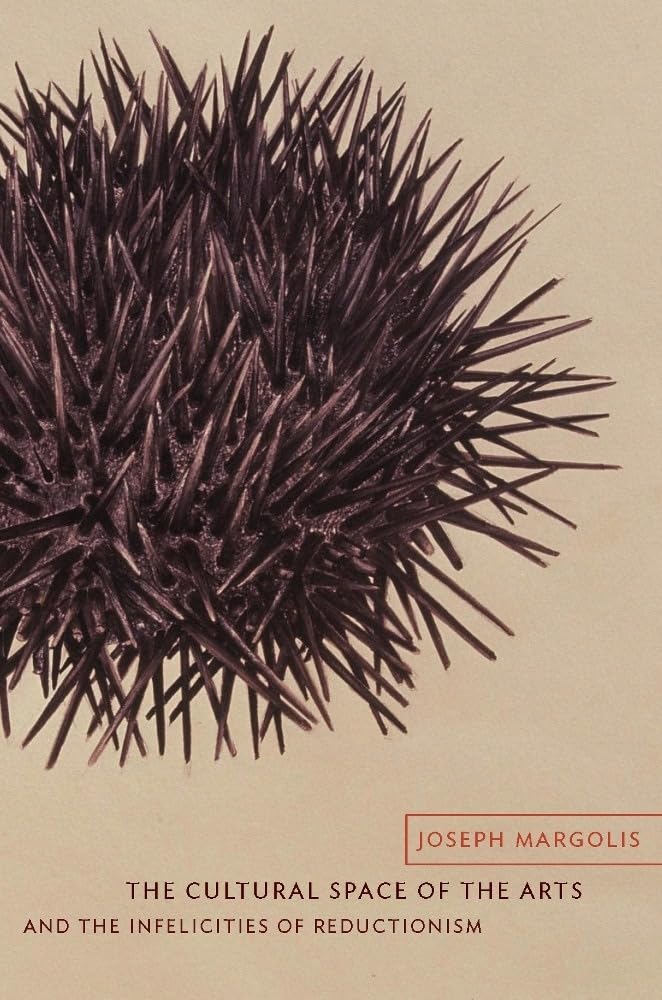
Joseph Margolis, known for his considerable contributions to the philosophy of art and aesthetics, pragmatism, and American philosophy, has focused primarily on the troublesome concepts of culture, history, language, agency, art, interpretation, and the human person or self. For Margolis, the signal problem has always been the same: how can we distinguish between physical nature and human culture? How do these realms relate?The Cultural Space of the Arts and the Infelicities of Reductionism identifies a conceptual tendency that can be drawn from the work of the twentieth century's bestknown analytic philosophers of art: Arthur Danto, Richard Wollheim, Kendall Walton, Nelson Goodman, Monroe Beardsley, Nol Carroll, and Jerrold Levinson, among others. This trend threatens to impoverish our grasp and appreciation of the arts by failing to do justice to the culturally informed nature of the arts themselves. Through his analysis, Margolis sets out to retrieve an adequate picture of the essential differences between physical nature and human cultureparticularly through language, history, meaning, significance, the emergence of the human self or person, and the essential features of human lifeall to explain how such difference bears on our perception of paintings and literature. Clearly argued and provocatively engaging, Margolis's work reestablishes what is essential to a productive encounter with art.
⚠️ WARNING (California Proposition 65):
This product may contain chemicals known to the State of California to cause cancer,
birth defects, or other reproductive harm.
For MAP (Minimum Advertised Price) violations and Intellectual Property (IP) or Trademark concerns, please contact:
support@ergodebooks.com
⚠️ California Proposition 65 Warning: Some products sold on this website may expose you to chemicals known to the State of California to cause cancer, birth defects, or other reproductive harm. For more information, visit www.P65Warnings.ca.gov.