
Title
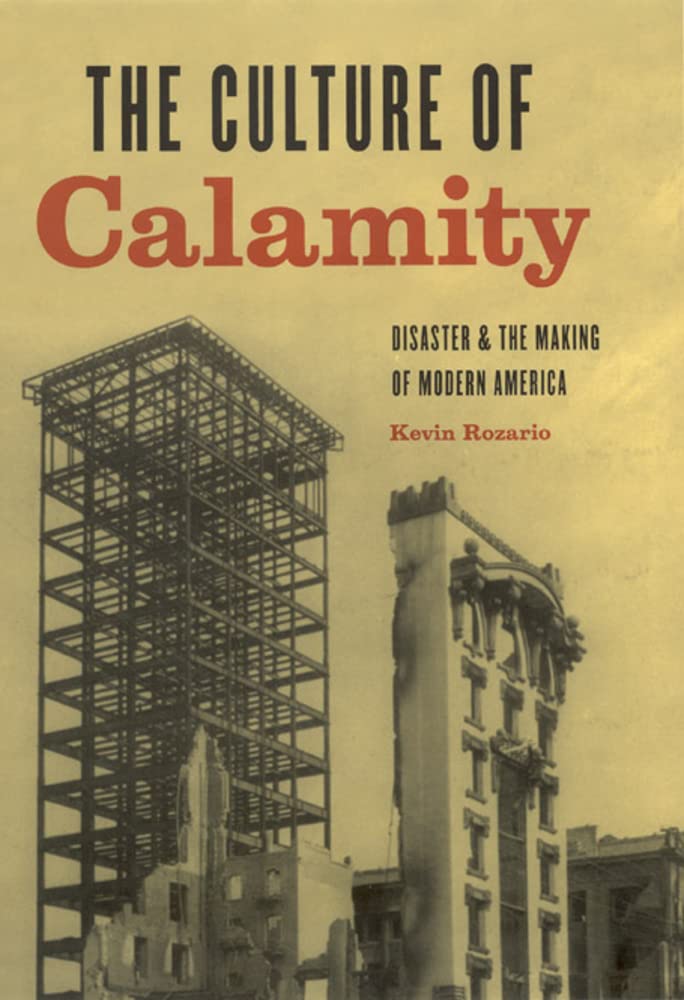
The Culture of Calamity: Disaster and the Making of Modern America,Used
Sold by Ergodebooks, an authorized reseller.
Returns accepted within 30 days | support@ergodebooks.com
Shipping Information
- Free Standard Shipping — United States only
- Processing Time: 3–5 business days
- Estimated Delivery: 6–10 business days after dispatch
- Double-boxed, fully insured & discreetly packaged
- Tracking number sent via email once dispatched
Returns & Refund
Returns accepted within 30 days of delivery.
Damaged or Defective Item
Free return shipping + replacement or full refund
Wrong Item Received
Free return shipping + replacement or full refund
Change of Mind
Return shipping at customer's expense · 25% restocking fee applies
Payment Option

Review'Broad in its historical sweep, sharp and pointed in its insights, this is academic writing at its spirited and relevant best.' Julia Keller Chicago Tribune'This interesting, complex examinaiton on how catastrophes have shaped the development of this country is recommended for all libraries.' Library Journal'The timeliest and most pertinent of books: a fascinating but far from cheerful read.' Lucy Moore Telegraph Review'[A] superb work of cultural history.' Saturday Guardian'Rozario stakes out new ground, asking important questions about the underlying meaning of calamity and challenging the view that postwar disaster management was simply the foreordained result of rational deliberation. His efforts to tie calamity to capital accumulation are suggestive, and the book as a whole is an important addition to the historiography.' Ted Steinberg Journal of American History'This is a very exciting text that shows the potential cultural sociology possesses for the purposes of illuminating the changing forms of disaster consciousness.' Frank Furedi Cultural SociologyProduct DescriptionTurn on the news and it looks as if we live in a time and place unusually consumed by the specter of disaster. The events of 9/11 and the promise of future attacks, Hurricane Katrina and the destruction of New Orleans, and the inevitable consequences of environmental devastation all contribute to an atmosphere of imminent doom. But reading an account of the San Francisco earthquake of 1906, with its vivid evocation of buildings crumbling as one might crush a biscuit, we see that calamitieswhether natural or manmadehave long had an impact on the American consciousness.Uncovering the history of Americans responses to disaster from their colonial past up to the present, Kevin Rozario reveals the vital role that calamityand our abiding fascination with ithas played in the development of this nation. Beginning with the Puritan view of disaster as Gods instrument of correction, Rozario explores how catastrophic events frequently inspired positive reactions. He argues that they have shaped American life by providing an opportunity to take stock of our values and social institutions. Destruction leads naturally to rebuilding, and here we learn that disasters have been a boon to capitalism, and, paradoxically, indispensable to the construction of dominant American ideas of progress.As Rozario turns to the present, he finds that the impulse to respond creatively to disasters is mitigated by a mania for security. Terror alerts and duct tape represent the cynical politicians attitude about 9/11, but Rozario focuses on how the attacks registered in the popular imaginationhow responses to genuine calamity were mediated by the hyperreal thrills of movies; how apocalyptic literature, like the bestselling Left Behind series, recycles Puritan religious outlooks while adopting Hollywoods style; and how the convergence of these two ways of imagining disaster points to a new postmodern culture of calamity. The Culture of Calamity will stand as the definitive diagnosis of the peculiarly American addiction to the spectacle of destruction.About the AuthorKevin Rozario is associate professor in the American Studies program at Smith College.
⚠️ WARNING (California Proposition 65):
This product may contain chemicals known to the State of California to cause cancer, birth defects, or other reproductive harm.
For more information, please visit www.P65Warnings.ca.gov.