
Title
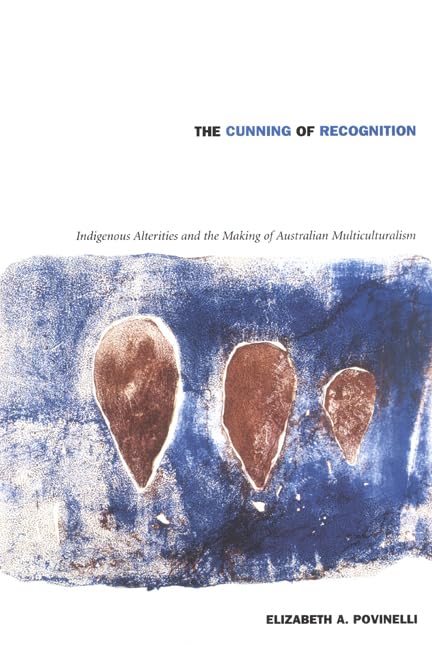
The Cunning Of Recognition: Indigenous Alterities And The Making Of Australian Multiculturalism (Politics, History, And Culture)
Sold by Ergodebooks, an authorized reseller.
Returns accepted within 30 days | support@ergodebooks.com
Shipping Information
- Free Standard Shipping — United States only
- Processing Time: 3–5 business days
- Estimated Delivery: 6–10 business days after dispatch
- Double-boxed, fully insured & discreetly packaged
- Tracking number sent via email once dispatched
Returns & Refund
Returns accepted within 30 days of delivery.
Damaged or Defective Item
Free return shipping + replacement or full refund
Wrong Item Received
Free return shipping + replacement or full refund
Change of Mind
Return shipping at customer's expense · 25% restocking fee applies
Payment Option

The Cunning Of Recognition Is An Exploration Of Liberal Multiculturalism From The Perspective Of Australian Indigenous Social Life. Elizabeth A. Povinelli Argues That The Multicultural Legacy Of Colonialism Perpetuates Unequal Systems Of Power, Not By Demanding That Colonized Subjects Identify With Their Colonizers But By Demanding That They Identify With An Impossible Standard Of Authentic Traditional Culture.Povinelli Draws On Seventeen Years Of Ethnographic Research Among Northwest Coast Indigenous People And Her Own Experience Participating In Land Claims, As Well As On Public Records, Legal Debates, And Anthropological Archives To Examine How Multicultural Forms Of Recognition Work To Reinforce Liberal Regimes Rather Than To Open Them Up To A True Cultural Democracy. The Cunning Of Recognition Argues That The Inequity Of Liberal Forms Of Multiculturalism Arises Not From Its Weak Ethical Commitment To Difference But From Its Strongest Vision Of A New National Cohesion. In The End, Australia Is Revealed As An Exemplary Site For Studying The Social Effects Of The Liberal Multicultural Imaginary: Much Earlier Than The United States And In Response To Very Different Geopolitical Conditions, Australian Nationalism Renounced The Ideal Of A Unitary European Tradition And Embraced Cultural And Social Diversity.While Addressing Larger Theoretical Debates In Critical Anthropology, Political Theory, Cultural Studies, And Liberal Theory, The Cunning Of Recognition Demonstrates That The Impact Of The Globalization Of Liberal Forms Of Government Can Only Be Truly Understood By Examining Its Concreteand Not Just Philosophicaleffects On The World.
⚠️ WARNING (California Proposition 65):
This product may contain chemicals known to the State of California to cause cancer, birth defects, or other reproductive harm.
For more information, please visit www.P65Warnings.ca.gov.
- Q: How many pages does the book have? A: This book has three hundred fifty-two pages. It provides an in-depth exploration of multiculturalism and indigenous perspectives in Australia.
- Q: What is the binding type of this book? A: The book is paperback bound. This makes it lightweight and easy to handle for reading.
- Q: What are the dimensions of the book? A: The book measures six point twenty-six inches in length, zero point seventy-five inches in width, and nine point forty-nine inches in height. These dimensions make it a manageable size for most readers.
- Q: Who is the author of the book? A: The author is Elizabeth A. Povinelli. She brings significant expertise through her extensive ethnographic research.
- Q: What genre does this book belong to? A: The book is categorized under Social Sciences. It delves into themes of political theory and multiculturalism.
- Q: Is this book suitable for academic use? A: Yes, it is suitable for academic use. It addresses theoretical debates in anthropology and political theory, making it valuable for students and researchers.
- Q: How can this book help in understanding multiculturalism? A: This book provides a critical perspective on liberal multiculturalism through indigenous experiences. It challenges readers to reconsider traditional views on cultural identity.
- Q: Is there a specific audience for this book? A: The book is aimed at scholars, students, and anyone interested in social justice and multiculturalism. It offers insights that are relevant to both academic and general audiences.
- Q: What themes does the book explore? A: The book explores themes of recognition, cultural democracy, and the effects of colonialism on indigenous communities. It critically examines how these themes shape Australian multiculturalism.
- Q: How should I store this book? A: Store the book in a dry place away from direct sunlight. This will help maintain its condition and prevent fading of the cover.
- Q: Can I read this book in a classroom setting? A: Yes, it is suitable for classroom settings. Its insights can foster discussions on multiculturalism and social justice.
- Q: What if the book arrives damaged? A: If the book arrives damaged, you can return it for a replacement or refund. Always check the return policy for specific details.
- Q: Is this book appropriate for casual reading? A: Yes, it can be read casually. While it addresses complex themes, it is written in an engaging manner that can appeal to general readers.
- Q: Does this book include any illustrations? A: Yes, the book contains seven black and white photos and nine figures. These visuals support the text and enhance understanding of the content.
- Q: What makes this book unique? A: The book uniquely combines ethnographic research with theoretical analysis. It provides a critical view of how multiculturalism interacts with indigenous identities.
- Q: Are there any reviews or endorsements for this book? A: Yes, the book has received positive reviews for its insightful analysis and thorough research. It is recognized as a significant contribution to the field.