
Title
The Daguerreotype: NineteenthCentury Technology and Modern Science,Used
Sold by Ergodebooks, an authorized reseller.
Returns accepted within 30 days | support@ergodebooks.com
Shipping Information
- Free Standard Shipping — United States only
- Processing Time: 3–5 business days
- Estimated Delivery: 6–10 business days after dispatch
- Double-boxed, fully insured & discreetly packaged
- Tracking number sent via email once dispatched
Returns & Refund
Returns accepted within 30 days of delivery.
Damaged or Defective Item
Free return shipping + replacement or full refund
Wrong Item Received
Free return shipping + replacement or full refund
Change of Mind
Return shipping at customer's expense · 25% restocking fee applies
Payment Option

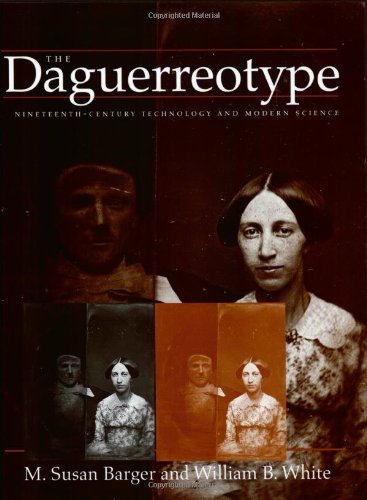
How daguerreotypes were doneThe discovery of lightsensitive chemicals in midnineteenthcentury Europe carried large implicationsfor scientists, technicians, astronomers, and for the businesspeople who soon made family portraiture standard tabletop fare in middleclass homes. In The Daguerreotype: NineteenthCentury Technology and Modern Science, M. Susan Barger and William B. White begin with a history of the process itself. Tracing the daguerreotype's origins and development, they proceed to discuss what researchers in this century have learned about the chemistry of the daguerreotype. They also address practical curatorial issues, describing how to restore and preserve the artifacts themselves. Richly illustrated, this survey of a fascinating and ubiquitous feature of midnineteenthcentury life also provides a detailed technical study of the daguerreotype process."The original motivation for our work was to devise better ways to preserve and care for daguerreotypes. As materials scientists, we knew that we needed to understand exactly what a daguerreotype is and how it is formed before we could attempt the problem of how best to care for these images . . . Our scientific work also gave us the opportunity to take a new look and interpretation of the scientific and technological literature on the daguerreotype and to reevaluate its technical history."from the Preface to the 1999 edition
⚠️ WARNING (California Proposition 65):
This product may contain chemicals known to the State of California to cause cancer, birth defects, or other reproductive harm.
For more information, please visit www.P65Warnings.ca.gov.
- Q: What is the binding type of this book? A: This book has a paperback binding. Paperback is a flexible and lightweight option, making it more portable for readers.
- Q: How many pages does the book contain? A: The book contains two hundred eighty pages. This length allows for an in-depth exploration of the daguerreotype process and its historical significance.
- Q: What are the dimensions of the book? A: The book measures eight and a half inches by eleven inches and is zero point fifty-nine inches thick. These dimensions make it a substantial and visually appealing addition to any collection.
- Q: Who are the authors of this book? A: The authors are M. Susan Barger and William B. White. They bring expertise in materials science and historical research to this examination of daguerreotypes.
- Q: What historical period does the book focus on? A: The book focuses on the nineteenth century. It explores the technological advancements and cultural implications of the daguerreotype during this era.
- Q: What is the main theme of this book? A: The main theme is the intersection of nineteenth-century technology and modern science. It highlights how the daguerreotype influenced both art and science.
- Q: How do I properly care for this book? A: To care for this book, store it in a cool, dry place away from direct sunlight. This helps preserve the pages and binding over time.
- Q: Can I restore or preserve daguerreotypes myself? A: It is not recommended to attempt restoration yourself. The book provides professional advice on proper preservation techniques for these delicate artifacts.
- Q: Is this book suitable for children? A: Yes, this book is suitable for older children and teenagers interested in history and science. It presents complex topics in an engaging manner.
- Q: What kind of illustrations are included in the book? A: The book is richly illustrated with historical images and diagrams. These visuals enhance understanding of the daguerreotype process and its impact.
- Q: Does this book contain any technical studies? A: Yes, it includes detailed technical studies of the daguerreotype process. These studies explore the chemistry and technology behind this early photographic method.
- Q: How does this book compare to other photography history books? A: This book offers a unique focus on the scientific and technical aspects of the daguerreotype, differing from more general photography histories.
- Q: What is the intended audience for this book? A: The intended audience includes historians, photographers, and anyone interested in the science of photography. It caters to both professionals and amateurs.
- Q: Is there a focus on the preservation of daguerreotypes in the book? A: Yes, the book addresses practical curatorial issues regarding the restoration and preservation of daguerreotypes. It provides insights on caring for these historical items.
- Q: Are there any references to modern scientific techniques in the book? A: Yes, the authors discuss modern scientific techniques used to analyze and preserve daguerreotypes. This connection to current science enriches the historical narrative.