
Title
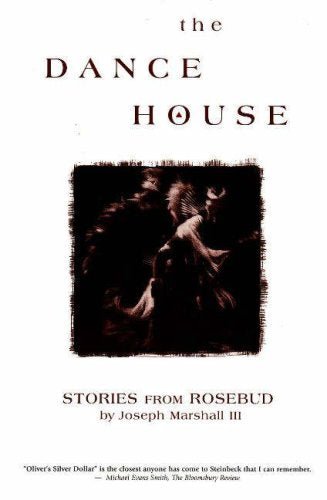
The Dance House: Stories from Rosebud,Used
Sold by Ergodebooks, an authorized reseller.
Returns accepted within 30 days | support@ergodebooks.com
Shipping Information
- Free Standard Shipping — United States only
- Processing Time: 3–5 business days
- Estimated Delivery: 6–10 business days after dispatch
- Double-boxed, fully insured & discreetly packaged
- Tracking number sent via email once dispatched
Returns & Refund
Returns accepted within 30 days of delivery.
Damaged or Defective Item
Free return shipping + replacement or full refund
Wrong Item Received
Free return shipping + replacement or full refund
Change of Mind
Return shipping at customer's expense · 25% restocking fee applies
Payment Option

Joseph Marshall III was born on the Rosebud (Sicangu Lakota) Indian Reservation in what is now southcentral South Dakota. Raised by his maternal grandparents, his first language is Lakota. A freelance writer, Marshall has published numerous articles and two previous books with Red Crane. He has been a technical advisor and actor in television movies, including 'Return to Lonesome Dove.'
⚠️ WARNING (California Proposition 65):
This product may contain chemicals known to the State of California to cause cancer, birth defects, or other reproductive harm.
For more information, please visit www.P65Warnings.ca.gov.
- Q: How many pages does the book have? A: This book has two hundred forty-eight pages. It offers a comprehensive collection of stories from the Rosebud Indian Reservation.
- Q: What is the binding type of this book? A: The binding type is paperback. This makes it lightweight and easy to carry around.
- Q: What are the dimensions of the book? A: The dimensions are six inches in length, nine inches in height, and zero point seventy-five inches in width. These dimensions make it a convenient size for reading.
- Q: Who is the author of 'The Dance House'? A: The author is Joseph Marshall III. He is a well-known writer and has a deep connection to the Lakota culture.
- Q: What is the main theme of the book? A: The main theme revolves around stories from the Rosebud Indian Reservation. It reflects the experiences and culture of the Sicangu Lakota.
- Q: Is this book suitable for young readers? A: Yes, this book is suitable for young readers. It provides insightful stories that can educate them about Lakota culture.
- Q: How should I care for this book? A: Store the book in a cool, dry place to maintain its condition. Avoid exposing it to excessive moisture or direct sunlight.
- Q: Can I clean the book if it gets dirty? A: Yes, you can clean the book gently. Use a soft, dry cloth to wipe off any dust without damaging the cover or pages.
- Q: What if the book arrives damaged? A: If the book arrives damaged, you should contact customer support for assistance. They can guide you through the return or exchange process.
- Q: Is there a warranty for this book? A: No, there is no warranty for books. However, you can return it if it is damaged or not as described.
- Q: What genre does 'The Dance House' belong to? A: This book belongs to the Essays genre. It features personal reflections and narratives from the author.
- Q: How does this book compare to other essays about Native American culture? A: This book provides a unique perspective from a Sicangu Lakota author. It stands out for its authentic voice and personal storytelling.
- Q: Is it easy to read for someone unfamiliar with Lakota culture? A: Yes, it is easy to read for someone unfamiliar with Lakota culture. The author provides context and relatable narratives that are engaging.
- Q: Are there illustrations or photographs in the book? A: No, this book does not contain illustrations or photographs. It focuses solely on written stories and essays.
- Q: Can I gift this book to someone interested in Native American stories? A: Yes, this book makes a great gift for anyone interested in Native American stories. Its rich narratives offer cultural insights that are valuable.
- Q: Does this book include references or sources for further reading? A: No, this book does not include references or sources. It primarily consists of personal stories and reflections.