
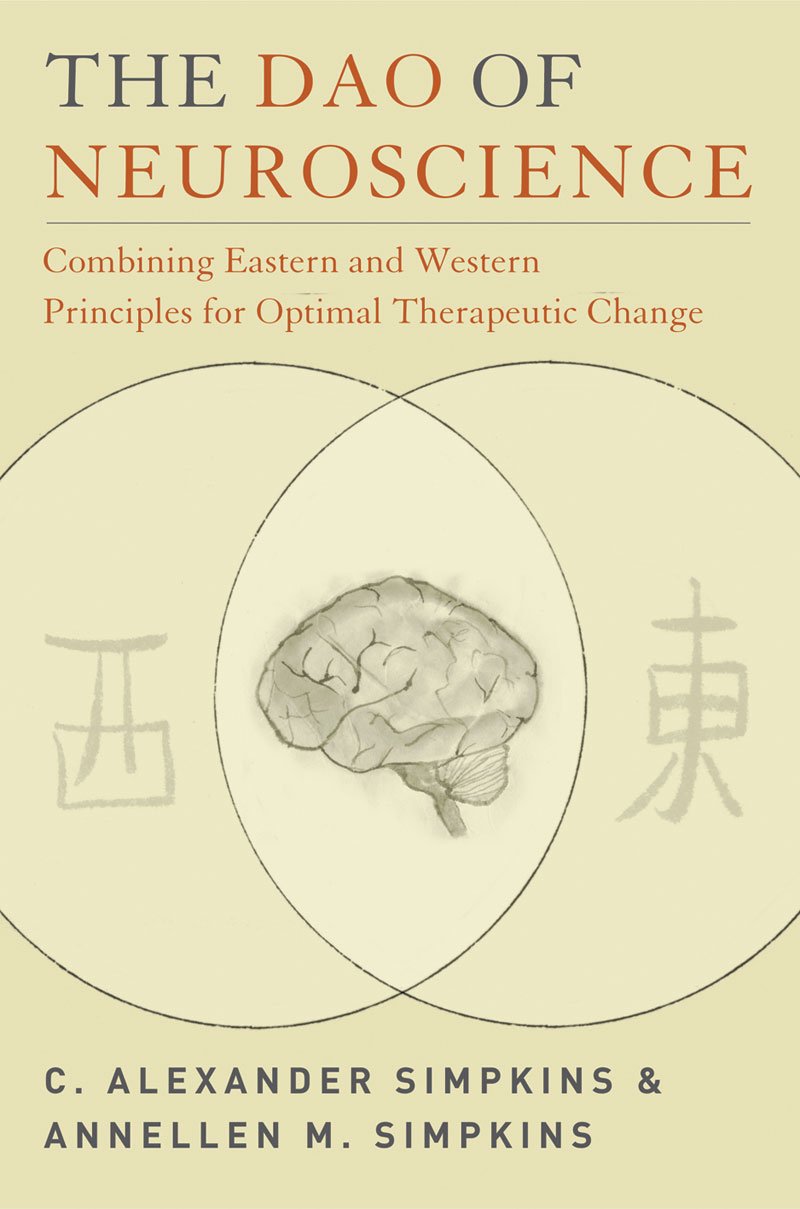
Title
The Dao Of Neuroscience: Combining Eastern And Western Principles For Optimal Therapeutic Change (Norton Professional Books (Pap,Used
Sold by Ergodebooks, an authorized reseller.
Returns accepted within 30 days | support@ergodebooks.com
Shipping Information
- Free Standard Shipping — United States only
- Processing Time: 3–5 business days
- Estimated Delivery: 6–10 business days after dispatch
- Double-boxed, fully insured & discreetly packaged
- Tracking number sent via email once dispatched
Returns & Refund
Returns accepted within 30 days of delivery.
Damaged or Defective Item
Free return shipping + replacement or full refund
Wrong Item Received
Free return shipping + replacement or full refund
Change of Mind
Return shipping at customer's expense · 25% restocking fee applies
Payment Option

Combining New Scientific Paradigms With Ancient Wisdom. Neuroscientists Have Made Huge Advances In Our Understanding Of The Brain, And Yet As Scientists Learn More, Paradoxes Arise. How Does The Braina Material Substancerelate To And Produce Nonmaterial Thoughts And Emotions? What Explains The Research Showing That Nonrational, Unconscious Experiencing Can Sometimes Be More Accurate Than Deliberate, Conscious Thought? The Resolution Of These Paradoxes Has Important Implications For All The Helping Fields, Suggesting New Approaches To Mindbrainbody Change.By Weaving Together Eastern Traditions (Including Yoga, Buddhism, Zen, And Daoism) And Western Science, New Understandings Previously Not Considered Emerge. The Dao Of Neuroscience Is An Insightful Introduction To These Traditions Which Sheds New Light On The Relationship Between The Mind And The Brain. Dao Is An Ancient Eastern Method, A Way Or Path For Exploring And Learning. From The Eastern Perspective, Everything Has Its Dao, Its Way, Even The Brain. As We Learn The Dao Of Neuroscience, We Come To Understand The Brain'S Most Optimal Ways Of Functioning And How To Facilitate Its Natural Processes Toward Health, Happiness, And Fulfillment.
⚠️ WARNING (California Proposition 65):
This product may contain chemicals known to the State of California to cause cancer, birth defects, or other reproductive harm.
For more information, please visit www.P65Warnings.ca.gov.
- Q: How many pages does this book have? A: This book has two hundred ninety-six pages. It provides a comprehensive exploration of neuroscience combined with Eastern philosophies.
- Q: What is the binding type of this book? A: The binding type is paperback. This makes it lightweight and easier to handle for reading.
- Q: What are the dimensions of this book? A: The dimensions are eight point three one inches in height, eight point three one inches in length, and zero point seven one inches in width. These measurements make it a convenient size for both reading and storage.
- Q: Who is the author of this book? A: The author is C. Alexander Simpkins. He integrates various scientific and philosophical perspectives in this work.
- Q: What topics are covered in this book? A: This book covers the integration of neuroscience with Eastern traditions such as Yoga and Buddhism. It delves into the relationship between the mind and brain.
- Q: Is this book suitable for beginners in neuroscience? A: Yes, this book is suitable for beginners. It presents complex ideas in an accessible manner, making it easy for readers new to the subject.
- Q: How can I use the insights from this book? A: You can use the insights by applying the concepts of mind-brain-body change in therapeutic practices. It offers new approaches for personal development.
- Q: What age group is this book appropriate for? A: This book is appropriate for adults and older teens. It discusses advanced concepts in neuroscience and philosophy.
- Q: How do I store this book to keep it in good condition? A: Store this book in a cool, dry place and avoid direct sunlight. This helps preserve the quality of the paperback cover and pages.
- Q: Can this book be used as a textbook? A: Yes, it can be used as a textbook for courses in psychology or neuroscience. Its comprehensive content makes it suitable for educational purposes.
- Q: What if I received a damaged copy of this book? A: If you receive a damaged copy, you should contact customer support for a return or exchange. Most retailers have policies in place for damaged items.
- Q: Is there a warranty or guarantee for this book? A: There is typically no warranty for books, but many retailers offer satisfaction guarantees. Check with the retailer for specific policies.
- Q: Are there any safety concerns with this book? A: No, there are no safety concerns associated with this book. It contains no hazardous materials and is safe for general reading.
- Q: Can I read this book on an e-reader? A: Yes, if an electronic version is available, you can read it on various e-readers. Check for digital formats from your preferred retailer.
- Q: What makes this book different from other neuroscience books? A: This book uniquely combines Eastern and Western philosophies to explore therapeutic change. It offers insights not commonly found in traditional neuroscience texts.