
Title
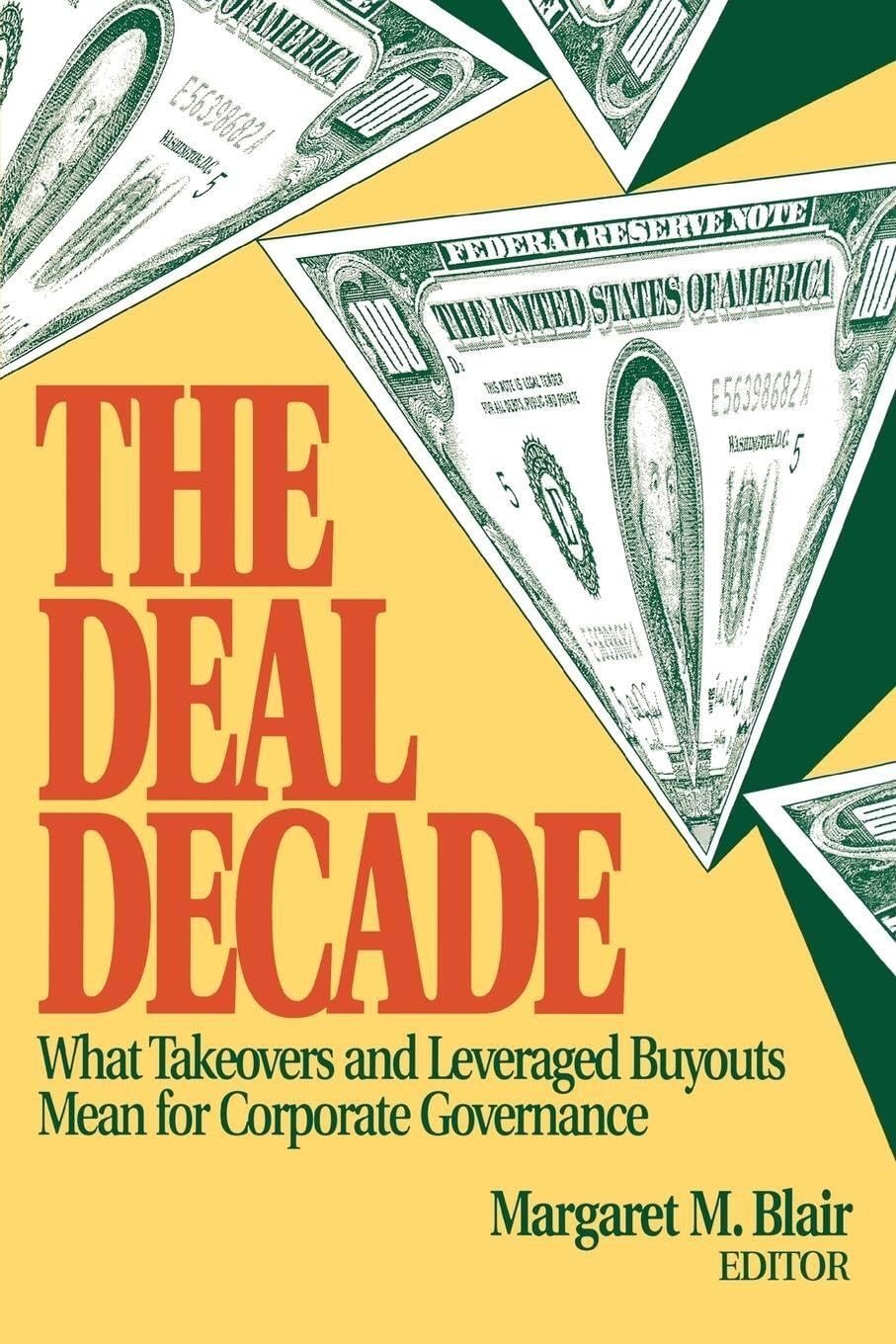
The Deal Decade: What Takeovers And Leveraged Buyouts Mean For Corporate Governance,Used
Sold by Ergodebooks, an authorized reseller.
Returns accepted within 30 days | support@ergodebooks.com
Shipping Information
- Free Standard Shipping — United States only
- Processing Time: 3–5 business days
- Estimated Delivery: 6–10 business days after dispatch
- Double-boxed, fully insured & discreetly packaged
- Tracking number sent via email once dispatched
Returns & Refund
Returns accepted within 30 days of delivery.
Damaged or Defective Item
Free return shipping + replacement or full refund
Wrong Item Received
Free return shipping + replacement or full refund
Change of Mind
Return shipping at customer's expense · 25% restocking fee applies
Payment Option

U.S. companies are still reeling from the takeovers, leveraged buyouts, junk bond issues, recapitalizations, and other financial restructuring transactions that reshaped corporations in the 1980s. In this book, distinguished economists and scholars in the business administration, management, and law discuss how those transactions affected corporate management and the financial markets. The authors examine why so much corporate restructuring occurred and, particularly, what corporate governance problems were behind it. They evaluate the causes and effects of restructuring, the economic, political, and legal environment that encouraged it, and the new laws and court rulings that resulted. The contributors explain that financial restructuring was driven by a dispute over who should control large public corporations, what their goals should be, to whom the organizations and their managers should be accountable, and how to make them more accountable. Although the wave of financial restructuring itself has subsided, this conflict remains unsolved and will continue to influence the business climate. The Deal Decade addresses such issues as: Why did longdormant questions about corporate performance and governance surface in the 1980s? Why did they manifest themselves in takeovers and financial restructurings? Why would capital structure be likely to affect corporate performance? Were the increased use of debt and rapid pace of innovation in financial markets, and the explosion in takeover activity independent phenomena or related? And if related, which caused which? Finally, why did the impulse to restructure subside without having resolved the controversies that underlay it?
⚠️ WARNING (California Proposition 65):
This product may contain chemicals known to the State of California to cause cancer, birth defects, or other reproductive harm.
For more information, please visit www.P65Warnings.ca.gov.